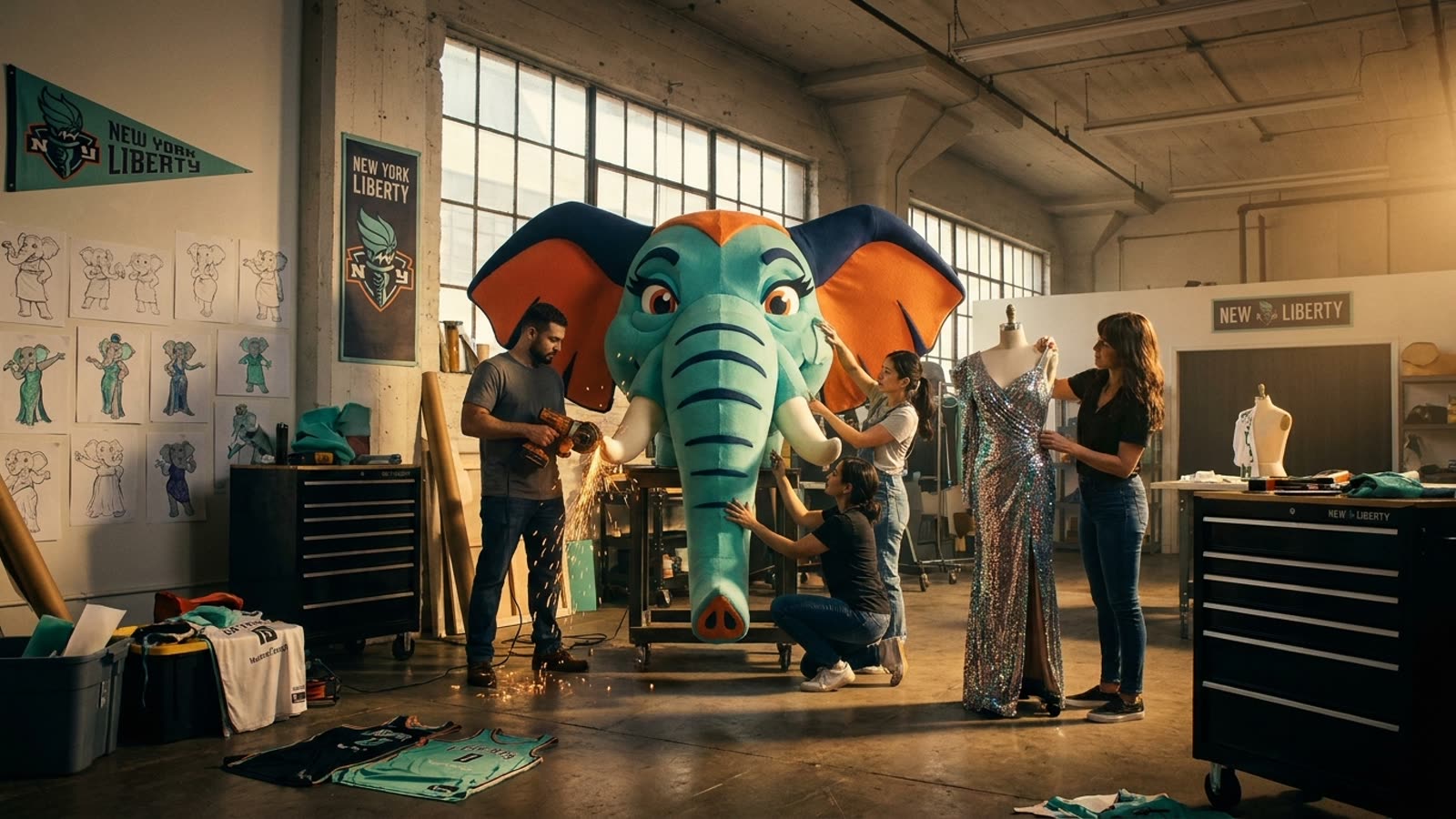
The New York Liberty did not mark three decades in the WNBA with a simple banner drop or a montage of championship highlights. Instead, the franchise handed its mascot a bedazzled microphone and a Whitney Houston wig, then let her lip-sync her way into the cultural conversation.
Ellie the Elephant's pre-game transformation—documented by Vogue's cameras with the seriousness typically reserved for Met Gala preparations—involved a glam squad, a custom sequined gown engineered to fit a seven-foot foam body, and choreography that nodded to Houston's iconic 1991 Super Bowl performance. The result was absurd, theatrical, and utterly deliberate. This is what happens when a league that spent years begging for mainstream attention finally realizes it can manufacture its own mythology.
The Mascot as Main Character
Mascot culture in American sports has always oscillated between cringe and cult following. The Philadelphia Phanatic commands genuine devotion; the San Diego Chicken became a genuine celebrity in the 1970s. But these figures emerged organically, through decades of accumulated weirdness. Ellie's Whitney moment represents something more calculated: a franchise understanding that virality is a resource, and that a mascot in full diva regalia will travel further on social media than any highlight reel.
The Liberty, notably, chose to platform this transformation through Vogue rather than ESPN. The audience they want is not necessarily the one already watching basketball—it is the one that might start.
Women's Sports and the Spectacle Gap
For years, women's professional leagues operated under an unspoken austerity doctrine: prove your athletic legitimacy first, worry about entertainment later. The WNBA's early years were marked by sparse crowds, minimal production budgets, and a defensive posture toward critics who questioned whether the league could survive. That era is over.
The Liberty's willingness to stage a full-camp mascot moment reflects a broader shift. Caitlin Clark's arrival has brought unprecedented television ratings. Angel Reese's social media presence has demonstrated that personality sells. The league is no longer waiting for permission to be entertaining—it is building spectacle infrastructure in real time. Ellie in a Whitney wig is not a distraction from basketball; it is an expansion of what WNBA game day can mean.
Our take
There is something genuinely charming about a foam elephant in a sequined gown belting out "I Wanna Dance with Somebody" to a sold-out arena. But the more interesting story is strategic: the WNBA has stopped trying to earn respect through restraint and started demanding attention through excess. Whether this approach builds lasting fans or merely generates disposable content remains an open question. For now, though, the Liberty has grasped a truth that took the league thirty years to learn—nobody ever went viral by being dignified.