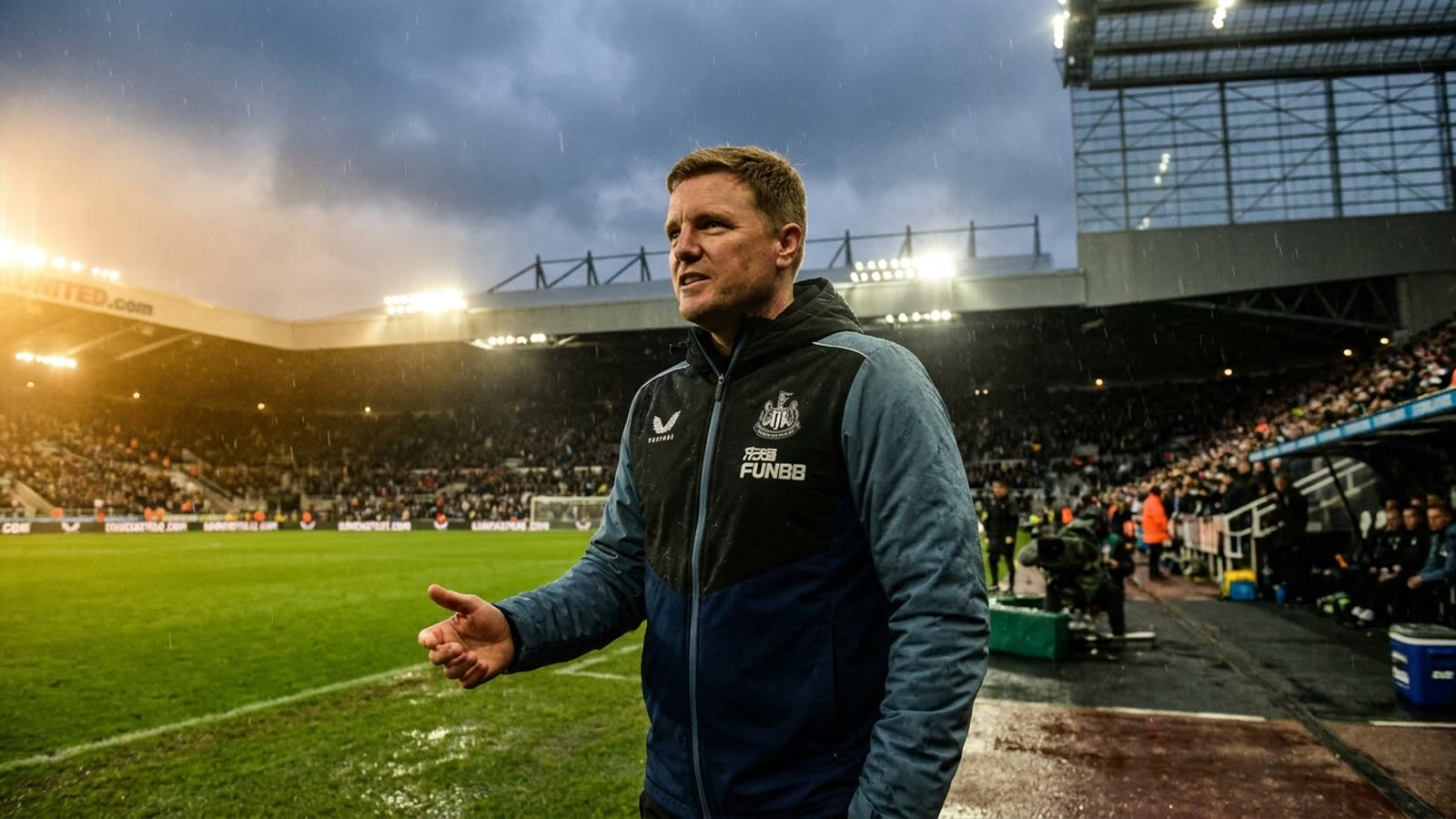
When a manager at a stable, ambitious club publicly signals he would take a call from a rival, the message is unmistakable: the rival's seat is not just warm but combustible. Eddie Howe's openness to discussing the Manchester United job—reported Sunday—is less a reflection of his own restlessness at Newcastle than a confirmation that Michael Carrick's tenure at Old Trafford has entered its terminal phase.
Carrick, the club legend who inherited the post-Ten Hag wreckage, was supposed to be the safe pair of hands: tactically competent, emotionally literate, institutionally fluent. Two years later, United sit mid-table again, their Champions League hopes fading, their dressing room reportedly fractured over playing time and transfer strategy. The Glazers, still clinging to majority ownership despite years of fan protest, have shown little appetite for another expensive managerial reset. But Howe's name now circulating suggests the calculus has shifted.
Why Howe makes sense
The 48-year-old transformed Newcastle from relegation candidates into genuine top-four contenders, doing so with Saudi money but also with a coherent pressing identity and a knack for improving players already on the books. His record at Bournemouth before that—two promotions, survival seasons punching above their financial weight—demonstrated sustainability, not just spending. United's hierarchy, burned by the Mourinho and Ten Hag experiments, craves someone who can build rather than merely buy.
Newcastle would not let him walk cheaply; compensation could exceed £15 million. But for a club that has hemorrhaged hundreds of millions on transfer fees and severance packages, that figure is rounding error.
The Carrick question
Carrick's defenders point to injuries, to an inherited squad imbalanced by years of incoherent recruitment, to the impossible expectations that come with the United crest. All true. But the counterargument is simpler: results. United have won just five of their last fifteen league matches. Their pressing metrics have regressed. And the January window, which was supposed to address midfield depth, instead produced a panic loan and a dispute with the board over a rejected bid for a Bundesliga winger.
The manager's post-match interviews have grown terse, his body language defensive. Whether the club moves before the season ends or waits until May, the direction is clear.
Our take
Howe to United would be a sensible appointment—perhaps the most sensible the club has made in a decade. He is neither a galáctico hire nor a nostalgic throwback; he is simply a coach who has proven he can organise a squad, develop young players, and compete with limited margin for error. That United's dysfunction has reached the point where such a hire feels like progress is, of course, its own indictment. But progress is progress. Carrick deserved better support; he will not get it. Howe, if he is wise, will demand it in writing.