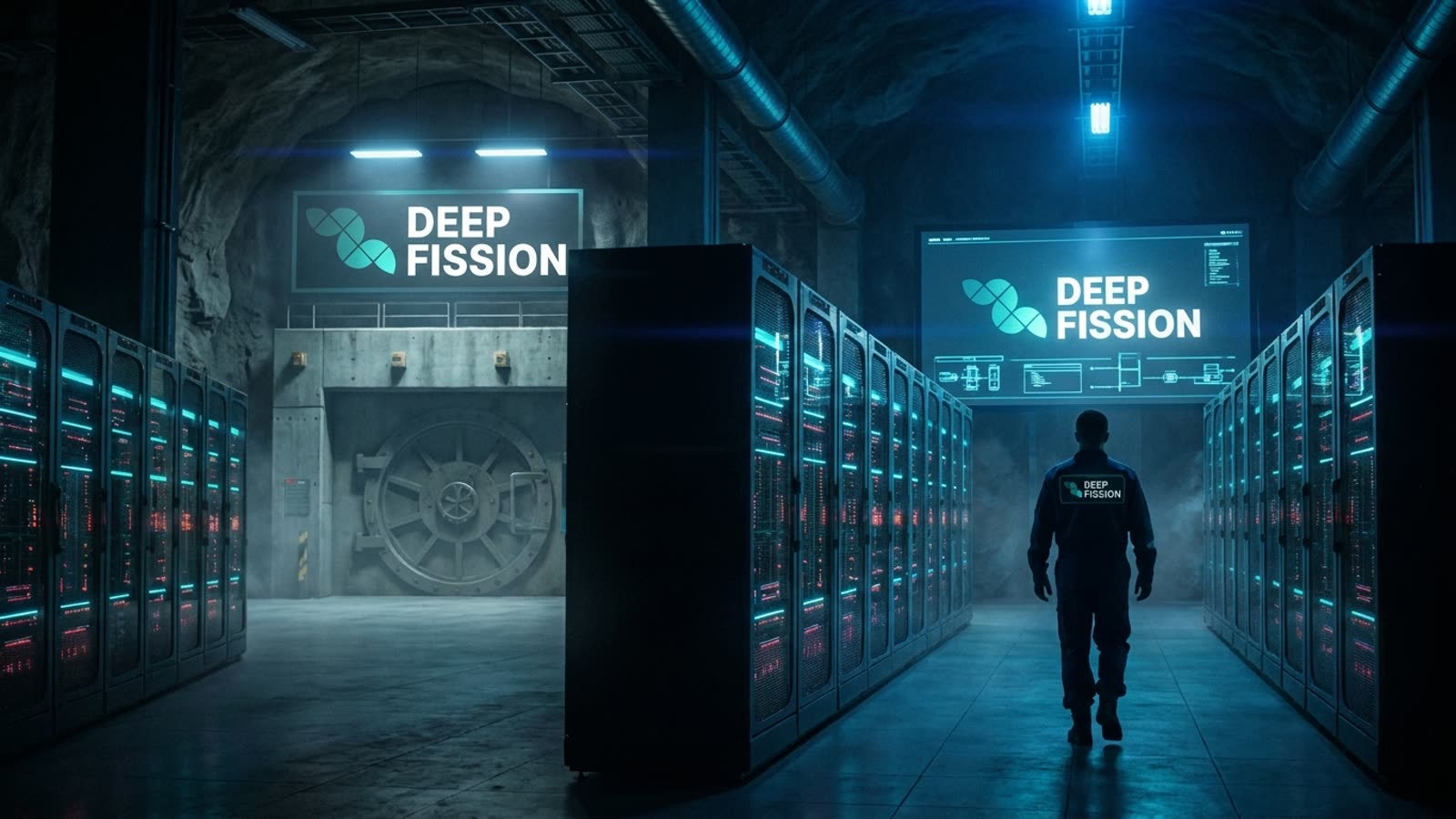
The AI boom has created an energy crisis that nobody in Silicon Valley wants to discuss honestly. Data centers now consume more electricity than some mid-sized countries, and the gap between what hyperscalers need and what the grid can deliver grows wider by the quarter. Into this breach steps Deep Fission, a nuclear startup announcing its second attempt to go public via SPAC merger—a financing mechanism that should give any serious investor pause.
The company's pitch is seductive: small modular reactors buried deep underground, promising inherent safety through geology and passive cooling. Microsoft, Google, and Amazon have all signed preliminary agreements with various nuclear ventures, desperate for carbon-free baseload power to meet climate commitments while feeding ever-larger AI training clusters. Deep Fission wants to be their supplier.
The SPAC problem
SPACs earned their reputation as the financing vehicle of choice for companies that couldn't survive traditional IPO scrutiny. Deep Fission's first public-market attempt collapsed in 2024 amid broader SPAC market carnage. That the company is returning to the same well—rather than pursuing private funding from the deep-pocketed tech giants who supposedly need its product—suggests something about either its financials or its technology readiness.
The nuclear industry's history is littered with promising concepts that never achieved commercial scale. NuScale, the furthest along among American small modular reactor companies, has faced repeated delays and cost overruns. Deep Fission's underground approach adds geological complexity to an already challenging engineering problem.
Why hyperscalers keep signing anyway
The math is simple, even if the execution isn't. Training a frontier AI model now requires power measured in hundreds of megawatts sustained over months. Inference at scale demands even more. Natural gas plants face carbon accounting problems. Solar and wind can't provide the 24/7 baseload that AI workloads require. Nuclear is the only carbon-free option that matches the demand profile.
This desperation explains why tech companies keep signing letters of intent with nuclear startups despite minimal operational track records. They're buying options on a future that may or may not arrive.
Our take
Deep Fission's timing is impeccable and its technology is unproven—a combination that historically enriches early shareholders at the expense of later ones. The AI industry genuinely needs nuclear power, but needing something doesn't make every proposed solution viable. Investors should ask why a company supposedly positioned at the intersection of two booming sectors can't attract enough private capital to avoid the SPAC route twice.