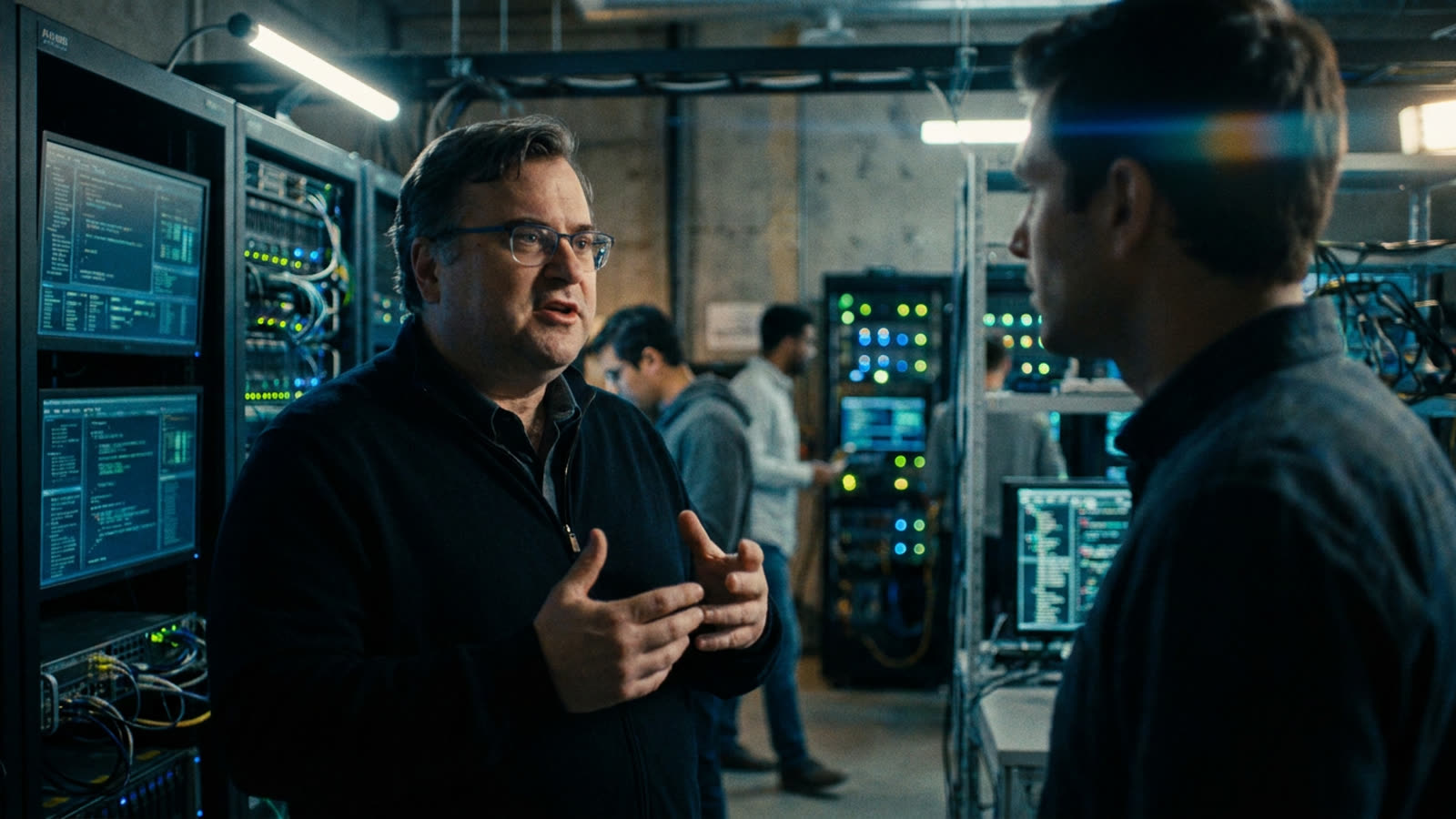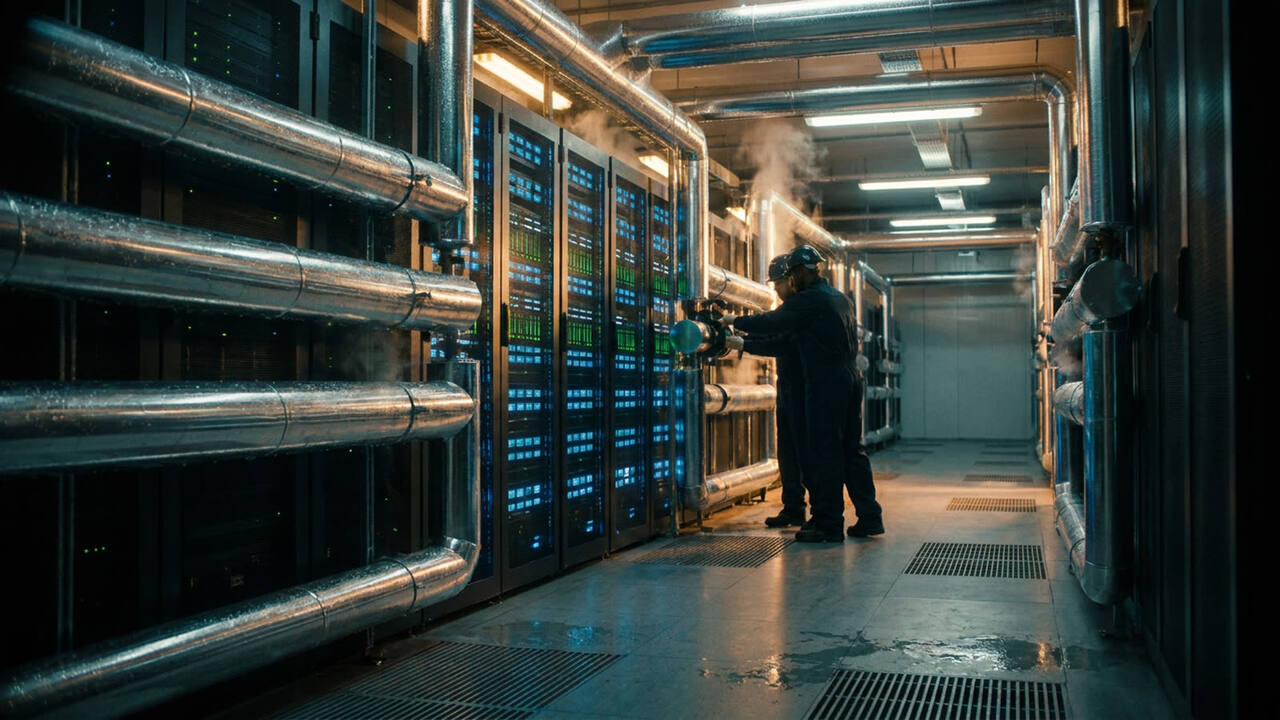
The artificial intelligence industry's most inconvenient truth isn't about bias or job displacement—it's about water. Every query to a large language model, every image generated, every model trained requires computational power that generates heat, and that heat has traditionally been managed by evaporating staggering quantities of freshwater into the atmosphere. Now, as drought conditions intensify across the American Southwest and European regulators sharpen their scrutiny, data center operators are being forced to confront a resource constraint that no amount of GPU innovation can code away.
The numbers are genuinely startling. A single large data center can consume as much water annually as a small city—estimates suggest Microsoft's global operations alone used over 6 billion gallons in recent years, with Google and Meta in similar territory. Much of this goes toward cooling towers, those industrial evaporators that have been the industry's default thermal management solution for decades. The approach works beautifully from an engineering standpoint. It works terribly from a sustainability standpoint, particularly when facilities are sited in water-stressed regions like Arizona or Nevada, where land is cheap and electricity historically plentiful.
The pivot to air and liquid
The most promising developments involve eliminating evaporative cooling entirely. Several major operators are now deploying closed-loop liquid cooling systems that circulate water or specialized fluids through heat exchangers without losing any to evaporation. Others are turning to direct-to-chip liquid cooling, where coolant flows directly over processors—a technique that not only conserves water but actually improves energy efficiency by keeping chips at more optimal temperatures.
Air cooling is also making a comeback, though in more sophisticated forms. Facilities in cooler climates are increasingly relying on outside air economizers, essentially using weather as infrastructure. A data center in Sweden or Finland can operate for most of the year without any mechanical cooling at all. The tradeoff is obvious: you can't build these facilities in Phoenix, which is precisely the point.
The siting question
This is where the water crisis intersects with industrial geography. For years, data center location decisions were driven primarily by power costs, tax incentives, and proximity to fiber networks. Water availability was an afterthought. That calculus is shifting. Some operators are now explicitly prioritizing water-rich regions, even at higher land or energy costs. Others are investing in on-site water recycling systems or negotiating access to reclaimed municipal wastewater.
The regulatory environment is accelerating this shift. Several European jurisdictions now require water impact assessments for new data center permits. In the United States, local opposition to proposed facilities increasingly centers on water concerns—a development that would have seemed bizarre a decade ago but now regularly delays or kills projects.
Our take
The AI industry's water problem is solvable, but solving it requires acknowledging that computation has physical consequences in the physical world. The most encouraging sign isn't any particular technology—it's that operators are finally treating water as a constraint worth engineering around rather than an externality to be ignored. The less encouraging sign is that it took drought headlines and regulatory threats to prompt this reckoning. The companies building the infrastructure for artificial general intelligence should probably have noticed the water thing on their own.