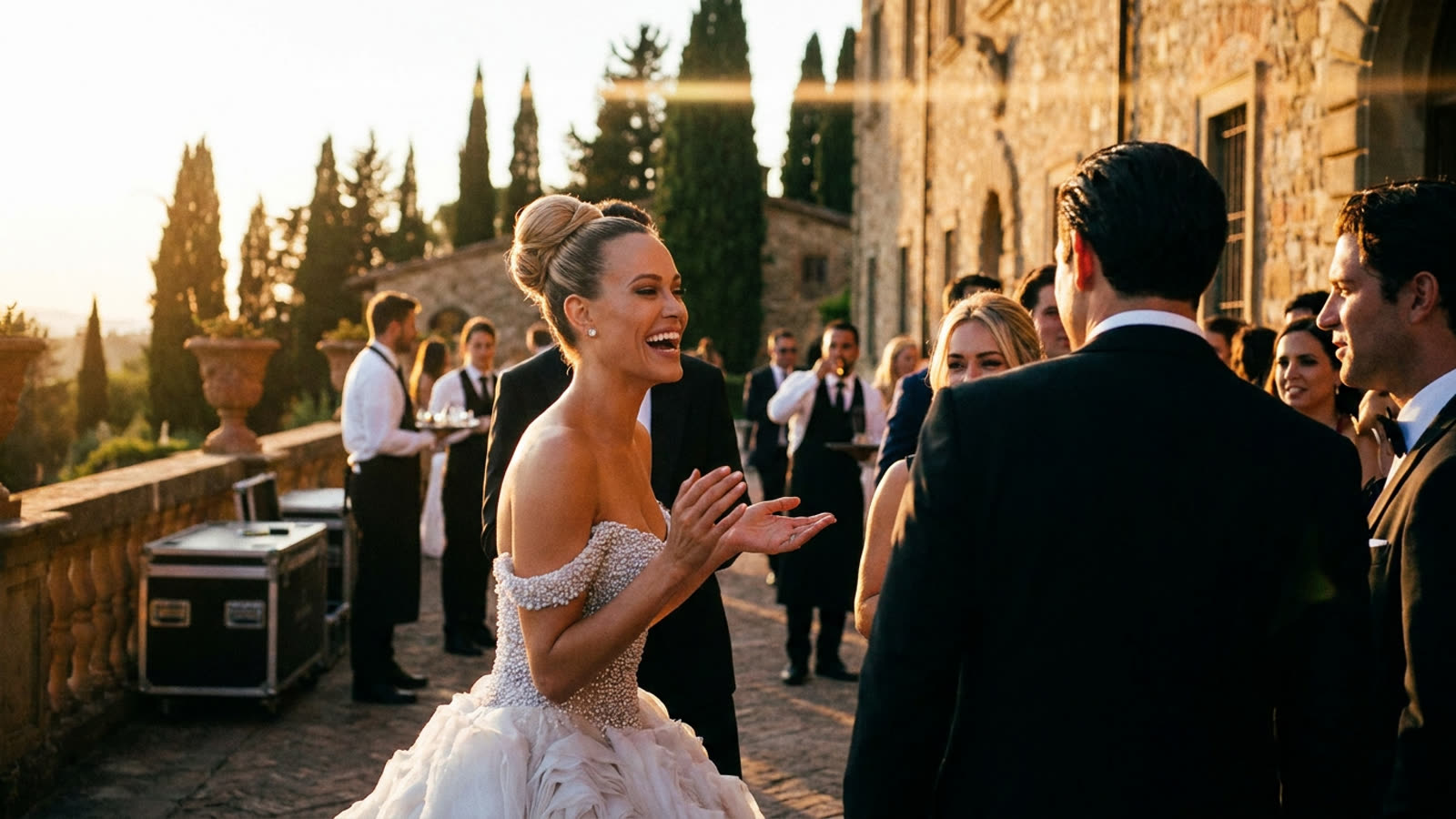
The format is as old as tabloid photography itself: crop a famous person's face out of the frame, zoom in on their body in swimwear, and invite the audience to identify them by silhouette alone. It is, when you strip away the playful framing, a game of corporeal recognition — and it remains one of the most reliably engaging content formats in digital media.
This week's iteration features an unnamed "curvy model" in a micro bikini, presented as a guessing game. The subject's identity is withheld not because it's unknown, but because the withholding is the product. The delay between seeing and knowing creates engagement: comments, shares, return visits. It's a small dopamine loop dressed up as celebrity news.
The economics of the faceless frame
These posts perform remarkably well because they exploit a cognitive quirk: we are hardwired to complete patterns. A body without a face is an incomplete equation, and our brains itch to solve it. Publications have understood this since the days of print gossip columns, but the digital attention economy has refined it into a science. The "guess who" format generates comments (guesses), shares (friends tagging friends), and return traffic (to see the reveal). It's engagement arbitrage.
The format also sidesteps certain editorial risks. By presenting the body as a puzzle rather than a profile, the publication can claim it's celebrating the subject's physique rather than objectifying it. The framing is participatory — you're the one looking, guessing, engaging. The editorial hand is supposedly neutral.
Why we keep playing along
The persistence of these features suggests they fulfill a genuine appetite. Part of it is simple prurience, but there's something else: the pleasure of recognition. Correctly identifying a celebrity by their body alone signals a certain intimacy with their public image. It says, I know them well enough to recognize them without their face. In an era of parasocial relationships, this is a form of closeness.
There's also the competitive element. Celebrity culture has always been a knowledge game — who's dating whom, who wore what, who's feuding. The guess-the-body format is just another quiz, another way to demonstrate fluency in the language of fame.
Our take
The format is undeniably reductive, but declaring it dead would be wishful thinking. It persists because it works — because we click, because we guess, because we feel a small thrill when we're right. The more interesting question isn't whether these features are beneath us, but why they aren't. The celebrity body, cropped and commodified, remains one of the most efficient engagement engines in media. Until we stop playing, publications will keep dealing the cards.