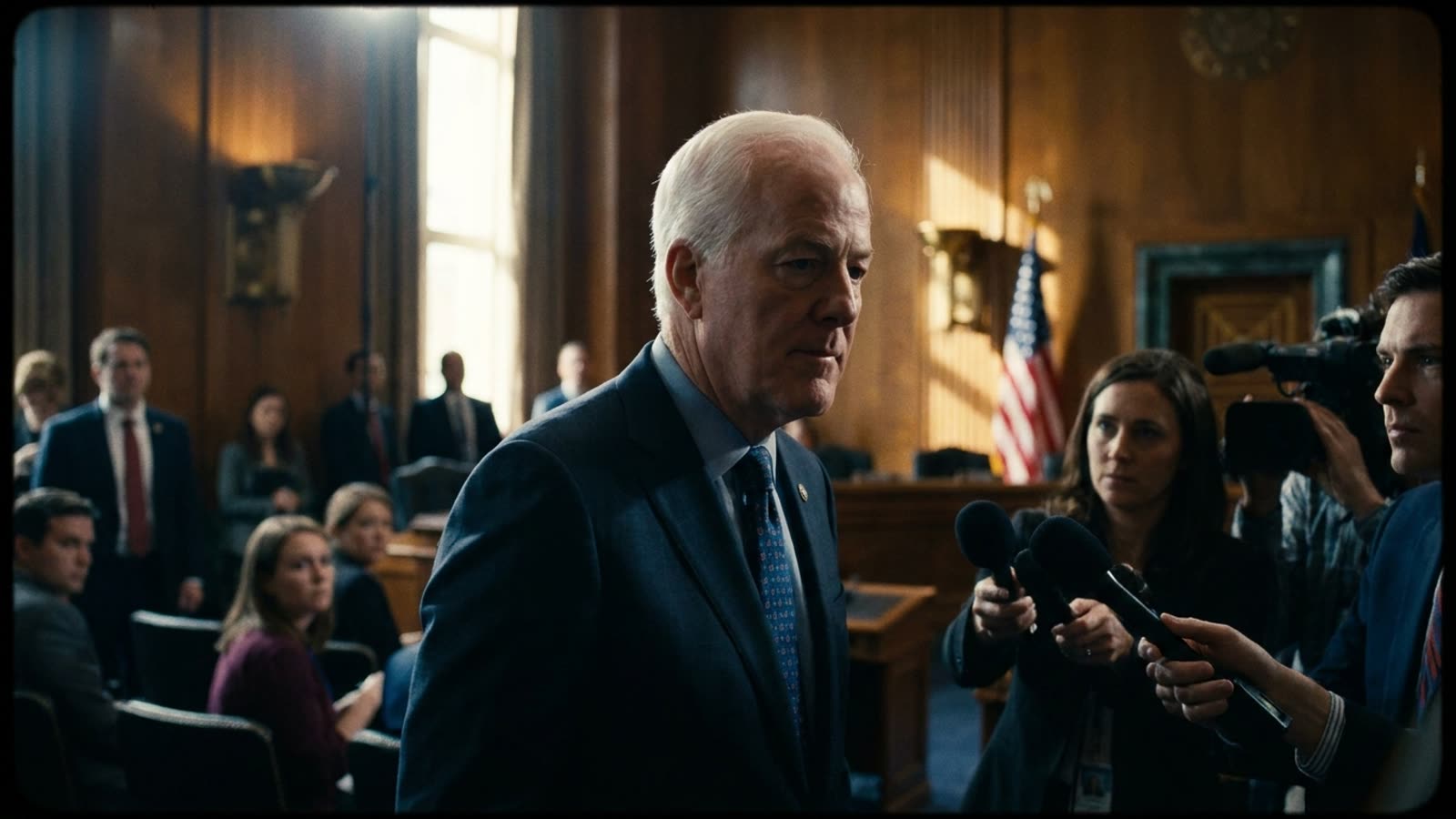
John Cornyn has spent two decades in the Senate perfecting the art of strategic invisibility—reliable enough to rise to Majority Whip, cautious enough to avoid the spotlight that incinerates ambitious colleagues. That era is over. As President Trump's Iran deal lurches toward a signing ceremony, Cornyn has positioned himself as the chamber's most prominent Republican skeptic, a posture that looks less like principle and more like political survival.
The Texas senator faces re-election in November against a Democratic challenger who has made surprising inroads in Houston's suburbs, where defense contractors employ tens of thousands and where "peace with Iran" polls considerably worse than it does nationally. Cornyn's recent floor speeches—warning of "premature concessions" and demanding "ironclad verification protocols"—read like opposition research preemptively neutralized.
The hawk's dilemma
Cornyn's predicament illustrates the impossible geometry confronting Senate Republicans. Trump's base wants the war over; the donor class and defense establishment want Iran contained; suburban swing voters want both, somehow. Cornyn has attempted to square this circle by praising Trump's "strength" while questioning his negotiators' "timeline." It is the legislative equivalent of voting present.
The gambit carries real risks. Trump has shown little patience for intra-party dissent on his signature foreign policy initiative, and Cornyn lacks the populist armor that protects figures like Josh Hawley or J.D. Vance from presidential ire. A single Truth Social post could scramble his carefully calibrated positioning overnight.
Texas math
Cornyn's anxiety is not irrational. Texas's transformation from safe red to competitive purple has accelerated since 2020, driven by demographic shifts in the I-35 corridor and the continued blueing of Harris County. His 2020 margin—nearly ten points—now looks like a high-water mark. Internal polling reportedly shows him below fifty percent for the first time in his career, with undecideds breaking against incumbents in the current anti-Washington mood.
Defense spending is personal in Texas. Lockheed Martin's F-35 facility in Fort Worth, Raytheon's missile operations in McKinney, and a constellation of smaller contractors depend on a threat environment that a comprehensive Iran deal would fundamentally alter. Cornyn's skepticism plays directly to these constituencies—and to the retired military voters who populate the suburbs ringing San Antonio and Dallas.
Our take
Cornyn's Iran hawkishness is too conveniently timed to be mistaken for conviction. He supported Trump's maximum pressure campaign, stayed silent during the initial strikes, and discovered his concerns only when polls tightened. That is not statesmanship; it is incumbency protection dressed in foreign policy language. Texas voters deserve a senator who leads rather than follows his consultants' crosstabs. Whether they will punish him for the distinction remains the only interesting question in what should have been a sleepy re-election.