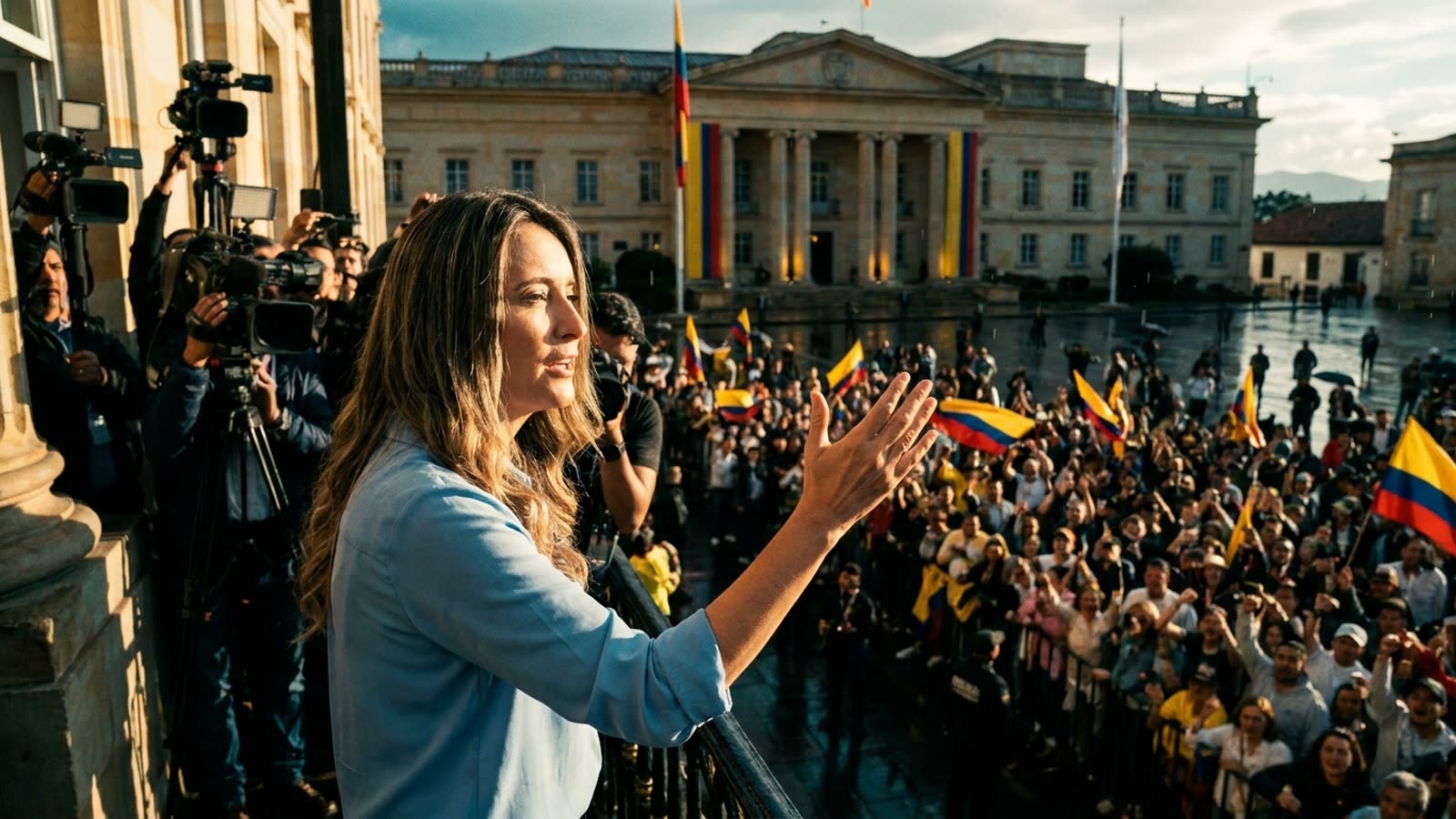
For two decades, American conservatives watched helplessly as Latin America drifted leftward, electing socialist after socialist while Washington's influence waned from Caracas to Buenos Aires. That era appears to be over. María de la Espriella's preliminary victory in Colombia's presidential runoff—backed openly by Donald Trump and financed substantially by American conservative donors—represents something more significant than a single election result. It is the first unambiguous success of a new American strategy: treating Latin American elections as extensions of domestic political warfare.
The margin, reportedly under two percentage points, will face scrutiny and likely legal challenges. But the symbolism is already locked in. A country that elected Gustavo Petro, a former guerrilla, just four years ago has now swung to a candidate who campaigned on reversing his entire agenda—and did so while Trump surrogates held rallies in Bogotá.
The Espriella formula
De la Espriella is not a conventional Colombian conservative. A 47-year-old former prosecutor with no prior elected office, she built her campaign on three pillars that will sound familiar to anyone who followed American politics in 2016: anti-corruption fury directed at incumbent institutions, hardline security promises focused on Venezuela-linked criminal networks, and economic nationalism wrapped in the language of sovereignty. Her Spanish-language social media operation borrowed directly from MAGA playbooks, complete with rally aesthetics and enemy-of-the-people rhetoric aimed at Colombian legacy media.
What distinguished her campaign was the openness of American involvement. Where previous U.S. administrations maintained plausible deniability about electoral preferences, Trump's team made endorsement a feature rather than a bug. The message to Colombian voters was explicit: elect our candidate and receive preferential treatment on trade, migration, and security cooperation. Reject her and face the consequences.
Regional implications
Colombia matters beyond its borders. As South America's third-largest economy and the traditional anchor of U.S. influence in the Andean region, its political direction shapes possibilities across the continent. Petro's government had pursued rapprochement with Venezuela, skepticism toward American military presence, and aggressive wealth redistribution. De la Espriella has promised to reverse all three.
The timing amplifies the significance. Brazil's Lula faces mounting corruption investigations that could destabilize his government. Mexico's Sheinbaum is struggling with cartel violence that has eroded her approval ratings. Chile's Boric never recovered from his failed constitutional reform. The left's regional infrastructure is weaker than at any point since the early 2000s—and Washington is now actively pushing against it rather than merely hoping for its collapse.
Our take
The hand-wringing about American interference in Latin American elections has a certain irony given the region's long history of enduring exactly that. What's genuinely new is the brazenness—and the fact that it worked. De la Espriella's victory suggests that Trumpian politics travel better than critics assumed, at least in countries with similar grievances about crime, corruption, and elite capture. Whether she can govern effectively is another question entirely. Colombia's problems are not solved by campaign aesthetics, and her lack of legislative allies or administrative experience will matter once the rallies end. But for now, Washington has demonstrated that it still knows how to win elections in its backyard. The question is whether anyone will like what comes next.