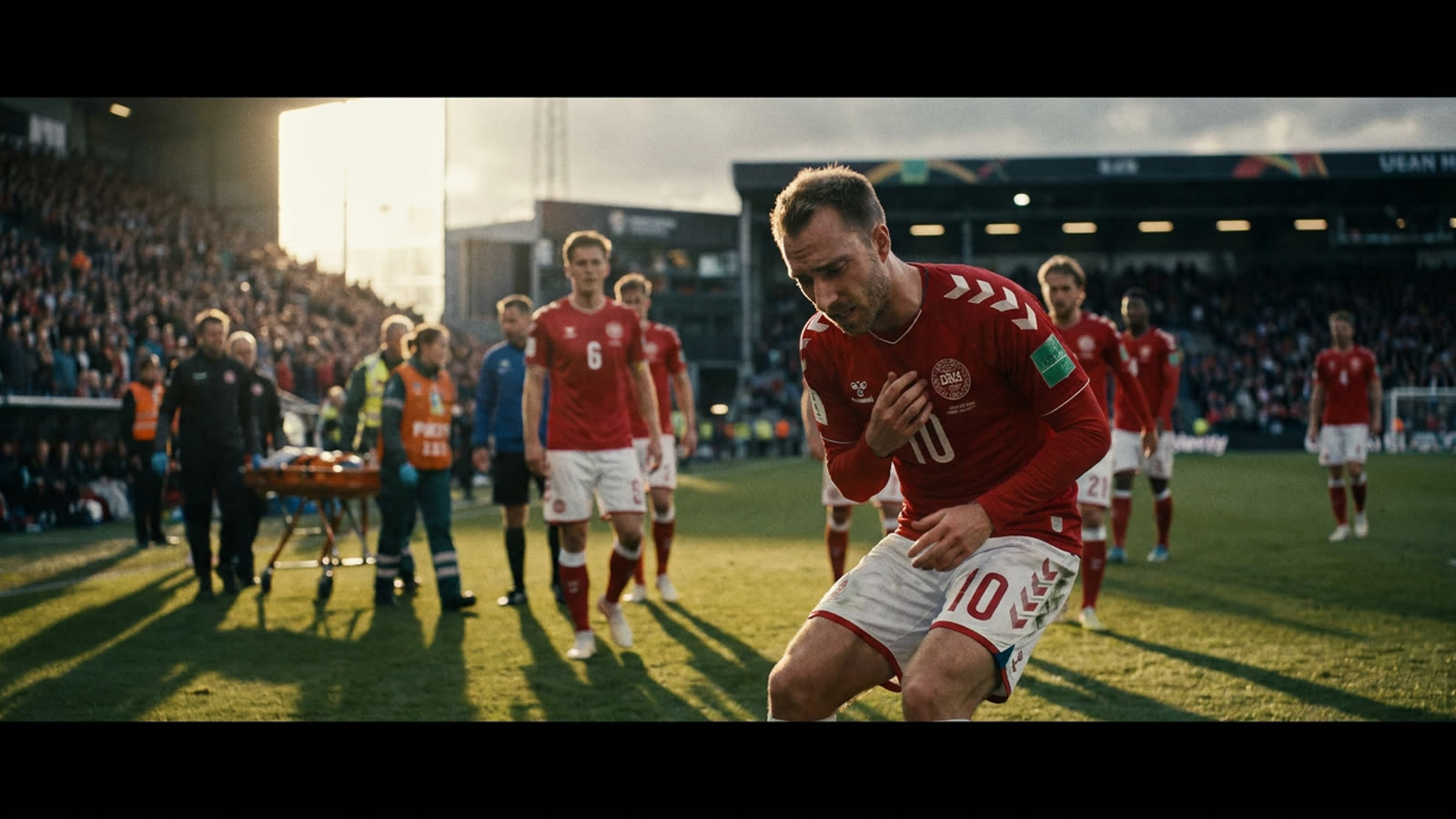
There are moments in sport that strip away every pretense of importance about the game itself, and football lived through another one on Sunday. Christian Eriksen, the Denmark midfielder whose cardiac arrest at Euro 2020 became one of the most harrowing scenes in the sport's modern history, collapsed on the pitch again during an international match.
The game, a Denmark friendly against Ukraine, was called off. According to the Denmark team doctor, Eriksen was conscious and doing well in the immediate aftermath. After what this player and this country have already been through, that is not a footnote. It is the headline.
The scene everyone recognized
For anyone who watched the 2021 European Championship, the images carried an unbearable echo. On June 12, 2021, during Denmark's opening Euro match against Finland in Copenhagen, Eriksen suffered a cardiac arrest on the field. He was revived by medical staff on the pitch in front of a stunned stadium and a watching world, his teammates forming a protective shield around him as he was treated. He survived, was later fitted with an implantable cardioverter-defibrillator, and—against the expectations of many—returned to professional football.
That return was supposed to be the end of the story, the redemptive coda. Eriksen went back to the top level of the game, played on at club and international level, and for nearly five years the football world allowed itself to believe the worst was behind him. Sunday's collapse reopened a wound the sport had let itself forget was still there.
Why this time is different, and why it isn't
The details that matter most are also the ones still emerging, and they should not be guessed at. What is known is narrow but vital: Eriksen went down, the match was stopped, and the Denmark camp's first communication described him as conscious and doing well. The circumstances of the collapse, its cause, and what it means for his career are questions that belong to his doctors, not to speculation.
What can be said is that football's relationship with sudden cardiac events on the pitch has been shaped, more than by any other case, by Eriksen himself. His 2021 survival became a reference point for the sport's emergency protocols—the speed of the medical response, the presence of defibrillators, the willingness to stop everything. If those lessons were applied again on Sunday, and the early reports suggest the match was halted without hesitation, then the system Eriksen's own ordeal helped build may have worked exactly as intended.
Our take
It feels almost indecent to analyze a moment like this while the man at the center of it is still being assessed. So we won't pretend to know more than we do. The only responsible thing to write tonight is the thing the Denmark doctor offered: Eriksen was conscious, and he was doing well.
Football will have time later for the harder questions about whether any athlete should carry this kind of risk back onto the field, and what duty the sport owes a player whose name has become synonymous with surviving the unthinkable. For now, the game that stopped for him in 2021 stopped for him again, and the whole sport is holding the same breath it held five years ago, waiting for the same word. So far, that word is good.