No team in NBA history has ever recovered from a 3-0 deficit in a playoff series. The Cleveland Cavaliers, after dropping Game 3 on their home floor Friday night, now face that statistical certainty with nothing but pride left to play for.
The Knicks' road victory—their tenth consecutive playoff win—was not a nail-biter. It was a professional dismantling. New York controlled pace, dominated the glass, and turned Cleveland's home crowd into spectators by the fourth quarter. The Cavaliers, who entered these playoffs as the East's second seed and a legitimate title threat, have been reduced to a team hoping merely to avoid the sweep.
The arithmetic of dominance
Ten straight playoff wins is not normal. The last team to string together such a run was the 2017 Warriors, and they had Kevin Durant, Stephen Curry, and the benefit of facing a weakened Eastern Conference. These Knicks have done it through defensive suffocation and an offense that has found its identity at precisely the right moment. Their point differential across the three games against Cleveland is +34—not the mark of close contests decided by late heroics, but of a team operating on a different plane.
Cleveland's issues are structural. Their perimeter defense, suspect all season, has been shredded repeatedly. Their half-court offense, reliant on isolation scoring, has stagnated against New York's switching scheme. And their bench, once a strength, has been outscored in every game of the series.
What went wrong for Cleveland
The Cavaliers built their roster for moments like this. They have the star power, the depth, the coaching pedigree. But postseason basketball exposes flaws that regular-season success can paper over. Cleveland's reliance on mid-range jumpers—effective against weaker defenses—has become a liability against a Knicks team that contests every shot and rarely fouls. Their transition game, a weapon in earlier rounds, has been neutralized by New York's disciplined half-court sets that limit fast-break opportunities.
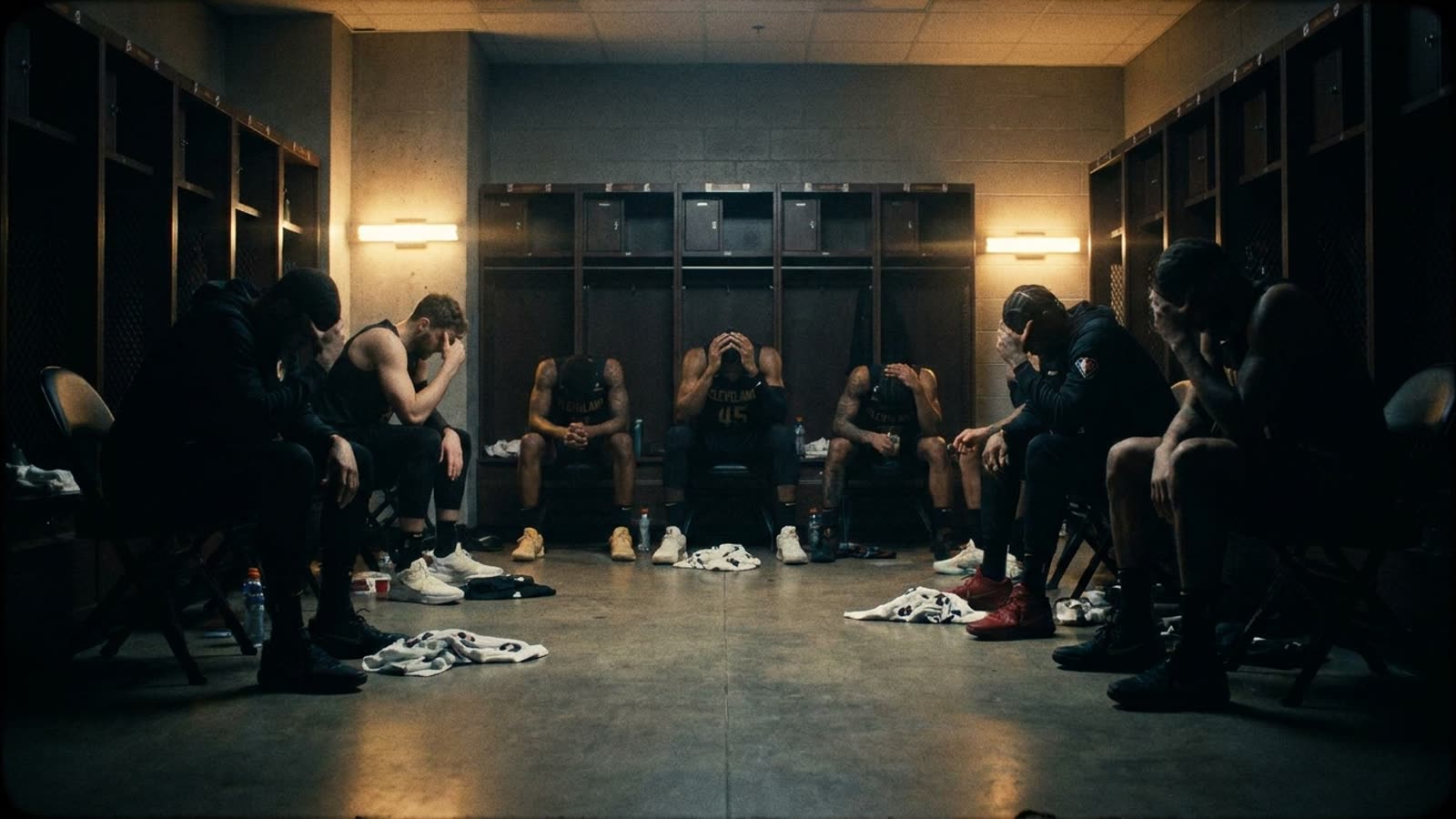
More damning is the body language. By the third quarter of Game 3, Cleveland's stars were exchanging frustrated glances, their communication breaking down in real time. Championship teams find answers in adversity. The Cavaliers have found only more questions.
Our take
The series is over in every way that matters. Cleveland will show up for Game 4 because the schedule demands it, and professional pride will ensure some resistance. But the Knicks are playing with the loose confidence of a team that knows it has already won. New York's return to the Finals—their first since 2026—feels less like an achievement and more like an inevitability. The only remaining drama is whether Cleveland can salvage a single win to avoid the ignominy of a sweep. Given what we have seen, even that feels generous.