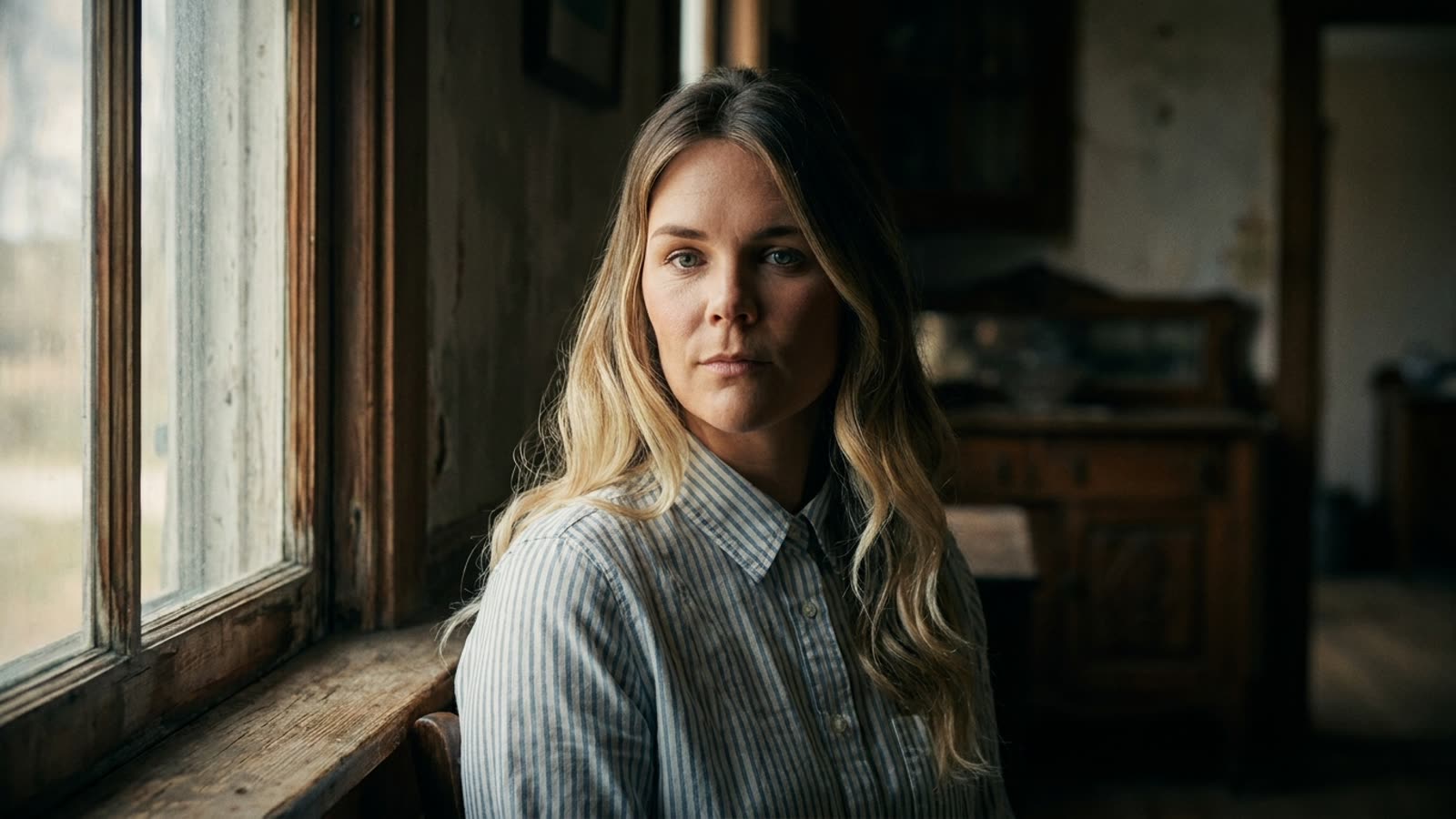
Caro Claire Burke did not set out to write a polemic. She set out to write a horror novel about a woman who bakes sourdough in linen aprons and ends up somewhere far darker than her farmhouse kitchen. That the result—Yesteryear, now eighteen weeks on the bestseller list—has been claimed by both tradwife critics and tradwife defenders as validation of their worldview suggests Burke threaded a needle so fine it became invisible.
The novel follows Natalie Heller Mills, a fictional influencer whose curated homesteading aesthetic masks something corrosive. Burke describes her protagonist as "acidic"—a word that applies equally to Natalie's passive-aggressive caption voice and to the narrative's slow dissolution of domestic fantasy. Readers who came for cozy cottagecore left disturbed. Readers who came to hate-read found themselves uncomfortably sympathetic.
The horror of performance
Burke's insight is that the tradwife phenomenon is not really about tradition at all. It is about content. Natalie's sourdough starter exists to be photographed; her children appear as props in a lifestyle that requires constant documentation to feel real. The horror emerges not from any supernatural element but from the gap between the image and the life behind it—a gap that widens until it swallows everything.
This is familiar territory for anyone who has watched the influencer economy mature. What Burke adds is the specifically gendered dimension: the tradwife sells not just a product but a self, and the self being sold is one of submission, abundance, and effortless domestic mastery. The contradiction—that performing effortlessness is exhausting, that submission requires an audience—is the engine of the novel's dread.
Hathaway and fidelity
The Anne Hathaway-backed film adaptation, now in development, will reportedly remain "faithful" to Burke's material. This is reassuring and slightly surprising, given Hollywood's tendency to sand down sharp edges. Hathaway's involvement suggests the adaptation will lean into the novel's satirical teeth rather than soften Natalie into a sympathetic victim.
Burke herself seems cautiously optimistic. In interviews, she has emphasized that Yesteryear is not an attack on women who choose domestic life but on the commodification of that choice—the way the algorithm rewards performance over substance, image over reality. Whether a two-hour film can capture that distinction remains to be seen.
Our take
The tradwife discourse has become tedious precisely because it collapses too many different things—genuine preference, economic necessity, aesthetic play, ideological commitment—into a single culture-war token. Burke's achievement is to refuse that collapse. Yesteryear is not interested in whether baking bread is good or bad; it is interested in what happens when baking bread becomes a brand, and when the brand consumes the baker. That this landed as horror rather than polemic is why the book works. The film will need to trust that same instinct.