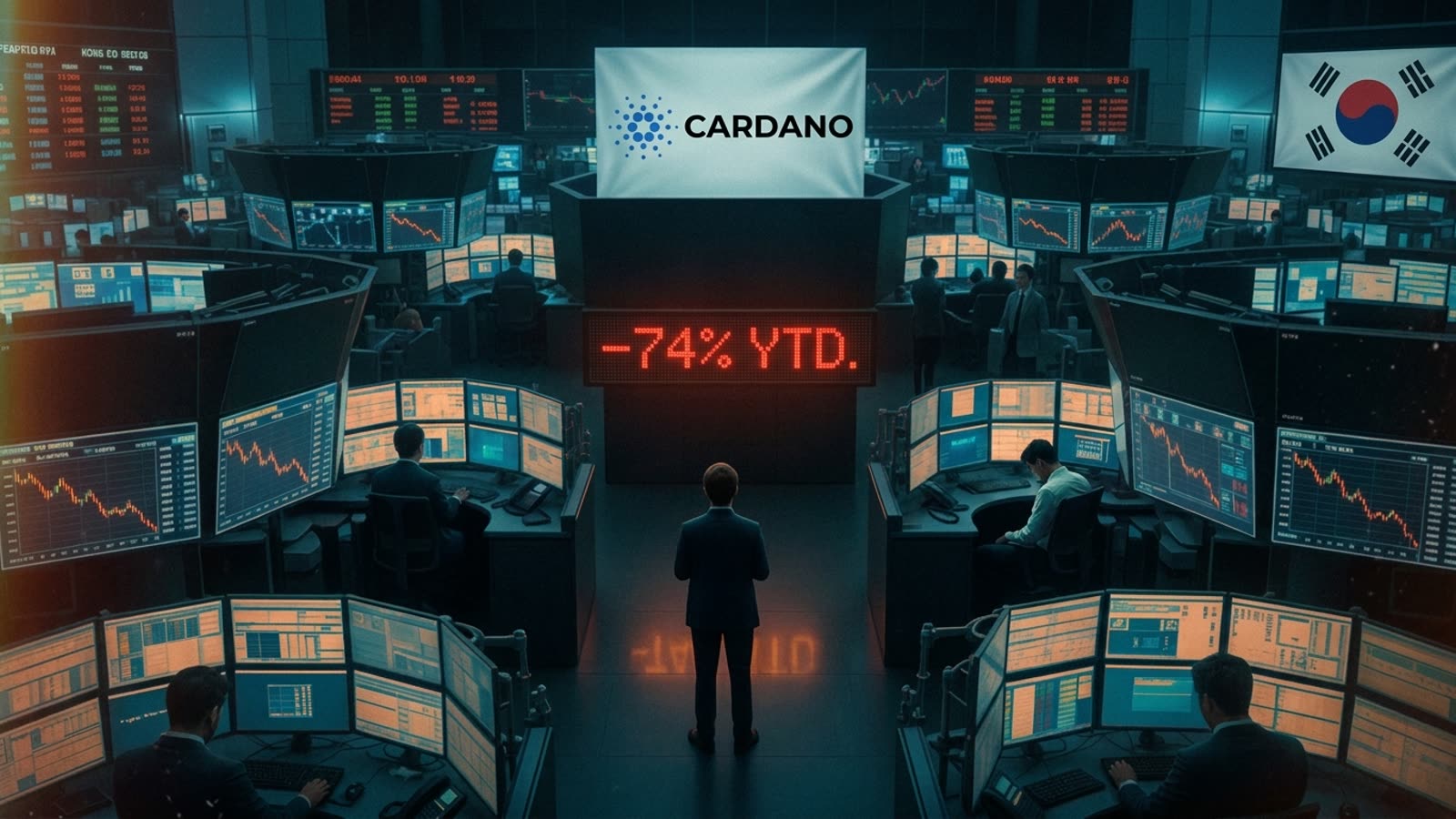
The cruelest fate in crypto isn't a spectacular collapse; it's irrelevance. Cardano, the blockchain that once promised to outthink Ethereum through peer-reviewed academic rigor, now trades at roughly $0.145—a 74% decline over the past year and a fraction of its 2021 highs. The market barely noticed its modest uptick this week.
This is how blockchain projects die: not through hacks or regulatory crackdowns, but through the slow erosion of attention. ADA holders who bought the "third-generation blockchain" thesis have watched their investment bleed out while Bitcoin ETFs captured institutional flows and Solana absorbed the retail speculation that once belonged to Cardano.
The academic promise that couldn't ship
Cardano's founding pitch was seductive: a blockchain built by academics, peer-reviewed like scientific papers, designed to avoid the technical debt that plagued earlier chains. Charles Hoskinson, a co-founder of Ethereum who left under disputed circumstances, positioned the project as the thinking person's crypto.
The problem was execution speed. By the time Cardano shipped smart contracts in 2021, Ethereum had a multi-year head start in developer tooling and DeFi liquidity. Solana had captured the speed-obsessed trading crowd. Cardano's methodical approach—admirable in theory—meant arriving to a party that had already moved elsewhere.
The metrics tell the story
Total value locked in Cardano's DeFi ecosystem remains modest compared to competitors. Developer activity, the leading indicator of blockchain health, has declined. The chain's governance system, while technically sophisticated, hasn't produced the kind of killer applications that drive adoption cycles.
Meanwhile, the broader market has moved on. Bitcoin dominance has climbed as institutional money flows through regulated ETF products. Ethereum maintains its smart-contract moat. The attention economy that sustains crypto valuations has found newer objects of fascination.
Our take
Cardano isn't going to zero—it has a committed community and technically sound infrastructure. But the project has become a cautionary tale about timing in technology markets. Being right eventually matters less than being useful now. The peer-reviewed approach that was supposed to be Cardano's competitive advantage became its constraint, and the market has rendered its verdict through the most honest mechanism available: price discovery over time.