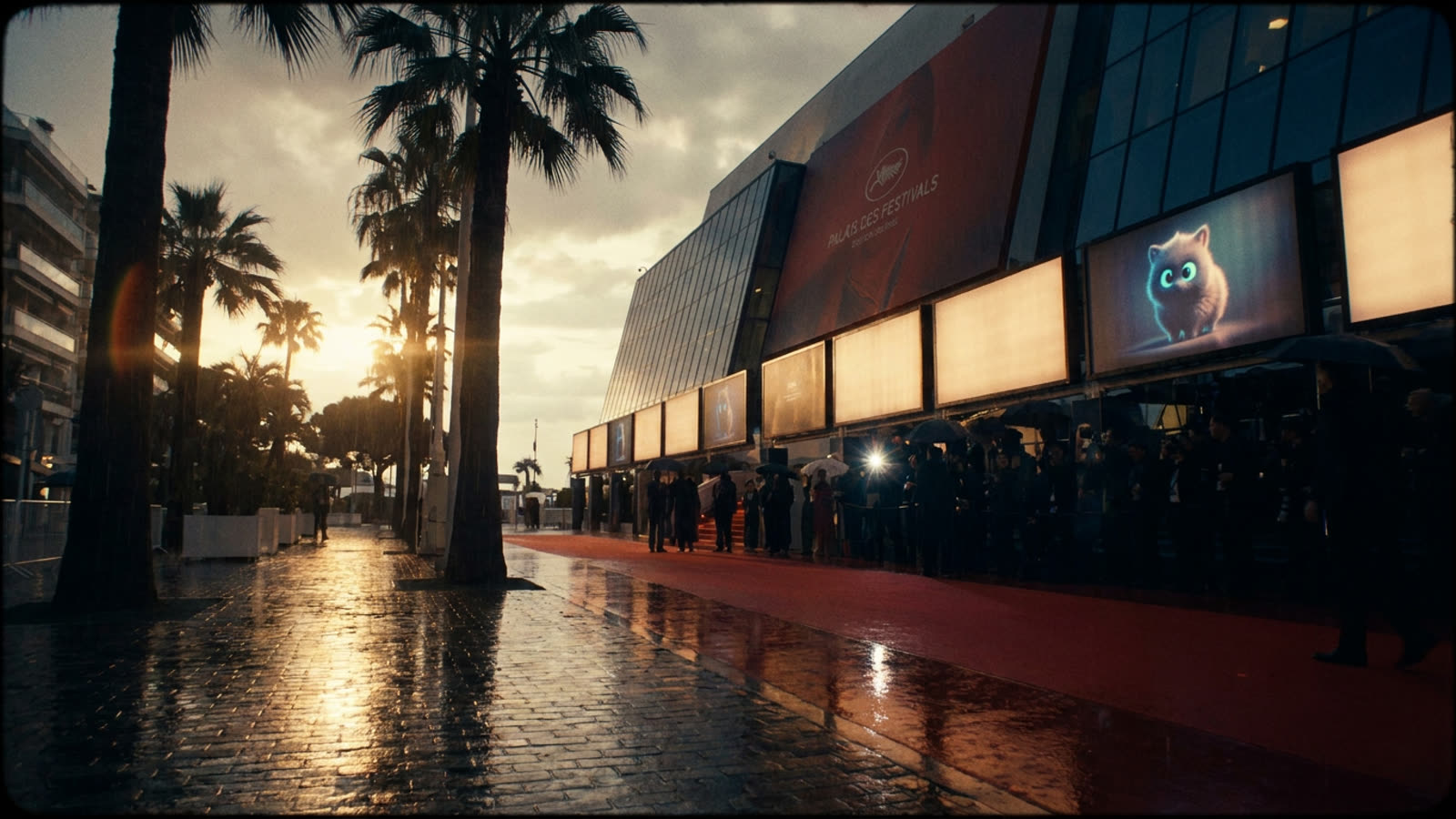
The Cannes Film Market has always been a place where the industry's future gets quietly negotiated between bottles of rosé and distribution contracts. This year, that future has fur.
"Critterz," an animated feature created using generative AI tools, received its first-look reveal at the market, accompanied by the announcement of a new production company formed specifically to scale AI-driven filmmaking. The venture pairs Vertigo Entertainment with Federation Studios, two established players betting that the technology has matured enough to anchor theatrical releases rather than merely populate tech conference keynotes.
The film itself comes from Chad Nelson of OpenAI, a pedigree that positions it as both a creative project and a proof-of-concept for the company's video generation capabilities. The imagery released shows anthropomorphic creatures rendered with the kind of soft, hyperdetailed textures that would have required a small army of animators and a Pixar-sized budget just five years ago. Whether audiences will embrace the aesthetic—or detect something uncanny lurking beneath the digital fluff—remains the central wager.
The business logic behind the bet
Animation has always been expensive, slow, and labor-intensive, which is precisely why it's the obvious beachhead for AI disruption. A traditional animated feature can take four to seven years and cost upward of $150 million. If generative tools can compress timelines and budgets by even a third, the economics of the mid-tier animated film suddenly become viable again. Vertigo and Federation are positioning themselves to own that emerging middle market before the major studios figure out their own AI strategies.
The timing is not coincidental. Cannes Market chief Guillaume Esmiol has made a deliberate push this year to integrate AI and the creator economy into the market's programming, signaling that the festival's commercial arm views these technologies as central to the industry's next decade rather than a sideshow curiosity.
The creative and labor questions remain unresolved
None of this comes without friction. The Hollywood labor disputes of 2023 centered heavily on AI guardrails, and the guilds secured contractual language meant to protect writers and performers from algorithmic replacement. Animation, however, exists in a grayer zone—much of the work is done by non-union artists, often overseas, and the legal frameworks around AI-generated imagery remain unsettled.
"Critterz" will inevitably become a test case for how audiences, critics, and industry insiders respond to a film that wears its AI origins openly. If it succeeds, expect a wave of imitators. If it flops, the technology won't disappear—it will simply retreat into the background, powering pre-visualization and effects work where its contributions are less visible and less controversial.
Our take
The reveal of "Critterz" at Cannes is less a creative milestone than a market signal: AI filmmaking has graduated from novelty to investable thesis. Whether the film itself is any good matters less, for now, than whether it proves the pipeline works. Hollywood has always been more comfortable adopting new tools than acknowledging their implications, and this moment is no different. The interesting question isn't whether AI will reshape animation—it will—but whether the industry can absorb that change without another round of labor warfare. The fluffy critters on screen are adorable. The negotiations happening off screen will be anything but.