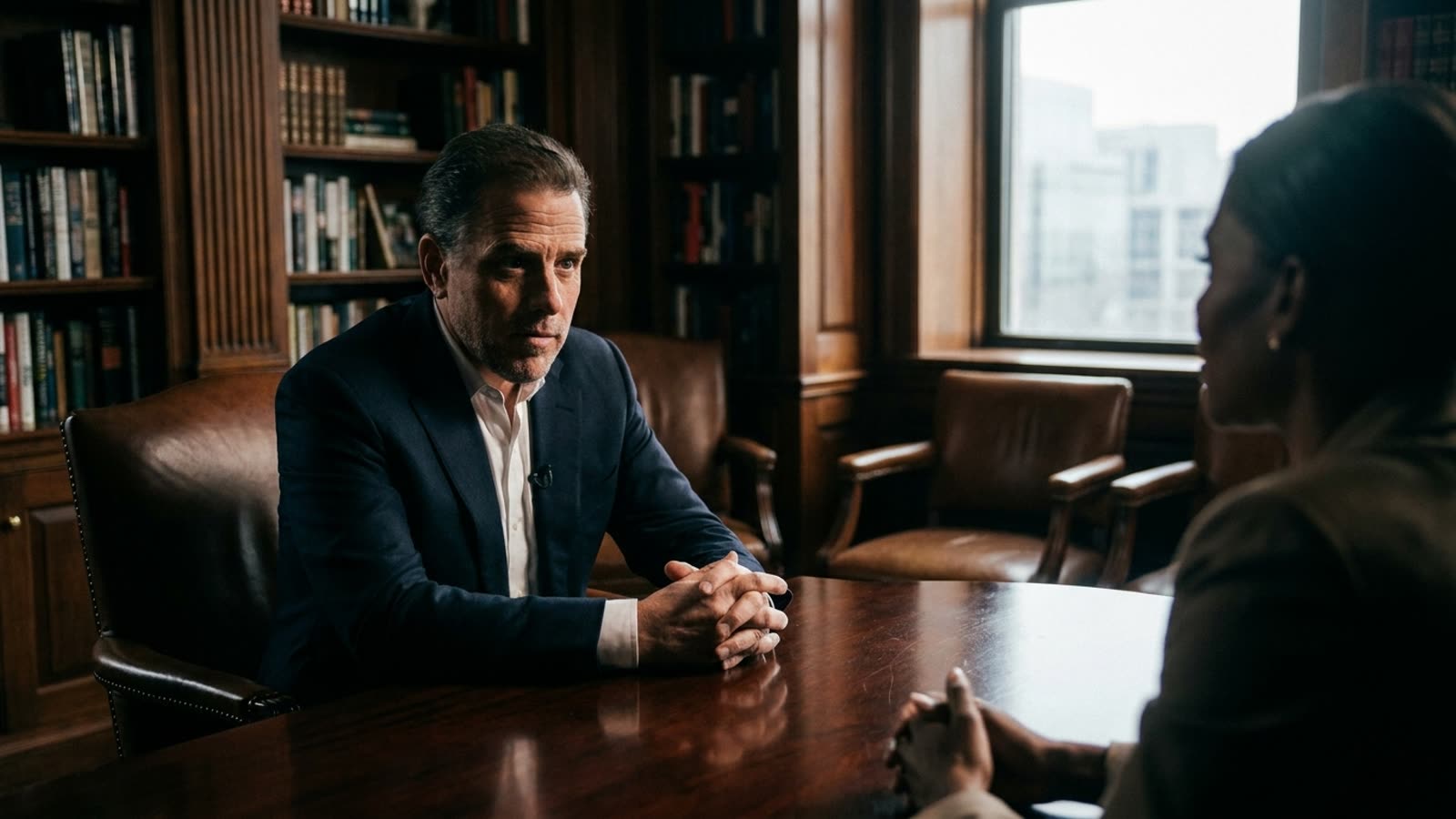
The interview itself was largely unremarkable—a meandering two-hour conversation heavy on grievance and light on revelation. But the fact that it happened at all tells us something important about where American politics stands in mid-2026: the old battle lines are dissolving into something stranger and less predictable.
Candace Owens, the conservative commentator who built her brand on attacking the Biden family during Joe Biden's presidency, sat down with Hunter Biden for what she promoted as an exclusive, unfiltered conversation. The optics alone would have been unthinkable two years ago. That they now seem almost logical is the real story.
The enemy-of-my-enemy calculus
Owens has spent recent months positioning herself as a critic of what she calls the Republican establishment's capitulation to conventional politics. Her willingness to platform Hunter Biden—a figure she once described as emblematic of Democratic corruption—reflects her ongoing feud with mainstream conservative media and her calculation that contrarianism generates more engagement than orthodoxy.
For Hunter Biden, the calculus is simpler. His legal troubles have largely concluded, his father is out of office, and he appears eager to rehabilitate his image through any available channel. An interviewer predisposed to frame him as a victim of prosecutorial overreach serves that purpose, regardless of her ideological history.
Five moments that captured the strangeness
The conversation touched on Hunter's addiction struggles, his relationship with his father, the laptop controversy, and his prosecution. Owens, notably, treated the federal cases against him as examples of the same weaponized justice system she claims targeted Donald Trump—a framing Hunter embraced without apparent irony.
He discussed feeling abandoned by Democratic allies who distanced themselves during his legal battles. He criticized media coverage of his business dealings. He expressed no regret about the paintings he sold to anonymous buyers during his father's presidency. Throughout, Owens nodded sympathetically, having apparently decided that their shared sense of persecution outweighed their nominal political differences.
The audience splits
Reaction divided predictably along tribal lines, though not in the expected directions. Some conservatives praised Owens for exposing what they characterized as Hunter's admissions of wrongdoing. Others accused her of legitimizing a figure they spent years vilifying. Liberal commentators largely ignored the interview, perhaps calculating that engagement would only amplify it.
The interview garnered substantial viewership on Owens' independent platform, suggesting an appetite for content that defies easy categorization—or at least for spectacle dressed up as political boundary-crossing.
Our take
This interview will change nothing about Hunter Biden's reputation or Candace Owens' trajectory. What it illustrates is more interesting: American political entertainment has become so thoroughly post-ideological that a conservative influencer and a Democratic president's son can bond over their mutual conviction that they've been treated unfairly. The content matters less than the performance of transgression. In 2026, the most reliable way to generate attention is to confuse your audience about what you actually believe—and both participants executed that strategy flawlessly.