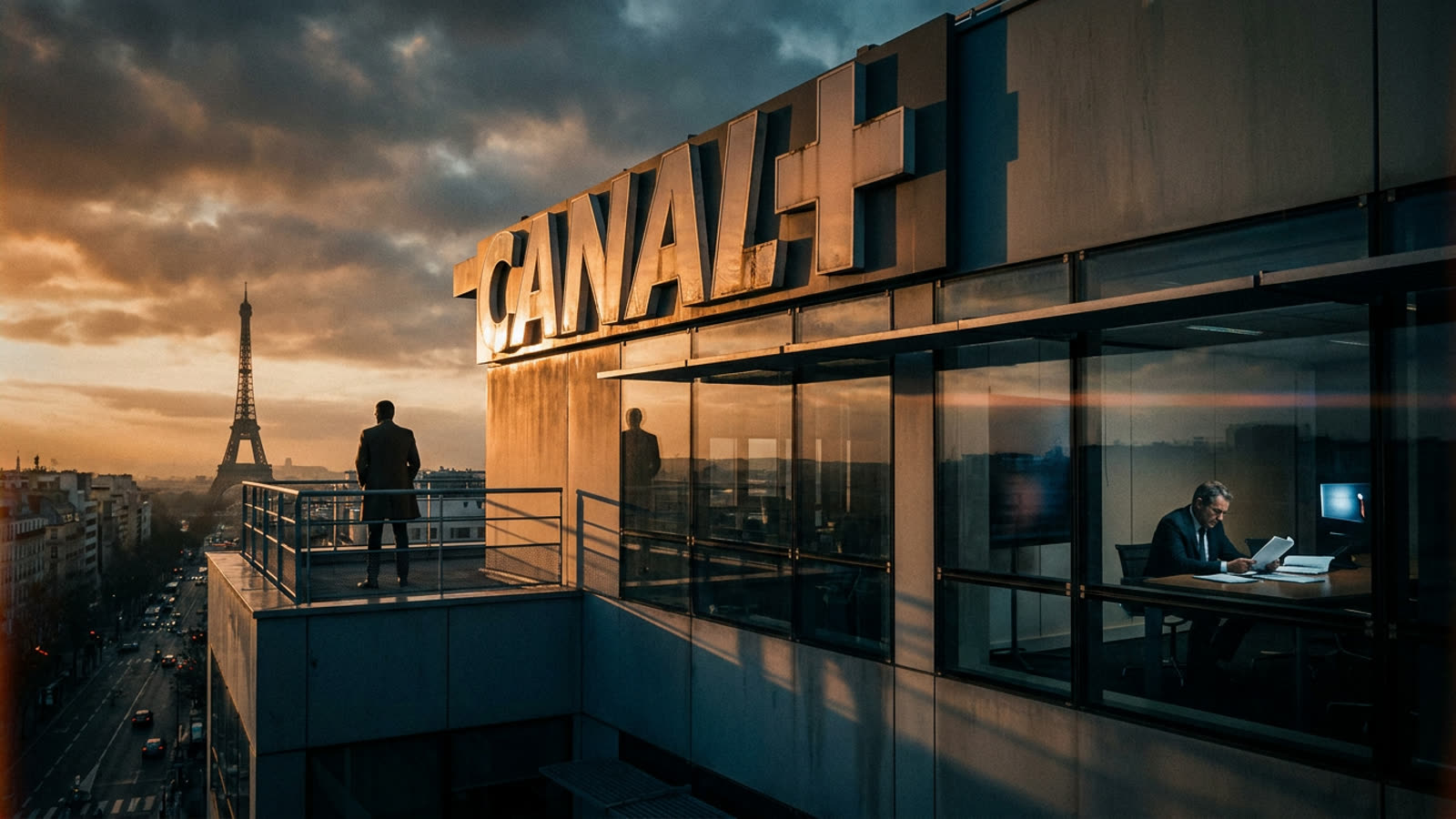
A media executive publicly promising to never work again with a nation's most celebrated actors is not normal. Yet that is precisely what Maxime Saada, chief executive of Canal+, declared this weekend: talents who signed an open letter opposing the network's right-wing billionaire owner, Vincent Bolloré, will find themselves persona non grata at the channel that has bankrolled French cinema for four decades.
Among the blacklisted: Juliette Binoche, the Oscar winner and face of French film abroad; Adèle Haenel, whose 2020 walkout at the Césars galvanized the country's #MeToo reckoning; and dozens of other actors, directors, and crew members who dared to question Bolloré's ideological influence over Canal+ and its parent company, Vivendi. The signatories had accused Bolloré of steering the network toward a harder-right editorial line, echoing concerns about his CNews channel, which critics have dubbed "France's Fox News."
The economics of cultural leverage
Canal+ is not merely another television channel. Through mandatory investment quotas and pre-buy agreements, it remains the single largest private funder of French film production—a lifeline for an industry that prides itself on independence from Hollywood economics. When Saada says he will no longer collaborate with certain artists, he is not simply exercising a programming preference; he is threatening to sever access to a financial artery. For mid-budget French films, losing Canal+ often means losing viability.
The move also tests the limits of France's cherished "exception culturelle," the policy framework that treats cinema as a public good deserving state protection. If the country's dominant private patron can now impose ideological litmus tests, the exception begins to look less like a shield and more like a subsidy for whoever controls the checkbook.
A chilling effect in plain sight
Saada's announcement was not leaked; it was broadcast. The transparency is itself a message: dissent will be noted, recorded, and punished. For younger actors and directors who lack Binoche's global profile or independent wealth, the calculus shifts immediately. Speaking out against Bolloré now carries a quantifiable career risk. The blacklist need not be enforced uniformly to be effective; its mere existence disciplines the industry.
French film has long styled itself as a bastion of auteur freedom, a counterweight to both American commercialism and state censorship. That self-image is harder to maintain when the country's most powerful media conglomerate treats political speech as a firing offense.
Our take
Bolloré's consolidation of French media has been an open secret for years, but Saada's declaration strips away the plausible deniability. This is no longer about editorial slant or programming choices; it is about punishing artists for civic participation. France's film establishment now faces a clarifying question: will it rally around the blacklisted, or will it quietly accommodate the new rules? The answer will reveal whether the exception culturelle protects culture—or merely the powerful.