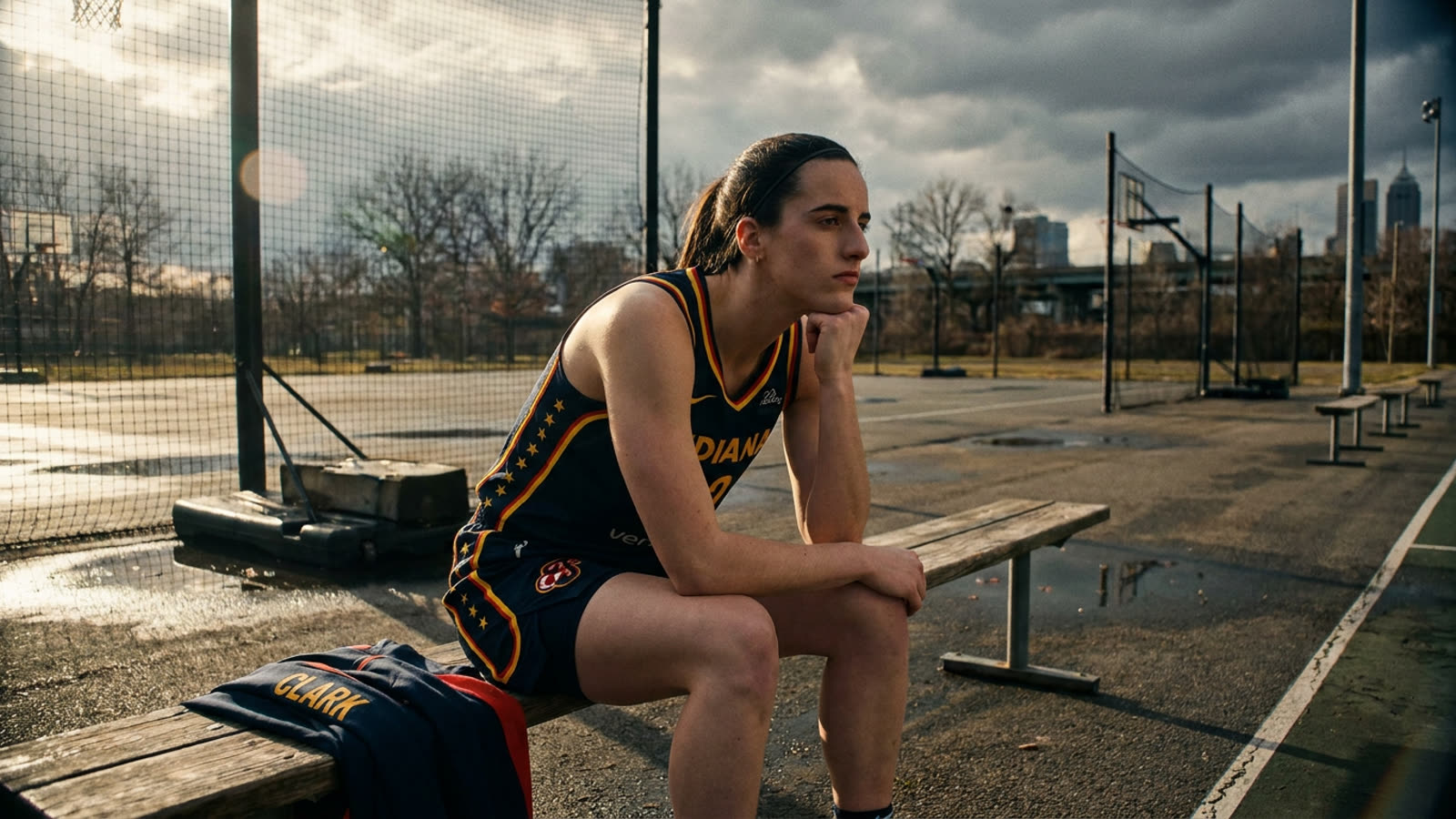
Athletes talk about comebacks in the language of strength: grinding, fighting, pushing through. Caitlin Clark, discussing her recovery from the injuries that truncated her 2025 season, chose a different register entirely. The mental challenge, she said, is the real obstacle—a confession that sounds unremarkable until you remember who's saying it.
Clark arrived in the WNBA as a phenomenon engineered for highlight reels and social-media virality, the kind of player whose confidence borders on performance art. That she would publicly acknowledge vulnerability—not the sanitized "adversity" of press-conference clichés, but genuine psychological difficulty—marks a shift worth noting.
The context of the confession
The 2025 injuries came at the worst possible moment. After a rookie season that reset attendance records and television ratings, Clark was positioned to consolidate her status as the league's commercial and competitive fulcrum. Instead, she watched from the sideline as the Fever stumbled and the discourse moved on to other storylines. For someone whose identity is so tightly wound around being the center of attention, the silence must have been deafening.
What makes her comments notable is their specificity. She's not talking about the rehab grind or the pain of physical therapy. She's talking about the space between sessions, the hours when an athlete has nothing to do but think about what they're missing and whether they'll return the same.
Why candor matters now
The WNBA has spent years cultivating a reputation as the more emotionally intelligent league, a place where players discuss mental health without stigma. Clark's willingness to engage that conversation authentically—rather than through the filtered language of brand management—reinforces that culture while also serving her own interests. Fans who watched her dominate Iowa with an almost manic intensity now get to see a more complete person, one capable of doubt.
There's a commercial calculation here, too. Clark's value to sponsors depends on relatability as much as dominance. The player who admits to struggling is, paradoxically, more marketable than the one who pretends to be invincible.
Our take
Caitlin Clark spent her college career proving she could handle the brightest lights. Her second act may be defined by something harder: proving she can handle the dark. The injuries of 2025 were a setback; her willingness to discuss their psychological aftermath suggests she's emerging from them with something more valuable than a healthy body—a genuine understanding of her own limits, and the confidence to talk about them publicly.