The architectural movement that gave us hulking civic centers and university libraries—buildings that polarize opinion like few others—has migrated indoors. Brutalism, that mid-century love affair with exposed concrete, geometric mass, and unadorned structure, is now being translated into coffee tables, pendant lights, and textured plaster walls by a generation of designers and homeowners who find comfort in severity.
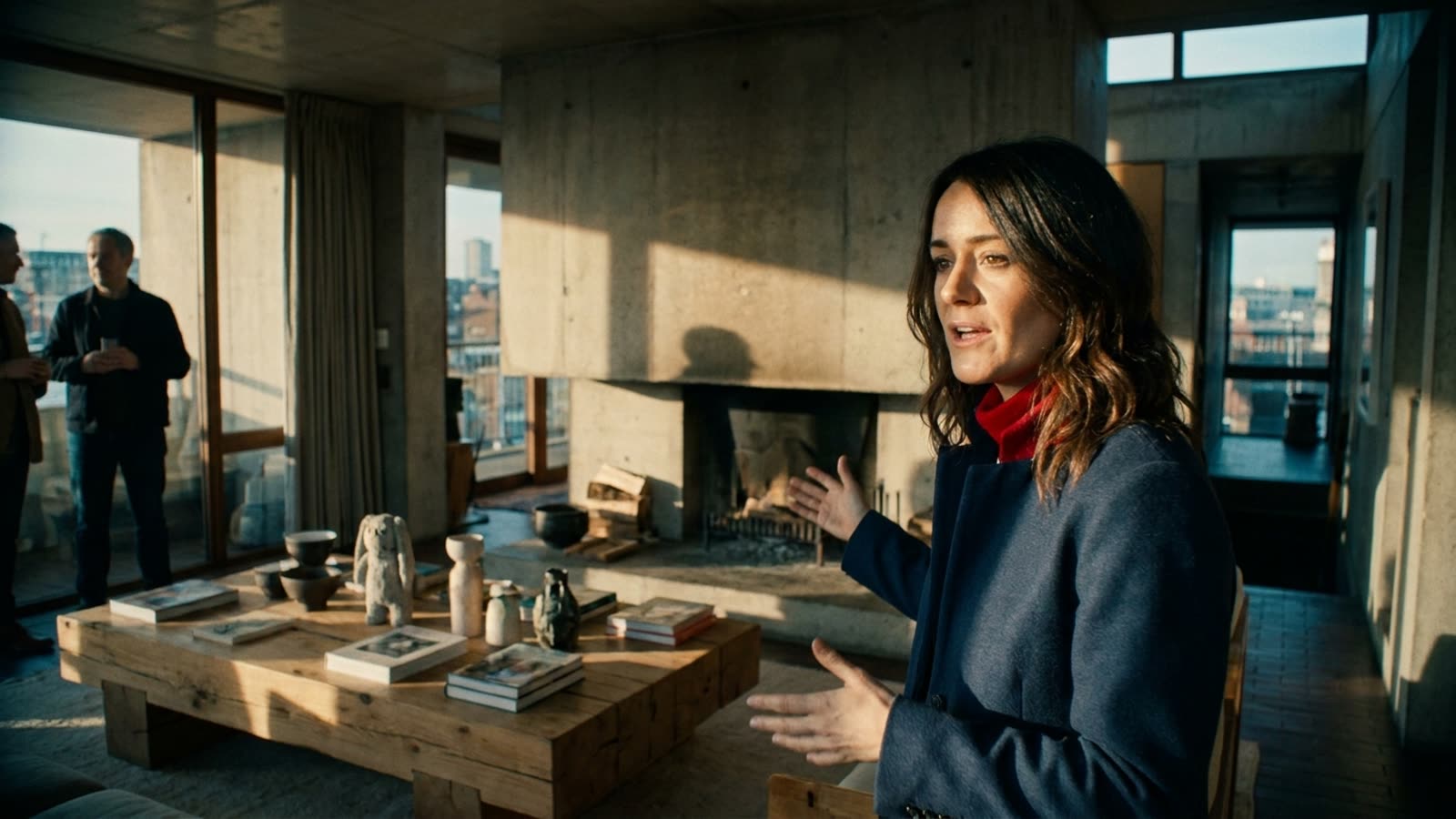
Alex Eagle, the London-based creative director whose eponymous store has become a pilgrimage site for design-conscious shoppers, has emerged as one of the style's most articulate evangelists. Her argument is simple: brutalism's honesty about materials—concrete that looks like concrete, steel that announces itself as steel—offers relief from an interiors market saturated with performance and pretense.
The appeal of the unfinished
Brutalism's domestic translation is not about recreating the Barbican in your two-bedroom flat. It is about borrowing the movement's core principles: truth to materials, sculptural form, and a rejection of decorative excess. In practice, this means chunky travertine side tables, lighting fixtures that expose their bulbs and wiring, and walls finished in raw plaster rather than paint.
The aesthetic resonates particularly with a cohort that came of age during the Instagram era's maximalist moment and now craves something that feels less curated, more permanent. Where millennial pink and brass accents suggested a kind of performative femininity, brutalist interiors suggest intellectual seriousness—or at least the aspiration toward it.
Why now?
The timing is not accidental. After years of supply-chain disruptions, material shortages, and inflation in construction costs, there is something appealing about a style that celebrates rather than conceals the bones of a space. Exposed ductwork and concrete floors, once the province of loft conversions born of necessity, now read as intentional design choices.
There is also a generational shift in how we relate to permanence. The brutalist buildings of the postwar era were monuments to civic optimism, designed to last centuries. In an age of disposable furniture and fast interiors, choosing materials that age visibly—that develop patina rather than wear—feels like a small act of resistance against planned obsolescence.
The commercial ecosystem
Predictably, the market has responded. Furniture brands from Frama to Menu have built collections around raw materials and geometric severity. Vintage dealers report surging demand for mid-century concrete pieces that once languished in warehouses. Even mass-market retailers have introduced "brutalist-inspired" ranges, though these often miss the point—brutalism's power lies in its refusal to be softened or made palatable.
Eagle's approach is more purist. Her recommendations emphasize sourcing actual vintage pieces where possible and commissioning bespoke work from craftspeople who understand the movement's principles. The goal is not to replicate brutalism but to channel its ethos: build things that will outlast you, from materials that do not pretend to be something else.
Our take
There is something faintly comic about brutalism—architecture's great experiment in democratic monumentalism—becoming a signifier of refined taste in private homes. The style was meant to democratize grandeur, to give housing estates the same dignity as opera houses. Its current incarnation is more about individual distinction than collective aspiration. Still, if the choice is between honest concrete and another round of greige, we will take the concrete.