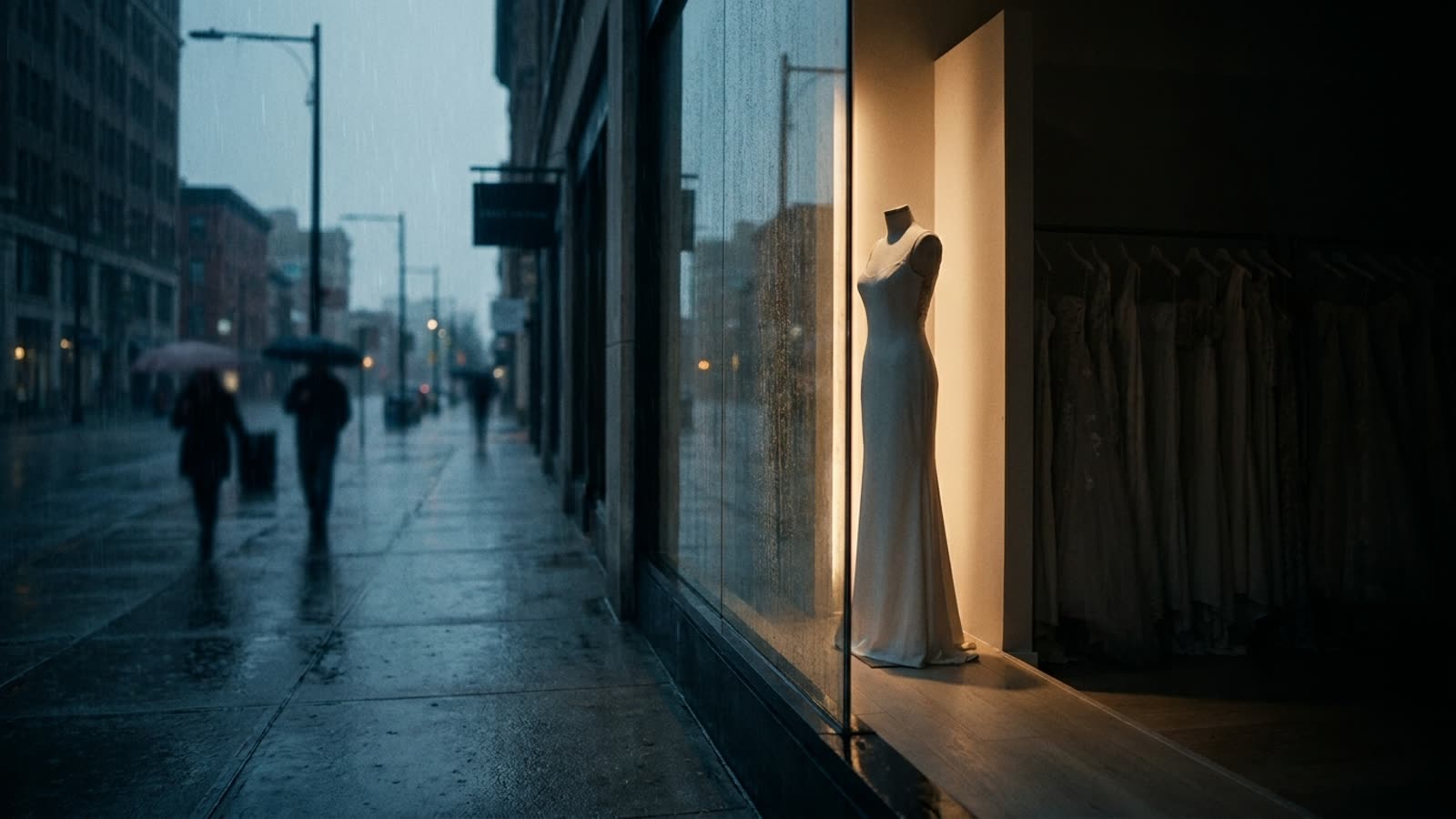
The wedding-industrial complex sells dreams, but it stocks nightmares for anyone above a size 12. Despite the average American woman wearing between a size 16 and 18, the vast majority of bridal salons carry sample gowns only up to size 10 or 12—forcing plus-size brides to imagine their wedding dress rather than try it on. This isn't a supply-chain hiccup or a niche complaint; it's a structural rejection of the majority of the market by an industry that claims to celebrate love in all its forms.
The clip-and-pray appointment
Walk into most bridal boutiques as a size-16 bride and you'll encounter what insiders call the "clip appointment": a consultant pinches fabric at your back with binder clips, asking you to envision how the dress might look if it actually fit. The emotional labor is entirely on the customer. Brides report leaving appointments in tears, not from joy but from humiliation. Designers argue that producing samples in extended sizes is cost-prohibitive, yet the plus-size apparel market was valued at over $32 billion in the U.S. alone last year. The math doesn't support the excuse; the bias does.
Why the runway won't budge
Bridal fashion remains one of the last holdouts against the size-inclusivity push that has reshaped ready-to-wear over the past decade. Part of the resistance is aesthetic gatekeeping: designers speak of "the silhouette" as though fabric draped on a size-2 mannequin is the only valid expression of their vision. Part is logistical inertia—trunk shows, editorial shoots, and influencer marketing all orbit around a narrow sample set. But the deeper issue is that bridal retail still operates on aspiration rather than accommodation. The industry tells brides to lose weight for their wedding rather than asking itself to gain perspective.
A slow turn, but not fast enough
Some brands have begun to shift. A handful of designers now produce runway samples up to size 24; a few direct-to-consumer startups have built their entire model around inclusive sizing and virtual try-ons. Yet these remain exceptions. Major bridal chains still relegate extended sizes to a separate catalog, a digital annex that signals "other." The message is clear: you can buy the dress, but you can't belong to the fantasy.
Our take
An industry that profits from one of life's most emotionally charged purchases has no excuse for making half its potential customers feel like afterthoughts. Size inclusivity isn't charity; it's commercial common sense dressed up as decency. The bridal market will eventually follow the money—it always does. The question is how many brides will have to cry in fitting rooms before designers decide their silhouettes can stretch.