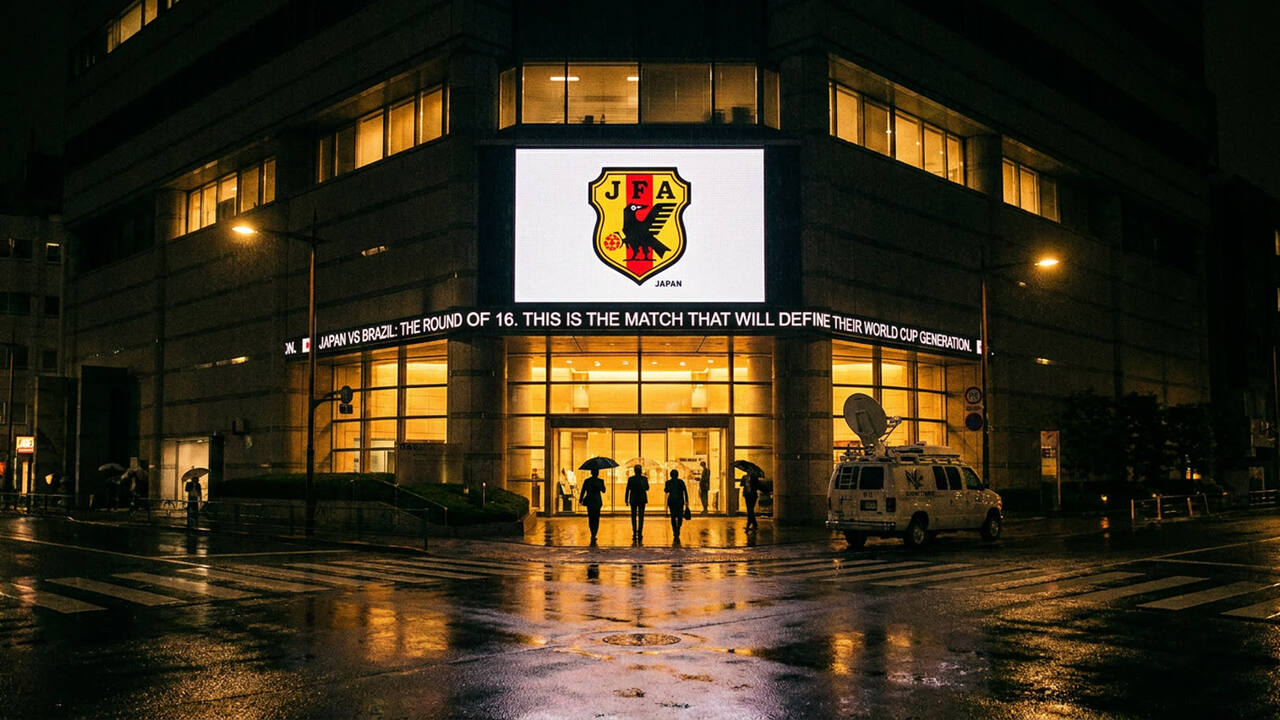
Japan finished their group stage with maximum points and minimal drama, dispatching opponents with the clinical efficiency of a team that believes its moment has arrived. Now comes Brazil, and with them, the question Japanese football has been building toward for two decades: can they beat the best when it matters most?
The Samurai Blue have never defeated Brazil in a competitive match. They have never reached a World Cup semifinal. They have, however, produced a generation of players scattered across Europe's elite leagues—Takefusa Kubo at Real Madrid, Kaoru Mitoma at Brighton, Daichi Kamada now anchoring midfield for Bayern Munich—who possess the technical quality to compete with anyone on the planet. The gap between Japanese potential and Japanese achievement at major tournaments has become the sport's most tantalizing unfulfilled promise.
Why this Brazil side is vulnerable
Brazil arrived in the United States as favorites but have looked mortal. Their group stage featured labored victories and a defensive fragility that top opponents will exploit. The Seleção's reliance on individual brilliance from Vinícius Júnior and Rodrygo has papered over systemic issues in midfield transition. Japan's pressing game, which suffocated opponents in the group stage, is precisely the tactical approach that has troubled Brazil in recent years.
The matchup also favors Japan's counterattacking speed. Brazil's high defensive line, a necessity given their possession-dominant style, creates space behind that Mitoma and Kubo have spent their club careers exploiting. If Japan can absorb early pressure and remain organized through the first half-hour, they will get chances.
The weight of history
Japanese football has been here before—on the precipice of a breakthrough that never quite materializes. The 2002 co-hosted World Cup ended in the Round of 16 against Turkey. The 2018 side led Belgium 2-0 before collapsing in the final minutes. The 2022 team beat Germany and Spain in the group stage, then lost on penalties to Croatia. Each tournament has added another chapter to a narrative of near-misses that has begun to feel like destiny rather than coincidence.
This generation of Japanese players has explicitly rejected that fatalism. Manager Hajime Moriyasu has built a squad that combines the technical precision Japanese football has always valued with a physical intensity it previously lacked. The question is whether tournament football rewards process or punishes history.
Our take
Japan will likely lose. Brazil, for all their imperfections, remain Brazil—a team that has forgotten more about winning knockout matches than Japan has ever learned. But this is the first time a Japanese side has entered a World Cup elimination game against a traditional power with a legitimate tactical path to victory. If they execute their pressing triggers, if Mitoma finds space on the left flank, if their European-based players perform to their club standards rather than shrinking under the weight of representing a nation's footballing ambitions—they can win. Whether they will is another matter entirely. Tournament football is cruel to teams still learning how to believe they belong.