The fact that Bitcoin is trending in June 2026 tells you everything you need to know about where crypto stands today. Not a new layer-one promising to solve the blockchain trilemma. Not a meme coin pumped by influencers. Not a DeFi protocol offering implausible yields. Just Bitcoin — the asset that Satoshi Nakamoto launched more than seventeen years ago, doing what it has always done: existing, settling transactions, and absorbing capital from people who have decided they would rather own it than not.
This is not a story about price action, though Bitcoin remains comfortably above the levels that once seemed like fantasy. It is a story about attention, and what the distribution of that attention reveals about the maturation of an asset class.
The flight to familiarity
Crypto's attention economy has always been a leading indicator. When retail searches spike for obscure altcoins, speculation is running hot. When they spike for Bitcoin, something more fundamental is happening: capital and curiosity are consolidating around the asset with the longest track record, the deepest liquidity, and the clearest regulatory status.
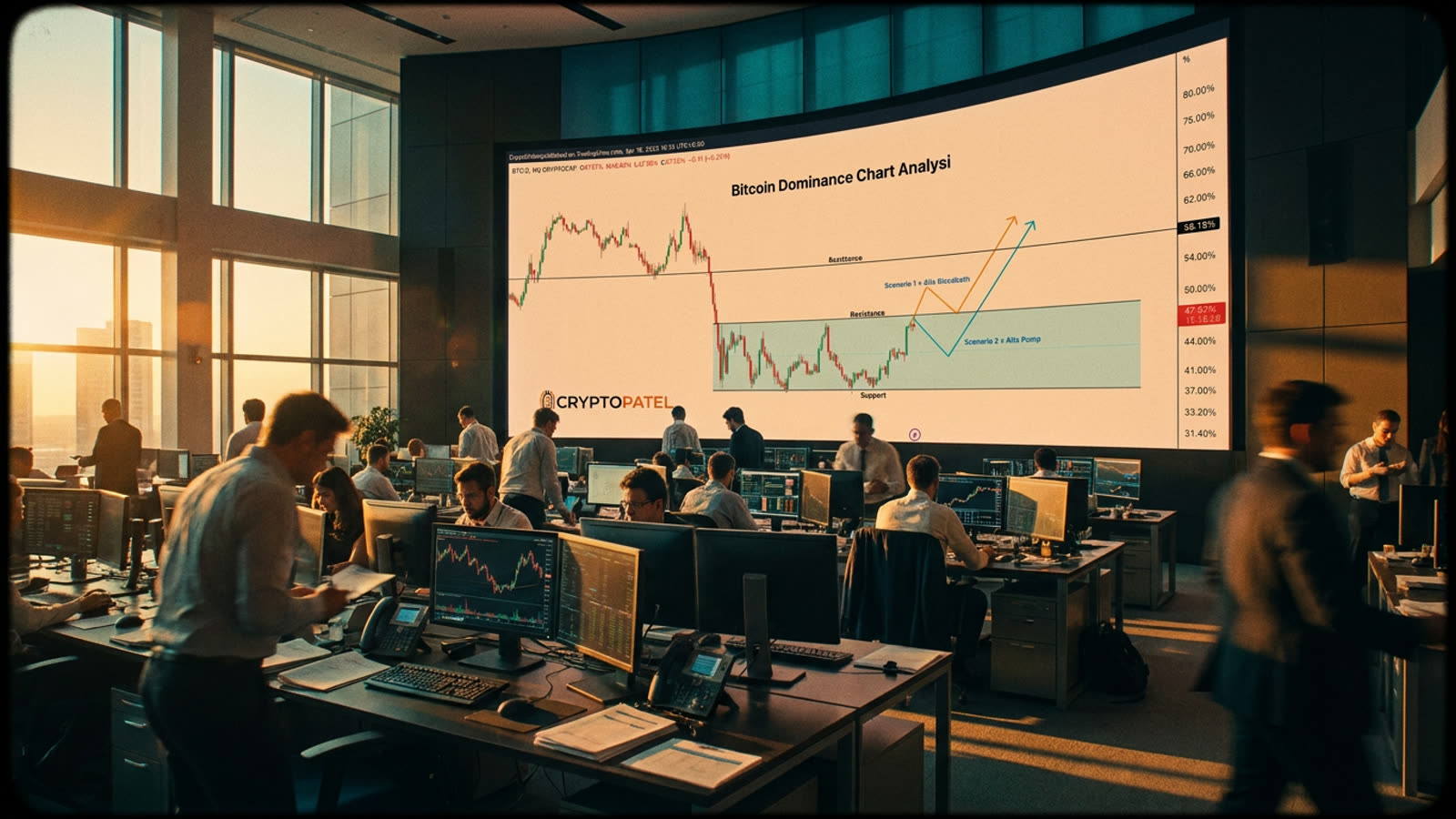
The pattern has repeated across every major cycle. In the frothy phases, Bitcoin dominance falls as traders chase higher-beta plays. In the consolidation phases, it rises as survivors retreat to the only digital asset that has never suffered an existential crisis of confidence. The trending data suggests we are firmly in the latter mode.
What the altcoin malaise means
Look at the rest of the market and the Bitcoin signal becomes clearer. Several major layer-one tokens have shed three-quarters of their value over the past year. The promises of faster transactions and cheaper fees have not translated into durable demand. Meanwhile, Bitcoin's value proposition — digital scarcity, censorship resistance, a monetary policy that cannot be changed by a foundation or a charismatic founder — looks increasingly differentiated rather than merely primitive.
This is not to say altcoins are finished. Innovation continues at the edges. But the market is telling us that in a world of macro uncertainty and regulatory scrutiny, the premium on credibility has never been higher. Bitcoin has it. Most of its competitors are still trying to earn it.
Our take
The most boring outcome is often the most likely one. Bitcoin trending in 2026 is not a sign that crypto is dying — it is a sign that crypto is growing up. The asset that critics dismissed as too slow, too simple, and too old has outlasted hundreds of supposed killers. When attention returns to Bitcoin, it usually means the market has remembered what matters: not novelty, but durability. That lesson tends to be expensive to learn and easy to forget.