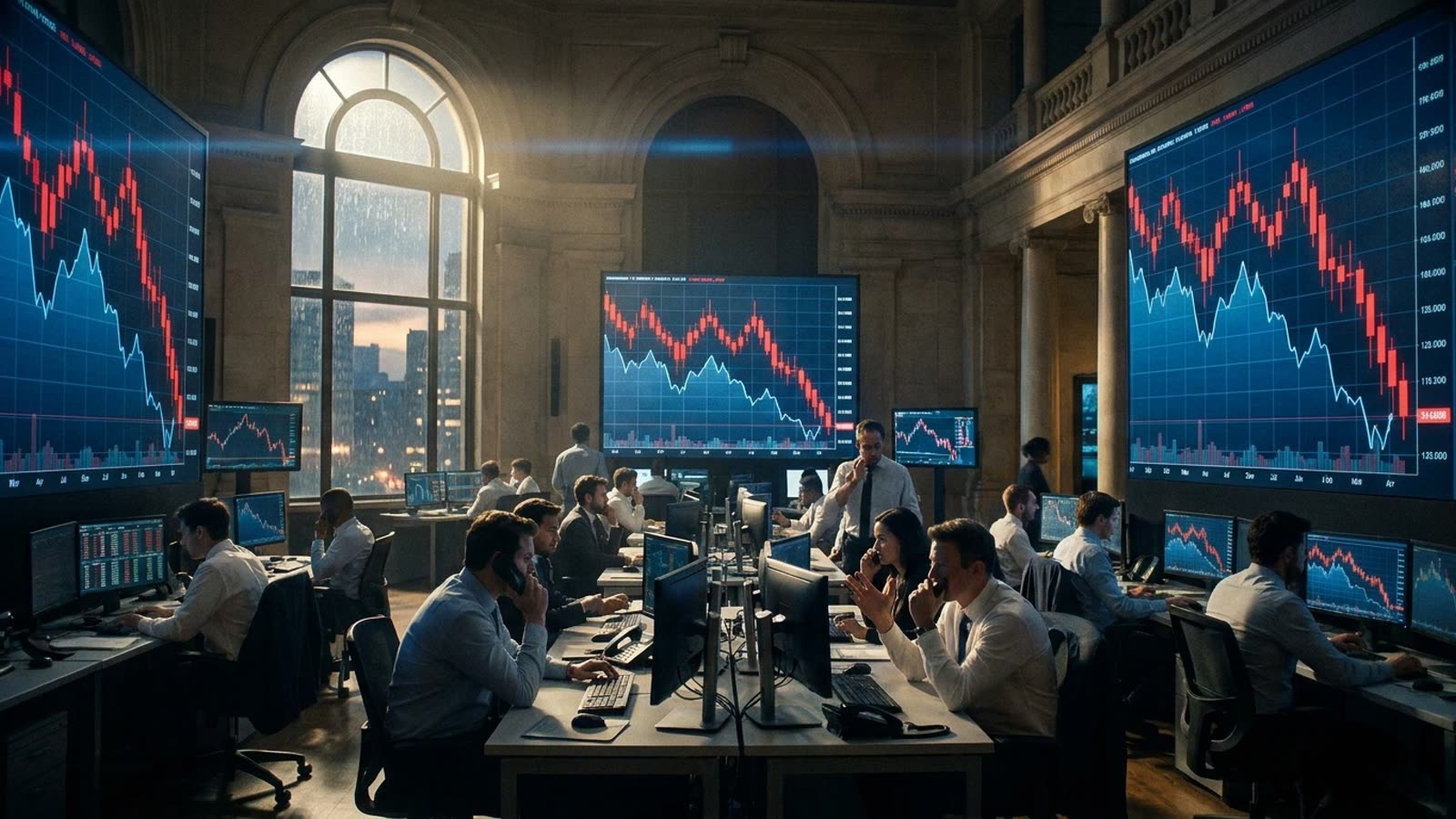
The cryptocurrency market's mood has curdled, and for once the catalyst wasn't a hack, a rug pull, or an SEC subpoena. It was Jerome Powell doing exactly what he said he would do.
Bitcoin and Ethereum traders have grown measurably more pessimistic following the Federal Reserve's latest policy meeting, where officials reiterated their commitment to keeping interest rates elevated until inflation convincingly retreats toward the two-percent target. Funding rates on perpetual futures have turned negative for the first time in weeks, a reliable indicator that leveraged speculators are betting on lower prices. Options markets tell a similar story: put-call ratios have spiked, and implied volatility skews now favor downside protection.
The shift in sentiment is real. What's puzzling is why it took so long.
The bond market's head start
Fixed-income investors have been telegraphing this message since early spring. The yield on the ten-year Treasury note has climbed steadily, reflecting expectations that the Fed will hold rates above five percent well into next year. The two-year yield, more sensitive to near-term policy expectations, has been even more stubborn. Real yields—nominal rates minus inflation expectations—have risen to levels not seen since before the 2008 financial crisis.
Crypto, by contrast, spent much of the past quarter in a state of willful optimism. Bitcoin flirted with new highs, meme coins staged improbable rallies, and venture capital continued to flow into decentralized-everything projects. The narrative was that digital assets had decoupled from traditional risk appetite, that institutional adoption had created a permanent bid, that the halving cycle would override any macro headwinds.
That narrative has now collided with the reality that money still has a price, and that price is set in Washington.
Why crypto lags the signal
The delay is partly structural. Cryptocurrency markets trade around the clock, dominated by retail participants in Asia and algorithmic strategies that respond to momentum rather than macro data. The bond market, by contrast, is the domain of pension funds, insurers, and central banks—institutions that parse every comma in Fed minutes and adjust portfolios accordingly.
There's also a cultural dimension. Crypto's founding mythology is built on skepticism of central banks and fiat currency. Many participants genuinely believe that Bitcoin is an escape hatch from monetary policy, not a beneficiary of it. The 2020-2021 bull run, fueled by zero rates and trillions in fiscal stimulus, was interpreted as validation of crypto's thesis rather than evidence of its dependence on cheap money.
The current correction is a reminder that correlation is not causation, but it is still correlation.
Our take
The Fed's hawkishness shouldn't surprise anyone who has been paying attention—Powell has been remarkably consistent in his messaging. What's instructive is watching crypto discover, again, that it is not immune to the gravitational pull of interest rates. Digital assets may one day function as the uncorrelated store of value their evangelists promise. For now, they remain leveraged bets on liquidity conditions, and liquidity conditions are tightening. The bond market knew. Crypto is catching up.