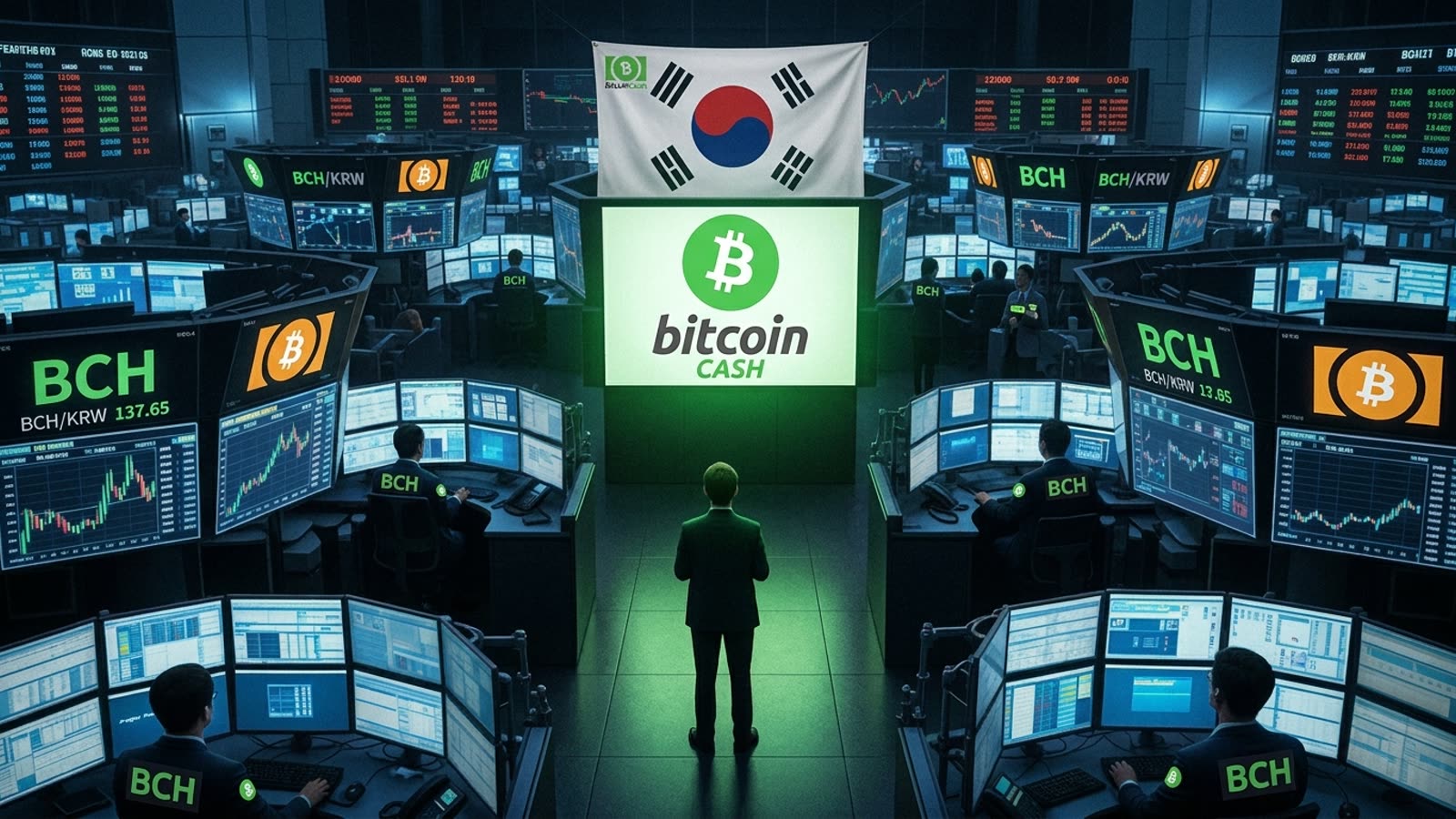
Bitcoin Cash rallied modestly this week, a flicker of green on the screen that invites an uncomfortable question: does anyone still remember what this project was supposed to accomplish?
The token climbed to roughly $190, enough to catch the attention of traders scanning for momentum plays but nowhere near enough to disturb its broader trajectory—down more than 60% over the past twelve months and trading at a small fraction of its 2017 highs. For a cryptocurrency that emerged from the most contentious schism in Bitcoin's history, the numbers tell a story of diminishing relevance.
The fork that was supposed to matter
In August 2017, a faction of Bitcoin developers and miners executed a hard fork, creating Bitcoin Cash with a larger block size meant to handle more transactions at lower fees. The argument was straightforward: Bitcoin had become too slow and too expensive for everyday payments. BCH would be the version people actually used to buy coffee.
The technical debate was real, but so was the ego. Roger Ver, the early Bitcoin evangelist who became BCH's loudest champion, insisted that his fork represented Satoshi Nakamoto's true vision. The Bitcoin community responded with something between mockery and rage. What followed was years of hash wars, further forks (Bitcoin SV split off in 2018), and a gradual fade from mainstream attention.
The adoption problem
Nearly a decade later, Bitcoin Cash has not become the dominant payment rail its proponents envisioned. Merchant adoption remains thin. The Lightning Network—Bitcoin's own scaling solution—has absorbed much of the low-fee payment use case that BCH was designed to serve. Meanwhile, stablecoins like USDC and USDT have become the actual medium of exchange for crypto-native commerce, offering dollar stability that no volatile token can match.
BCH still processes transactions. It still has a community. But it occupies an awkward middle ground: too similar to Bitcoin to attract ideological converts, too volatile for payments, and too far from the DeFi ecosystem to benefit from that sector's growth.
Our take
Bitcoin Cash is a monument to a debate that the market has largely moved past. The 2017 block-size war felt existential at the time; today it reads like a footnote. BCH's occasional rallies are trading noise, not signals of renewed relevance. The cryptocurrency that was supposed to replace Bitcoin has instead become a cautionary tale about the limits of technical purity when the world has already chosen its Schelling point.