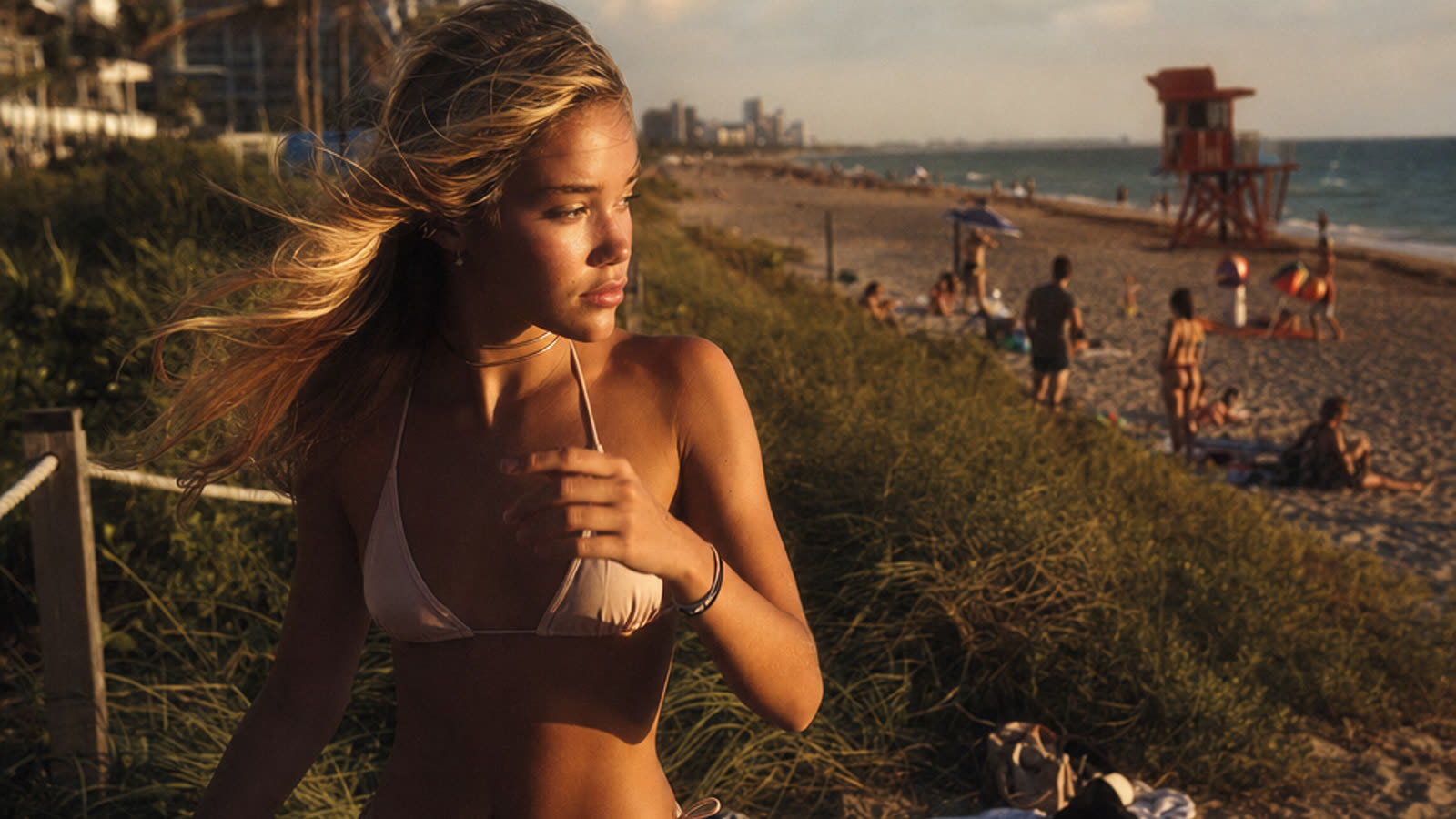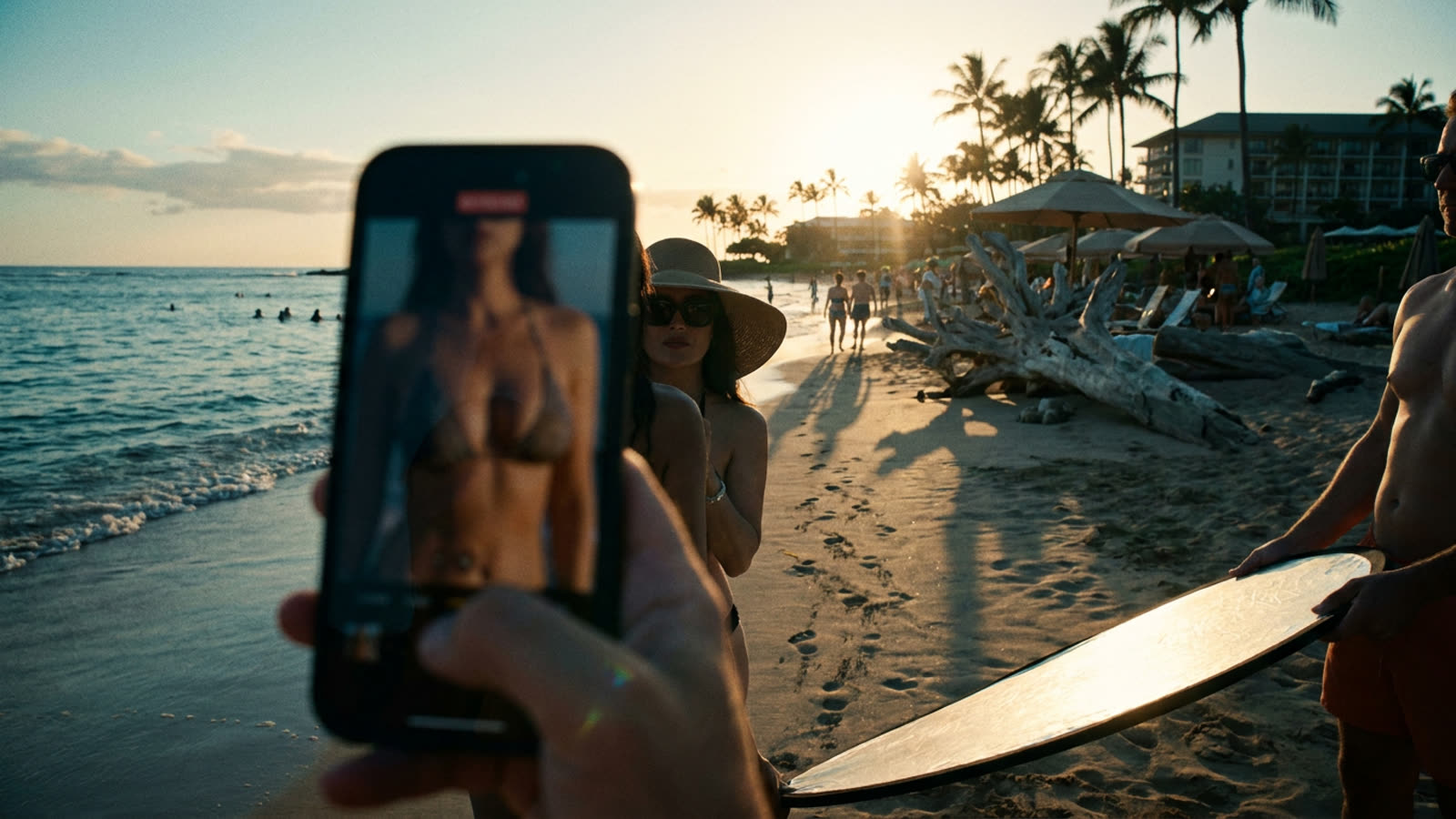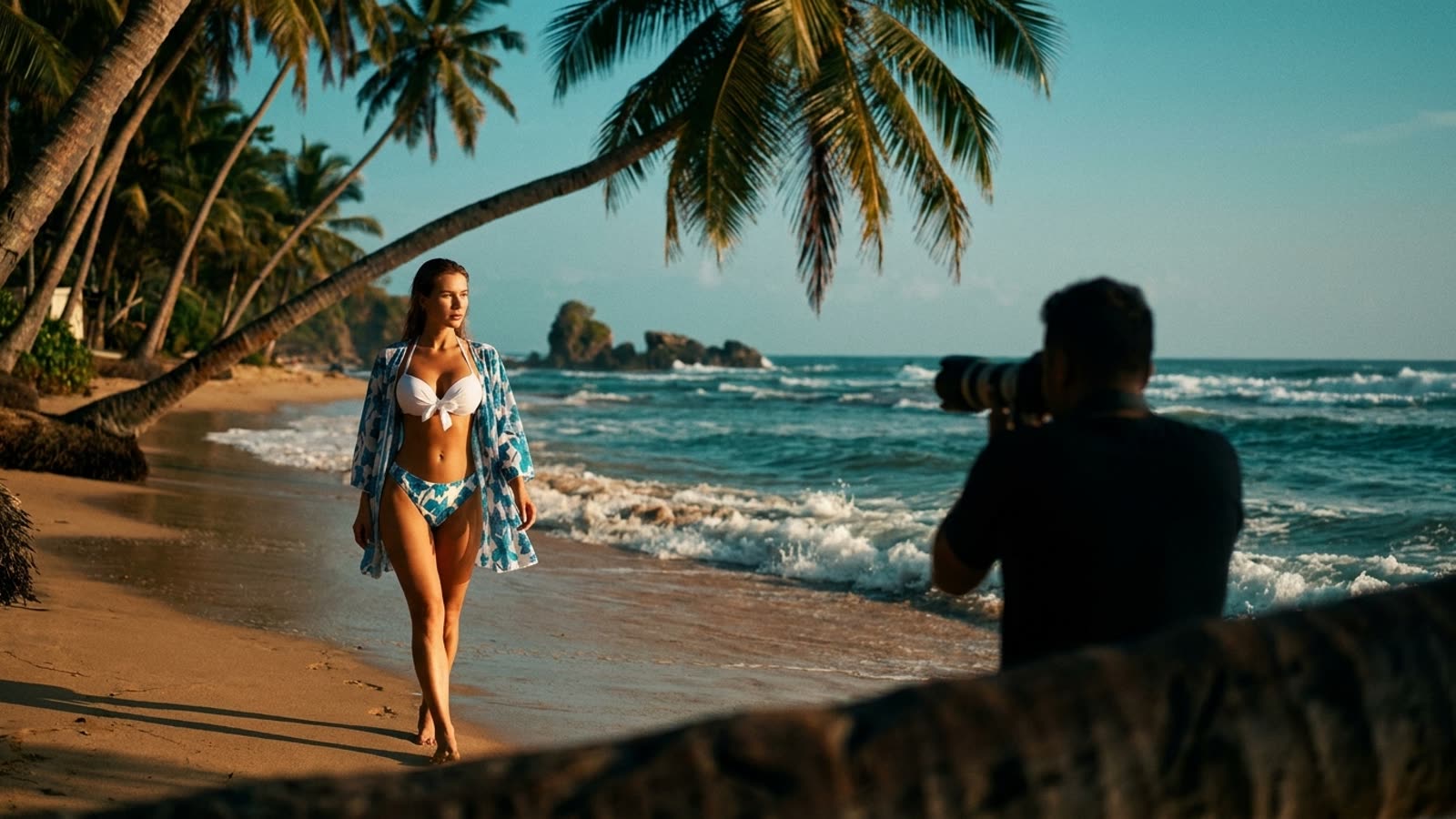
The floral bikini has returned with the subtlety of a greenhouse explosion. Scroll through any celebrity feed this spring and you will encounter an avalanche of botanical prints—hibiscus, orchids, abstract petals in saturated hues—adorning the bodies of influencers and A-listers with such coordinated frequency that coincidence seems implausible. This is not your mother's Hawaiian print revival. This is content strategy dressed as poolside leisure.
The timing is precise. As Northern Hemisphere temperatures climb and Memorial Day weekend marks the unofficial start of swimwear season, the celebrity-industrial complex has delivered its verdict: florals are the aesthetic of choice for 2026's sun-drenched months. The look skews deliberately retro—think 1970s Slim Aarons photographs crossed with contemporary high-cut silhouettes—while remaining thoroughly optimized for the vertical frame.
The economics of the coordinated reveal
What distinguishes this moment from previous floral cycles is the sheer commercial infrastructure behind it. Swimwear has become one of the most lucrative categories in celebrity brand partnerships, with influencer-driven labels and legacy houses alike competing for the same poolside real estate. A single well-placed bikini shot can generate millions in earned media value, and florals photograph exceptionally well—the prints pop against blue water, require no styling accessories, and signal approachable femininity without the try-hard energy of more avant-garde choices.
The brands understand this calculus intimately. Frankies Bikinis, Triangl, and a dozen direct-to-consumer upstarts have flooded the market with botanical options at price points ranging from accessible to aspirational. Meanwhile, luxury players like Zimmermann and Cult Gaia have positioned their floral swimwear as investment pieces, banking on the Instagram-to-purchase pipeline that has transformed how women shop for summer.
Why florals, why now
There is something almost defensive about the floral moment. After several seasons of minimalist swimwear—solid colors, architectural cuts, the Skims-adjacent aesthetic of engineered simplicity—the botanical print offers visual abundance without conceptual risk. It reads as joyful rather than provocative, nostalgic rather than edgy. In a cultural moment marked by anxiety about everything from geopolitics to AI displacement, the floral bikini proposes a fantasy of uncomplicated pleasure: sun, water, flowers, the body at ease.
The celebrity adoption has been remarkably democratic. The trend has appeared on bodies across the age and fame spectrum, from twentysomething influencers to established actresses, suggesting that florals function as a kind of aesthetic Switzerland—territory everyone can claim without controversy.
Our take
The floral bikini's dominance is neither organic nor cynical—it is simply how fashion works now, with commercial incentives and cultural appetites aligning so seamlessly that distinguishing between them becomes pointless. The prints are pretty. The photographs perform well. The sales follow. If there is something slightly exhausting about watching another trend cycle execute with such mechanical precision, there is also something reassuring: at least someone still believes in the simple pleasure of looking good by a pool.