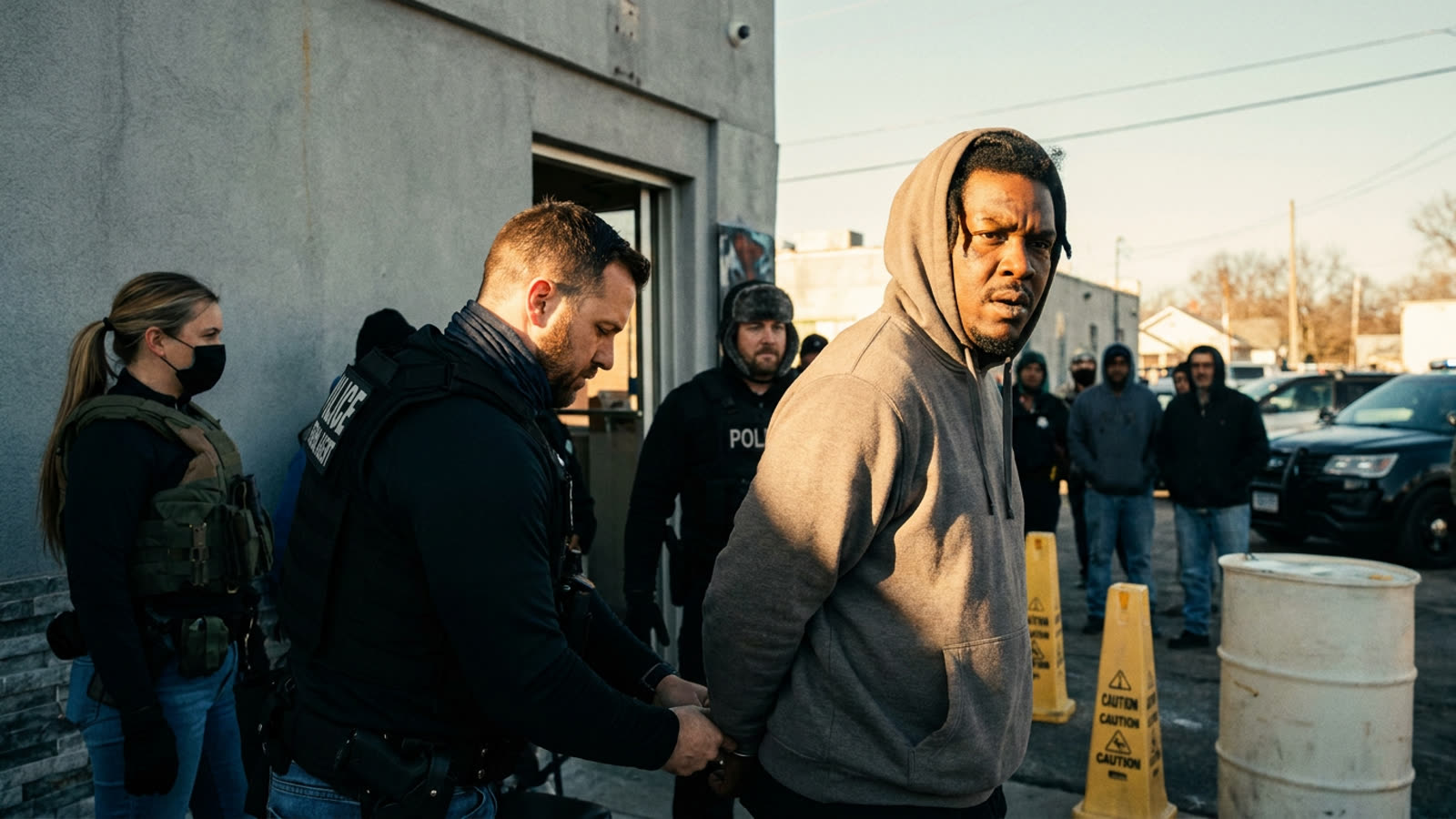
Darian Morgan, the man who built a media empire under the name Big Tigger, was booked on battery and child-cruelty charges this week, a development that has sent shockwaves through the entertainment industry he once helped define. The arrest represents a stunning reversal for a figure who, for more than two decades, served as one of hip-hop culture's most recognizable gatekeepers.
The charges themselves remain sparse in public detail, but their severity — child cruelty is a felony in most jurisdictions — suggests something far more serious than a misunderstanding. For a personality whose entire brand was built on warmth, accessibility, and the celebration of Black excellence, the allegations land with particular force.
The empire he built
Big Tigger's cultural footprint extends far beyond what casual observers might recall. His tenure hosting BET's "Rap City" from 2001 to 2008 coincided with hip-hop's commercial apex, making him the face that introduced suburban America to artists who would reshape popular music. His subsequent radio dominance in Atlanta — arguably hip-hop's most important market — cemented his status as an industry institution.
That institutional status makes his arrest newsworthy beyond the tabloid details. Big Tigger was not merely famous; he was trusted. Record labels sent their artists to his studio. Parents let their teenagers watch his show. His voice carried an implicit endorsement that few media personalities ever achieve.
What happens now
The legal process will unfold according to its own timeline, and Big Tigger, like anyone accused of a crime, deserves the presumption of innocence until proven otherwise. But the court of public opinion operates on different rules, and the entertainment industry's tolerance for controversy has narrowed considerably in recent years.
Radio stations and networks will face immediate pressure to distance themselves. Sponsors will quietly reassess. The lucrative appearance circuit — club hosting, corporate events, nostalgia tours — will almost certainly dry up before any verdict is rendered. This is the arithmetic of modern celebrity: the accusation becomes the story, and the story becomes the sentence.
Our take
There is something particularly disorienting about watching a figure from one's cultural adolescence face charges of this nature. Big Tigger represented a specific era of hip-hop media — before social platforms democratized access, before algorithms replaced tastemakers. His arrest does not erase that legacy, but it does complicate it irreparably. Whatever the legal outcome, the Big Tigger who emerges from this will not be the one who entered it. Some falls cannot be recovered from, regardless of what the courts ultimately decide.