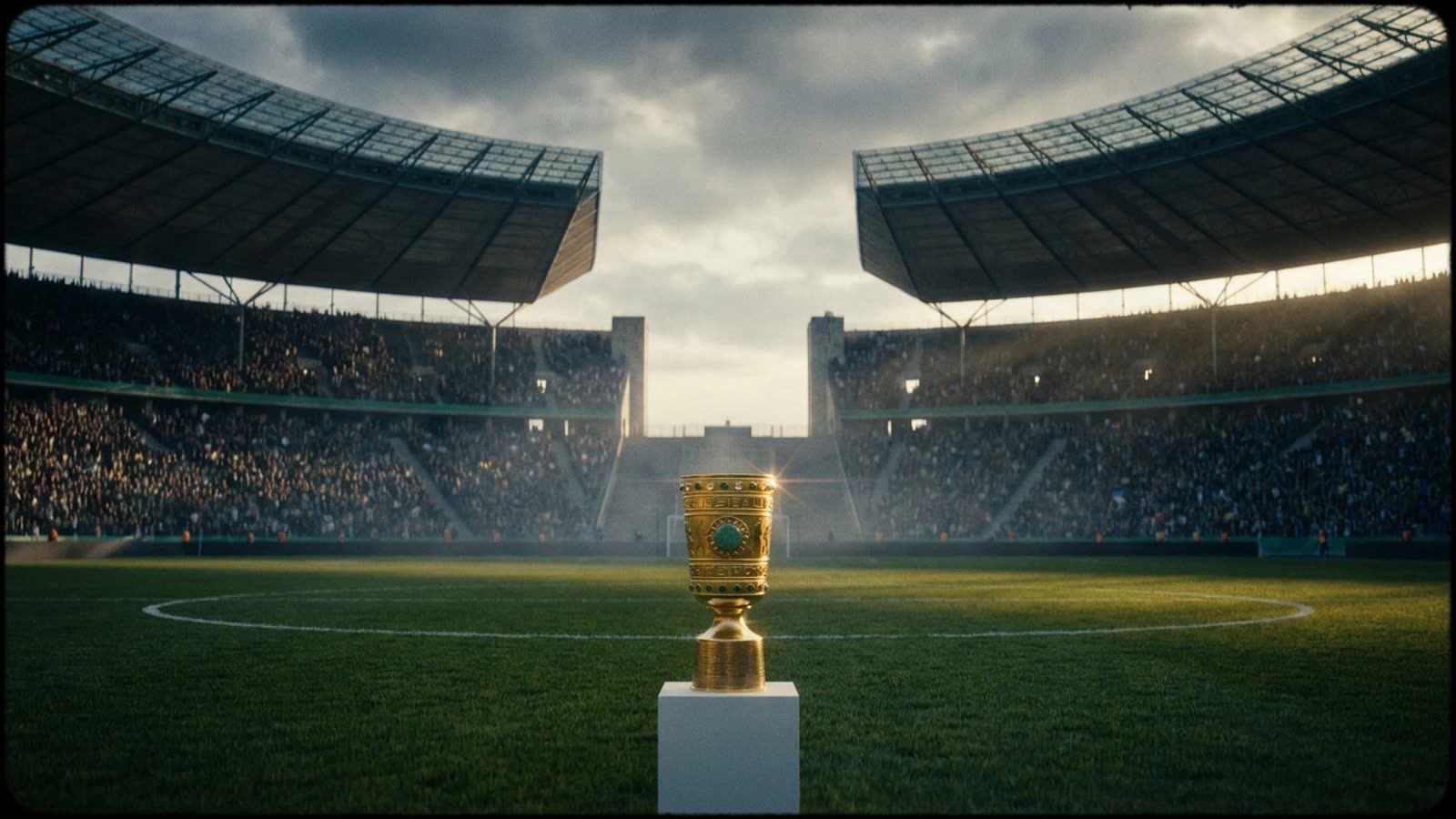
The DFB-Pokal final is German football's great equalizer, a single match where the Bundesliga's established hierarchy can be upended in ninety minutes. On Saturday, VfB Stuttgart will attempt precisely that against Bayern Munich, a club that has won the domestic cup twenty times and treats the competition as a birthright rather than an aspiration.
Stuttgart last lifted the Pokal in 2007, when Mario Gomez was still wearing their red sash rather than Bayern's red stripes. The intervening years have been unkind: relegation, financial strain, managerial chaos. Their resurgence under Sebastian Hoeneß — nephew of Bayern legend Uli Hoeneß, in a delicious subplot — has been one of European football's better rehabilitation stories. A second-place Bundesliga finish last season announced their return to relevance; a cup triumph would announce something more permanent.
Bayern's curious season
Bayern arrive in Berlin as favorites, naturally, but this has not been a vintage campaign by their exacting standards. The Bundesliga title race went longer than Munich prefers, and their Champions League exit stung a club that measures itself against continental supremacy. The cup offers redemption of a modest sort — silverware is silverware — but also exposes a team still searching for its identity under a transitional project.
The Bavarians possess superior depth and experience in finals, advantages that compound under pressure. Yet Stuttgart's high-pressing system and collective belief have troubled better sides this season. Hoeneß has built a team that runs harder and believes more deeply than the sum of its parts would suggest.
What's at stake beyond the trophy
For Stuttgart, victory would validate a project and potentially unlock transfer market leverage to retain key players coveted by wealthier clubs. For Bayern, defeat would cap an underwhelming season with an exclamation point of failure, intensifying scrutiny on a squad and structure that has looked uncertain.
The Olympiastadion in Berlin will host its annual congregation of German football's faithful, and the neutral observer should hope for Stuttgart's romance to prevail. Cup finals exist for such stories.
Our take
Bayern will likely win because Bayern usually does, but Stuttgart's presence in this final matters more than the result. German football has suffered from predictability; the Bundesliga's competitive imbalance is a structural problem the league has failed to address for a decade. Stuttgart's rise, however temporary, reminds us that football's appeal lies partly in the possibility of upset. If they can take the cup back to Baden-Württemberg, it would be the most significant German domestic result in years. That alone makes Saturday worth watching.