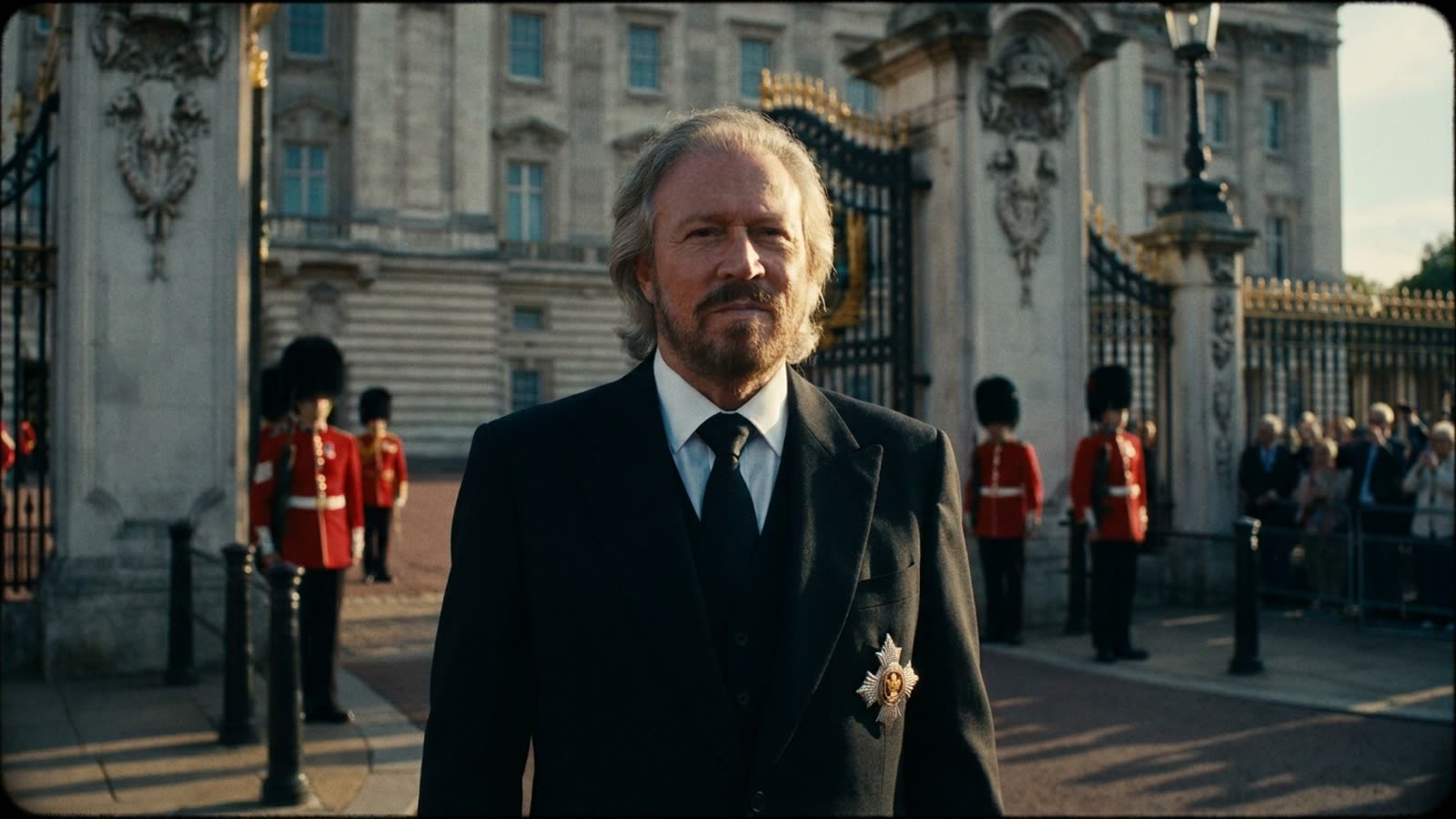
The British honours system has finally caught up with Barry Gibb, knighting the 79-year-old singer-songwriter in recognition of a career that reshaped popular music at least three times over. That it took this long tells you everything about how thoroughly the Bee Gees were written out of serious musical conversation after disco's spectacular cultural implosion in 1979.
Gibb, the last surviving member of the trio following the deaths of twins Robin (2012) and Maurice (2003), has spent the better part of four decades watching his catalogue get plundered by hip-hop producers and rediscovered by younger generations while critics who dismissed the brothers as sequined lightweights quietly revised their assessments.
The numbers that haunt rock purists
The Bee Gees wrote or co-wrote nine consecutive number-one singles between 1977 and 1979—a streak no act has matched. They penned hits for Barbra Streisand, Dionne Warwick, Kenny Rogers, and Dolly Parton. The Saturday Night Fever soundtrack, which the brothers dominated, remains one of the best-selling albums in history. Their songwriting credits alone would place them among the most commercially successful composers of the twentieth century, yet they spent years as a punchline.
The backlash was so severe that by the early 1980s, Barry Gibb was writing hits under pseudonyms to avoid the disco taint. "Islands in the Stream," the Rogers-Parton duet that became a country standard, was a Gibb composition. So was "Heartbreaker" for Warwick and "Woman in Love" for Streisand. The man was hiding his own genius because his name had become commercially radioactive.
A rehabilitation decades in the making
The critical reassessment began slowly, accelerated by sampling culture. When Destiny's Child interpolated "Emotions" for their 2001 hit of the same name, or when Jay-Z built "This Can't Be Life" around "Guilty," a new generation encountered the Gibbs' melodic sophistication without the cultural baggage. The 2020 HBO documentary How Can You Mend a Broken Heart completed the rehabilitation, presenting the brothers as serious artists who happened to catch the wrong side of a cultural moment.
The knighthood arrives when Barry Gibb has nothing left to prove and no brothers left to share the recognition. Maurice died from surgical complications at 53. Robin succumbed to cancer at 62. The youngest brother, Andy, who had his own pop career, died of heart failure at just 30 in 1988. Barry has outlived them all, carrying the legacy alone.
Our take
There's something bittersweet about honours that arrive after the controversy has cooled and most of the principals have died. Barry Gibb deserved this recognition in 1995, when it might have meant vindication rather than valediction. But the knighthood matters anyway—not for Gibb, who hardly needs validation at this point, but as an institutional admission that the critical establishment got the Bee Gees catastrophically wrong. Sometimes the sequins were hiding the substance all along.