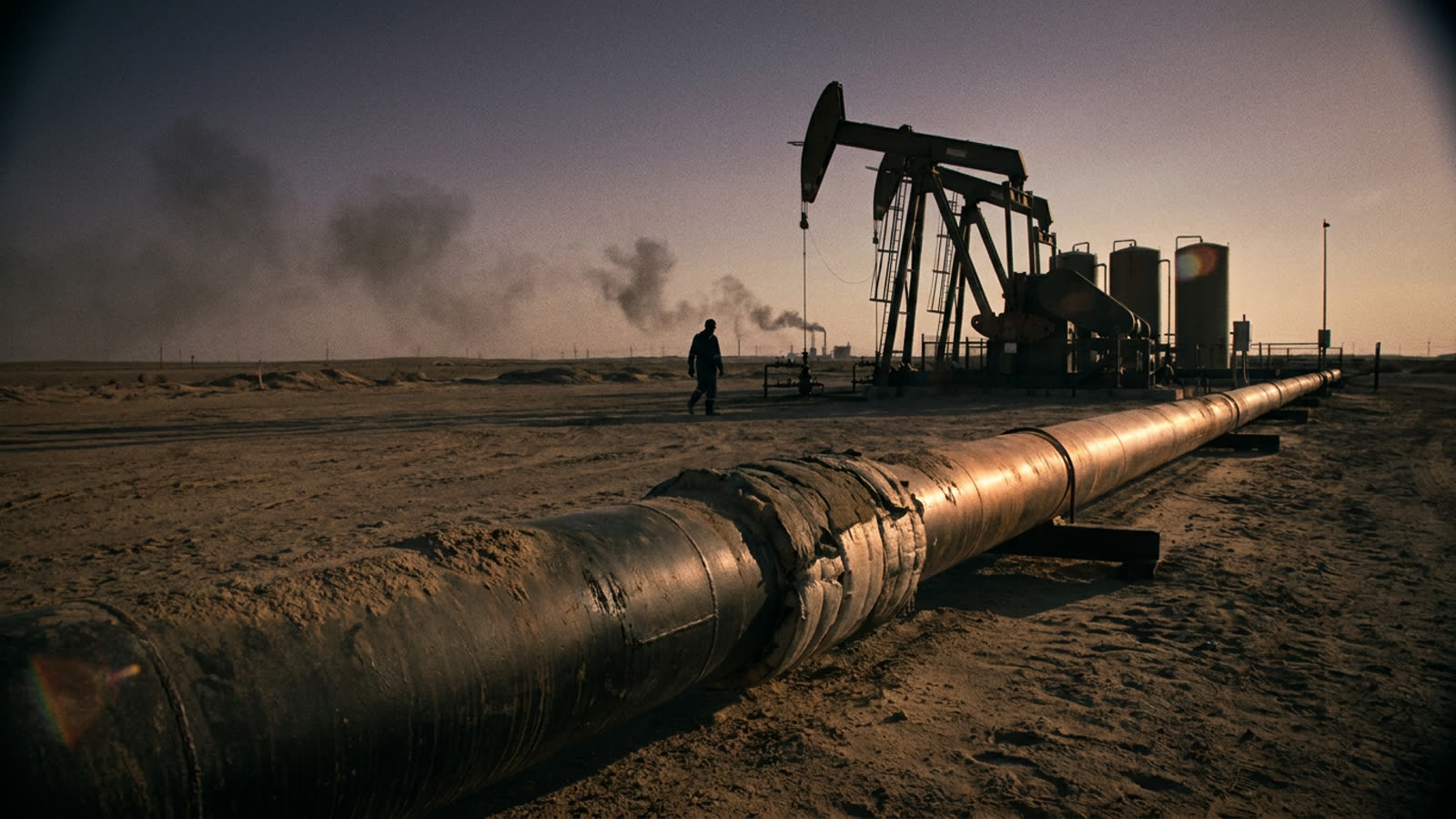
The Federal Reserve's preferred inflation measure — the Personal Consumption Expenditures price index — rose 3.5% in April compared with a year earlier, the largest annual increase since May 2023, according to Commerce Department data released Wednesday. The culprit is no mystery: war-driven energy costs have metastasized from gas pumps into grocery aisles, shipping invoices, and airline tickets.
The pass-through is complete
For months, economists debated whether elevated oil prices would remain "contained" to energy-intensive sectors or bleed into core inflation. April's numbers settle the argument. Core PCE, which strips out food and energy, climbed 0.4% month-over-month — double the pace consistent with the Fed's 2% target. Services inflation, supposedly insulated from commodity swings, accelerated to 4.1% annualized as transportation, hospitality, and logistics firms passed along fuel surcharges.
The mechanism is textbook but no less painful: diesel prices affect trucking costs, which affect warehouse economics, which affect the price of everything that moves. With Brent crude hovering near $95 following Iranian drone exchanges and Kuwaiti spillover, there is no near-term relief valve.
The Fed's dilemma sharpens
Chair Jerome Powell has spent 2026 threading a needle — acknowledging that supply-driven inflation differs from demand-driven inflation while insisting the Fed cannot ignore headline numbers indefinitely. April's report tightens that needle's eye. Futures markets, which had priced in a September rate cut as recently as mid-May, have now pushed expectations to December at the earliest. Some traders are reviving bets on a hike.
The political calendar adds pressure. With midterm elections five months away and gasoline prices a perennial kitchen-table issue, the White House has limited tools: the Strategic Petroleum Reserve is already at four-decade lows, and jawboning OPEC has produced diminishing returns.
Our take
This is not 2022's demand-fueled inflation, and treating it identically would be a policy error. But the Fed's credibility hinges on headline numbers, not nuanced explanations. Expect Powell to talk tough and act cautiously — a posture that satisfies no one but may be the least-bad option until geopolitics offers a reprieve the central bank cannot manufacture.