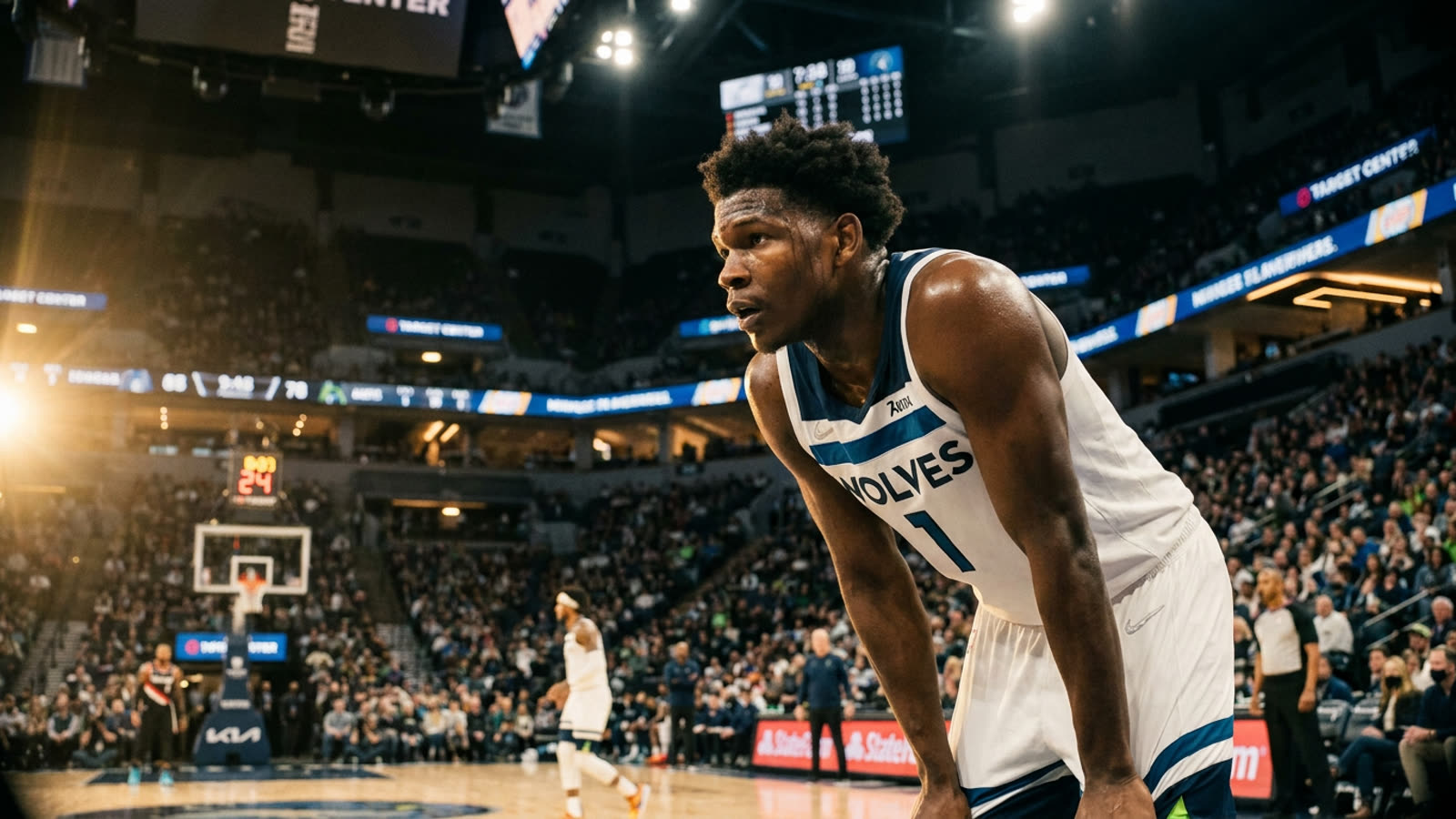
Anthony Edwards has spent the past two seasons making the case that he is the best basketball player not named Giannis or Jokić. Now he is making a different argument entirely: that personality, properly deployed, converts athletic excellence into cultural equity faster than championships ever could.
The 24-year-old Timberwolves guard has become the league's most quotable figure, a status he has monetized with the efficiency of a step-back three. His endorsement roster—Adidas, Beats by Dre, and a recently expanded deal with a major fast-food chain—now generates income that approaches his $42 million annual salary. More telling than the contracts is the positioning: Edwards is being sold not as a basketball player who happens to be funny, but as a personality who happens to be elite at basketball.
The charisma dividend
Edwards arrived in the league in 2020 as the first overall pick with a reputation for candor that bordered on indifference. He famously admitted he preferred football, a comment that would have sunk a less talented prospect. Instead, it became the first data point in a personal brand built on saying whatever he actually thinks—about opponents, about his own game, about the relative merits of Michael Jordan versus LeBron James.
The approach has made him a staple of sports media's highlight-and-soundbite ecosystem. His postgame pressers routinely outperform game recaps in engagement metrics. A clip of Edwards dismissing a reporter's question about defensive schemes with a shrug and a grin circulated for three days last month, generating the kind of organic reach that marketing departments spend millions attempting to manufacture.
The Jordan template, updated
The comparison Edwards and his handlers are quietly encouraging is to prime Michael Jordan—not the basketball, but the business. Jordan's genius was understanding that athletic dominance was a platform, not a destination. Edwards appears to grasp the same principle, but in an attention economy that rewards authenticity over polish.
Where Jordan was meticulous and controlled, Edwards is spontaneous and occasionally chaotic. Both approaches work, but they work differently. Jordan built a brand that transcended basketball by seeming superhuman. Edwards is building one by seeming relentlessly, entertainingly human. The bet is that relatability scales as well as aspiration did in the 1990s.
The risk in the room
The same unfiltered quality that makes Edwards compelling also makes him volatile. His comments about opposing players have drawn fines. His social media presence, while engaging, occasionally veers into territory that makes sponsors nervous. The line between refreshing honesty and liability is thin, and Edwards walks it with the confidence of someone who has never fallen off.
His camp is aware of the tension. Recent interviews have been slightly more measured, the jokes landing in safer territory. Whether this represents maturation or management is unclear, but the adjustment suggests someone is thinking about the long game.
Our take
Edwards is the most interesting commercial proposition in American sports right now precisely because he has not been smoothed into corporate acceptability. The question is whether that roughness is sustainable as the money grows. Jordan became Jordan by being unknowable; Edwards is betting he can become equally iconic by being completely known. It is a fascinating wager, and so far, the returns are excellent.