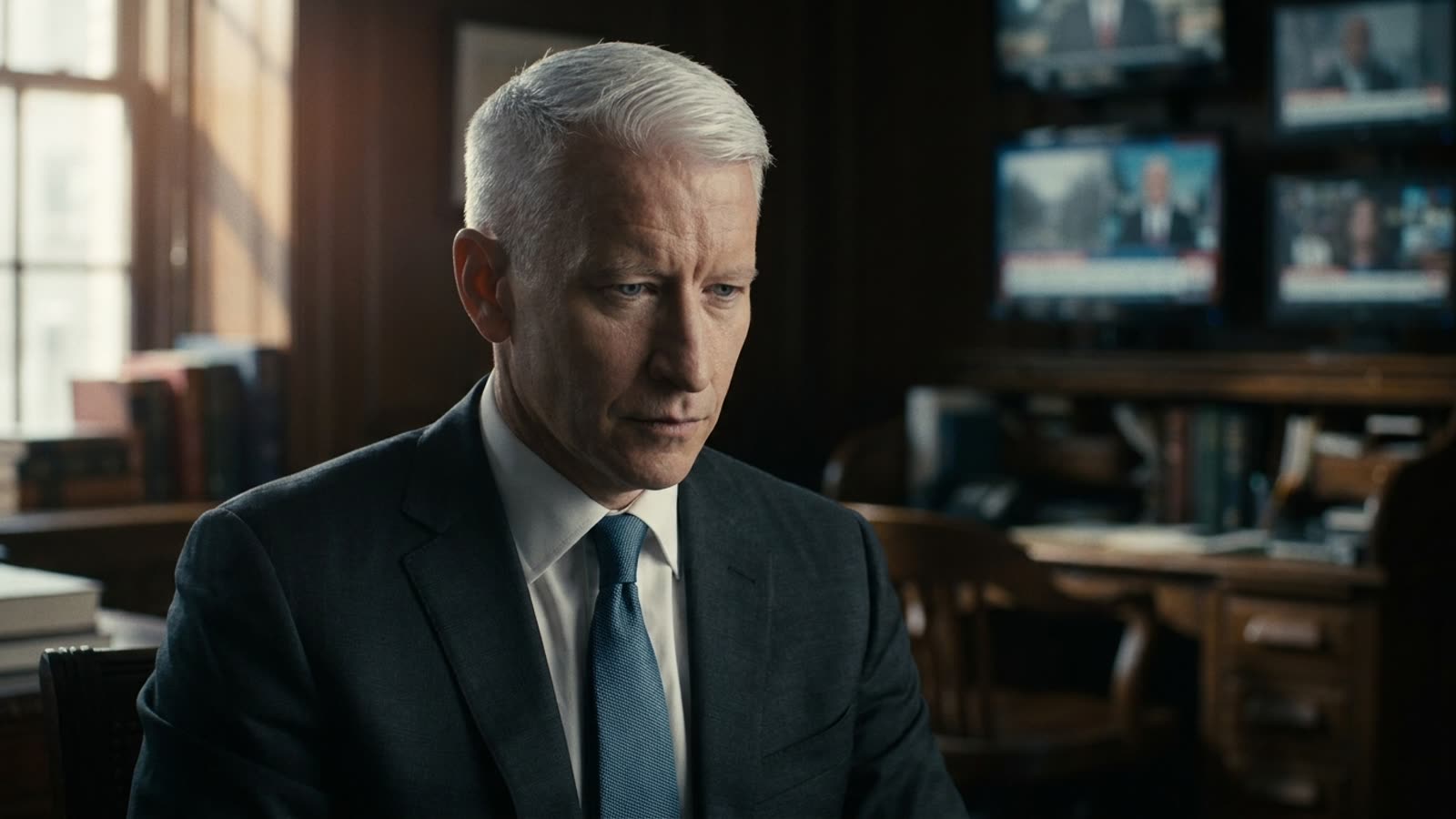
Anderson Cooper did not cry, did not reminisce about celebrity interviews, and did not tease a memoir. His final 60 Minutes segment on Sunday was something rarer: a direct appeal to viewers to care about the institutional integrity of a program most of them take for granted. "I hope 60 Minutes remains 60 Minutes," he said, a line that sounds anodyne until you remember the context.
The context is this: CBS's parent company Paramount Global has spent the past two years in merger limbo, with potential buyers ranging from Skydance to Apollo to a constellation of private-equity suitors who view news divisions as cost centers rather than crown jewels. 60 Minutes, the most profitable news broadcast in American television history, has survived precisely because it generates advertising revenue that offsets its expensive investigations. But profitability is not the same as invincibility, and Cooper knows it.
The calculus of leaving
Cooper framed his departure as a scheduling concession—he wants more time with his two young sons, and juggling a full-time CNN anchor chair with 60 Minutes contributor duties had become "challenging." That is almost certainly true. But the timing is notable. He is leaving before any new ownership can redefine his role, before the next round of corporate synergies, before the inevitable question of whether a legacy newsmagazine needs legacy correspondents or just cheaper ones. It is the exit of someone who would rather step away on his own terms than be managed out on someone else's.
What editorial independence actually means
Cooper's repeated invocation of "independence" and "trust" was not abstract. 60 Minutes has, in recent years, faced pressure from both political camps—accusations of bias, demands for access, advertiser skittishness around controversial investigations. The show's survival has depended on a peculiar bargain: it remains valuable to CBS because it is credible, and it remains credible because CBS has largely left it alone. Cooper's farewell was a public reminder that the bargain exists, and that breaking it would cost more than the savings.
The CNN question
Cooper remains at CNN, where he will continue anchoring Anderson Cooper 360. That show, too, exists in a state of corporate uncertainty; Warner Bros. Discovery has made clear that CNN's future involves fewer high-salaried anchors and more streaming-friendly content. Cooper's decision to consolidate his workload rather than expand it suggests he is preparing for a leaner decade in television news, one where the survivors will be those who picked their battles early.
Our take
There was something almost old-fashioned about Cooper's sign-off—no tears, no montage, just a man in a suit asking viewers to value something they might not notice until it is gone. It was the kind of moment that makes you wonder whether the golden age of broadcast journalism ended years ago and we are only now attending the memorial services. Cooper is 59. He has enough money and enough fame to walk away entirely. That he chose instead to stay at CNN and issue a quiet warning about 60 Minutes suggests he still believes the work matters. Whether the corporations that employ him agree is the question his farewell pointedly declined to answer.