The French Open's second week begins with American tennis in an uncomfortable position: its best player is gone, and the players who remain must prove they belong at this level rather than simply being along for the ride.
Coco Gauff's early exit—defending champion, world number three, the face of American women's tennis—has exposed a structural weakness that prize money and federation budgets have papered over for years. The United States produces excellent junior players, funds robust development programs, and generates more tennis revenue than any nation on earth. What it struggles to produce, with maddening consistency, is a second tier of Grand Slam threats.
The depth mirage
On paper, American tennis looks healthy. Multiple players dot the top fifty in both draws. Collegiate programs churn out professionals annually. The USTA's player development budget dwarfs most national federations. Yet when Gauff falls, there is no obvious American to pick up the narrative—no player the casual fan can name who might plausibly win the thing.
Contrast this with the European model, where Spain, France, and Italy routinely field three or four players capable of deep runs at any major. The difference is not funding or facilities but something harder to manufacture: a culture that treats the second-best player as a potential champion rather than a supporting character.
The clay court question
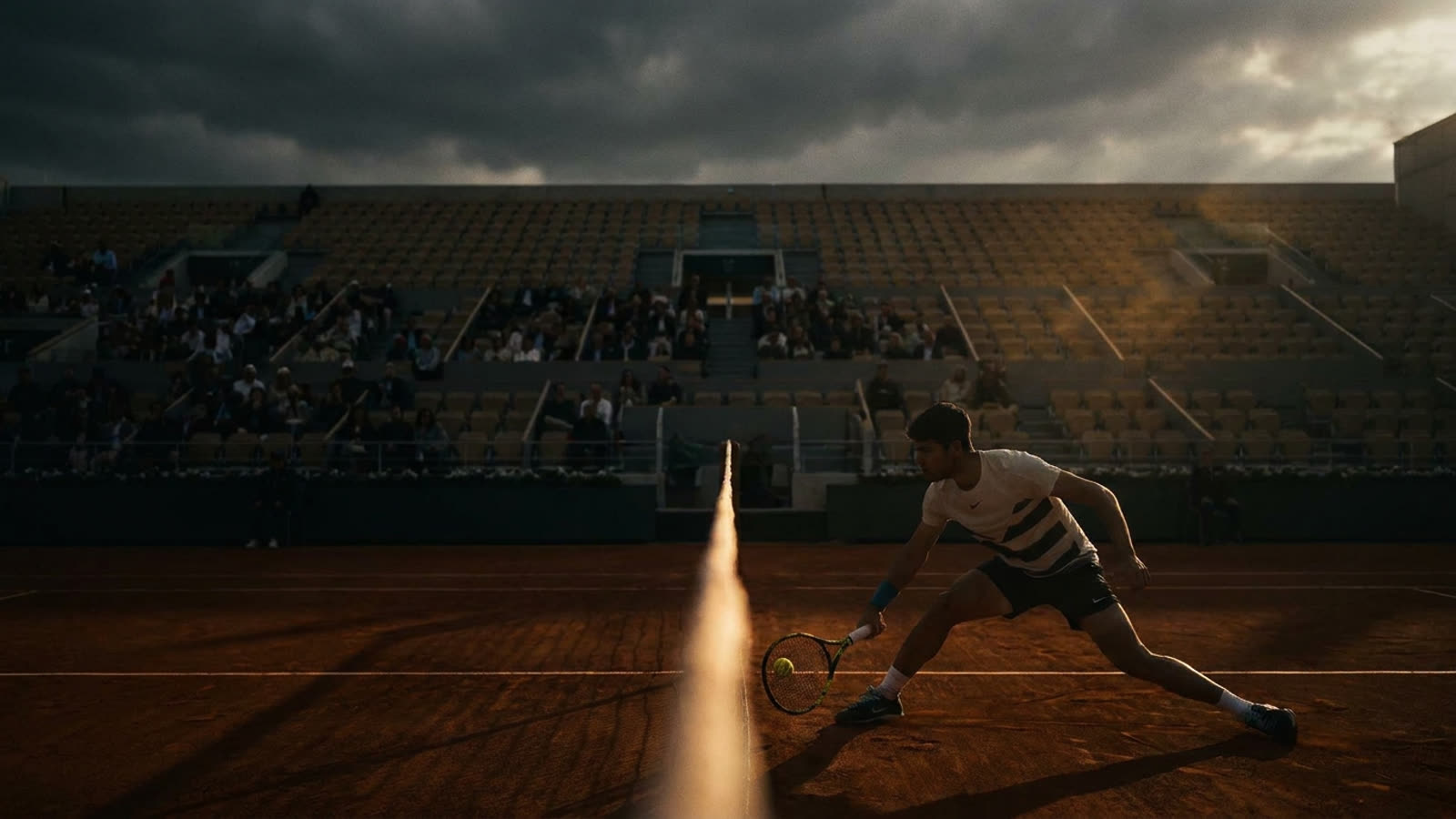
Roland-Garros has always been American tennis's least comfortable venue. The slow red dirt rewards patience, heavy topspin, and a willingness to construct points over twenty or thirty shots—qualities that American coaching has historically undervalued in favor of power and aggression. The remaining Americans in the draw will need to play against type to advance, which is possible but rarely sustainable over seven rounds.
The tournament's chaos—seeds falling, upsets multiplying—theoretically opens doors. But opportunity means little without the game to exploit it. A quarterfinal appearance would be a success; anything beyond requires a performance level these players have not yet demonstrated on this surface.
Our take
American tennis keeps waiting for the next wave while funding the current one. Gauff is genuine, a player who can win majors and carry a generation. But one player is not a program, and the French Open's second week will likely confirm what the first week suggested: the depth is an illusion, the rankings flatter, and until the USTA reckons with why its second-tier players plateau, American tennis will remain a one-star operation hoping that star stays healthy.