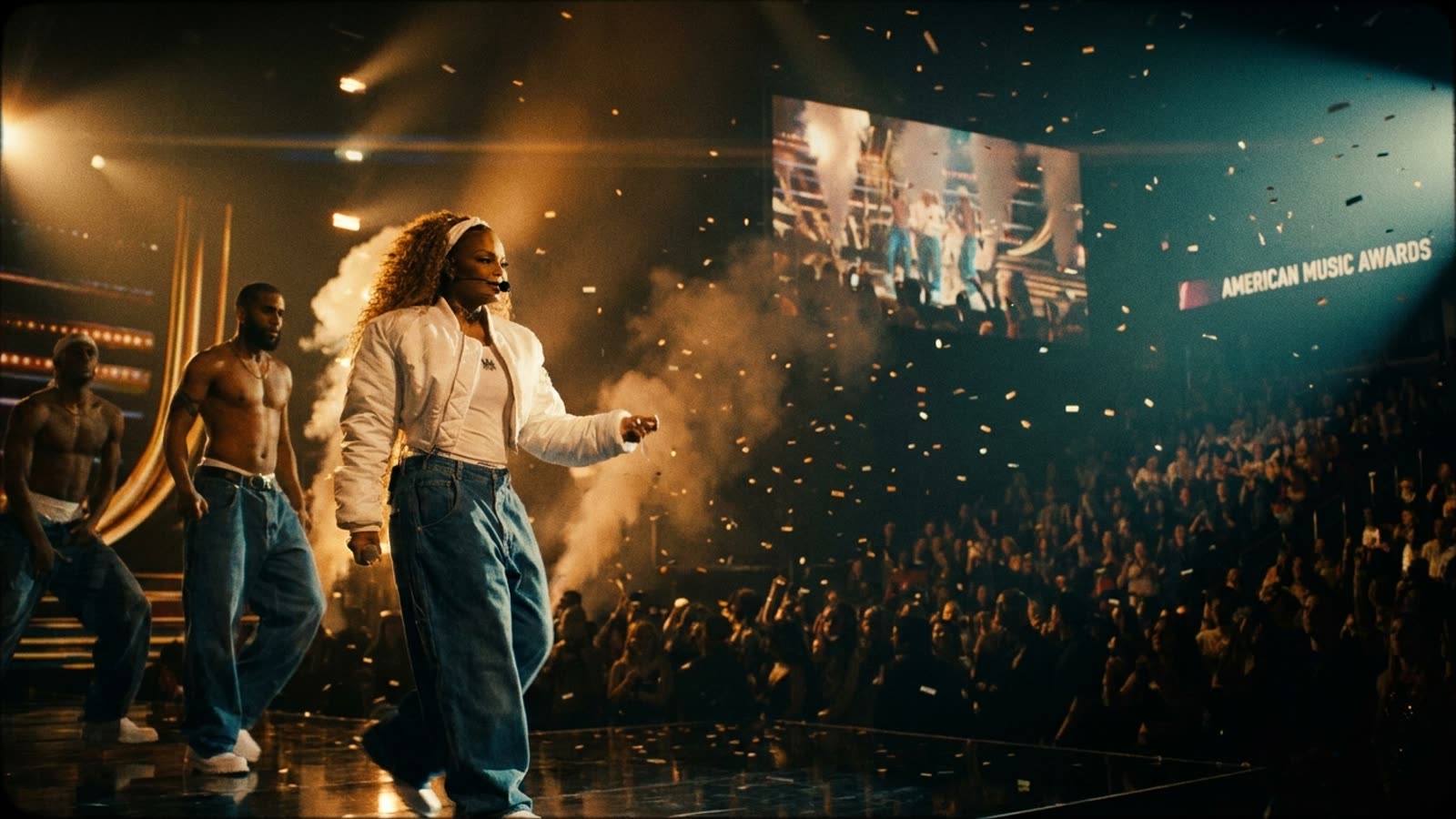
The American Music Awards have always understood something their competitors refuse to acknowledge: predictability is death in live television, and the appearance of spontaneity is worth more than actual prestige.
While the Grammys chase industry credibility and the VMAs lean into manufactured chaos, the AMAs carved out peculiar middle ground — a populist awards show where fan voting creates genuine uncertainty and where artists, freed from the Recording Academy's institutional weight, occasionally do exactly what they want. The result is a catalog of moments that defined eras.
The Architecture of Surprise
Prince's 1985 performance remains the template. When he debuted "Purple Rain" material on the AMA stage, he wasn't just promoting an album — he was demonstrating that the show could be a launchpad rather than a victory lap. The AMAs learned to schedule their biggest names not as safe bets but as wildcards.
This philosophy produced Whitney Houston's 1994 medley, Michael Jackson's increasingly elaborate spectacles, and eventually Taylor Swift's strategic use of the platform to wage public feuds. The show became a space where artists communicated directly with fans, critics be damned.
Why the Format Matters
Fan voting — the AMAs' founding distinction from Grammy peer selection — creates dynamics impossible elsewhere. Winners genuinely don't know if they've won. Acceptance speeches carry actual surprise. And because the audience skews younger and more digitally engaged, the show reflects popular taste in real time rather than industry consensus six months delayed.
This made the AMAs the first major show to recognize streaming-era stars. When Billie Eilish swept in 2019, the AMAs had already validated artists the Grammys were still figuring out how to categorize.
Our take
Awards shows are struggling across the board, but the AMAs' willingness to embrace chaos over choreography gives them a fighting chance. In an era when any clip can go viral, the show that produces the most shareable moments wins — and the AMAs have been training for this reality since before social media existed. The biggest OMG moments weren't accidents; they were the business model.