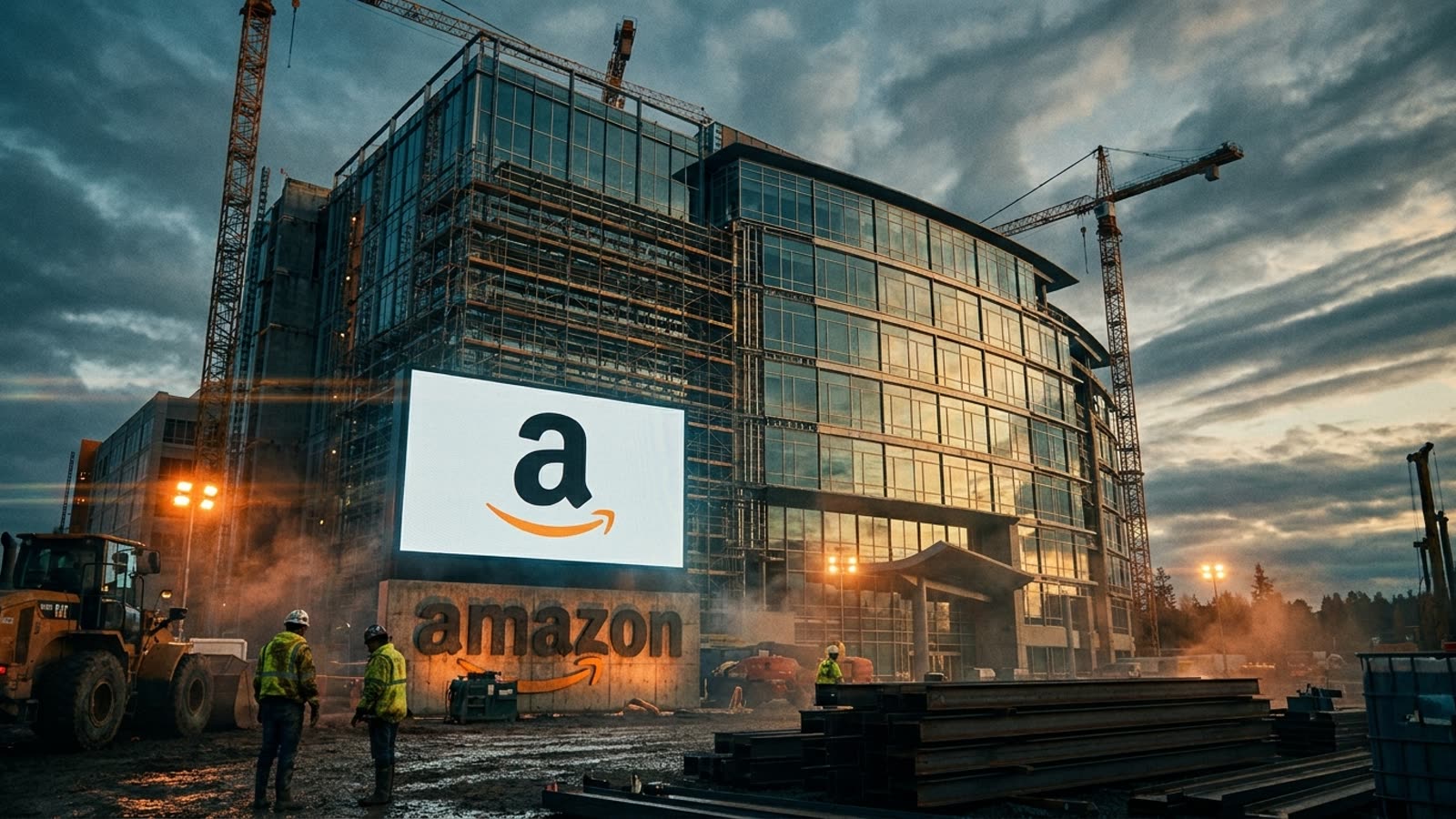
When a company with $86 billion in cash and short-term investments taps banks for a $17.5 billion credit facility mere days after completing a bond sale, it is not because the treasury team got bored. Amazon's double-barreled capital raise this week reveals something important about the AI infrastructure race: the bills are coming due faster than even the giants anticipated.
The loan, syndicated across a consortium of major banks, follows a bond issuance that reportedly raised north of $10 billion. Combined, Amazon has secured roughly $28 billion in new financing in under two weeks—a pace of borrowing more commonly associated with leveraged buyouts than with profitable technology conglomerates.
The data center math
Amazon Web Services remains the company's profit engine, but maintaining that position requires capital expenditure that would make an oil major blush. The company has signaled plans to spend more than $100 billion on data centers and AI infrastructure over the next several years, a figure that keeps climbing as Nvidia chip prices remain elevated and electricity costs for training clusters spiral upward.
The timing matters. Microsoft, Google, and Meta are all racing to deploy next-generation AI models, and the competitive window for establishing infrastructure dominance may be measured in quarters, not years. Waiting to fund projects from operating cash flow means ceding ground to rivals willing to lever up now.
Why debt, why now
Despite its cash pile, Amazon's decision to borrow makes financial sense. Interest rates remain elevated but have stabilized, making the cost of debt predictable. More importantly, the company's investment-grade credit rating allows it to borrow at spreads that make equity dilution look foolish by comparison.
The bank loan structure also provides flexibility that bonds do not. Credit facilities can be drawn down as needed, matching capital deployment to project timelines rather than front-loading cash that sits idle. For a company building data centers across multiple continents simultaneously, that optionality has real value.
The broader signal
Amazon is not alone in this posture. Microsoft has been similarly aggressive in securing financing for AI infrastructure, and Google's parent Alphabet has hinted at expanded capital programs. What distinguishes Amazon's move is the sheer velocity—two major raises in rapid succession suggests the company sees a window closing.
The AI infrastructure buildout is becoming the defining corporate finance story of the decade. Unlike the dot-com era, when companies burned cash on marketing and headcount, today's spending goes into physical assets: chips, power substations, cooling systems, fiber optic cables. These are long-lived investments that will shape competitive dynamics for a generation.
Our take
Amazon borrowing $17.5 billion is not a sign of desperation; it is a sign of ambition colliding with reality. The company has concluded that the AI infrastructure race rewards speed over prudence, and that the cost of falling behind exceeds the cost of leverage. Whether that bet pays off depends on whether generative AI delivers the productivity gains its boosters promise. But Amazon is not waiting to find out—it is building the roads before the cars arrive, and sending the bill to the banks.