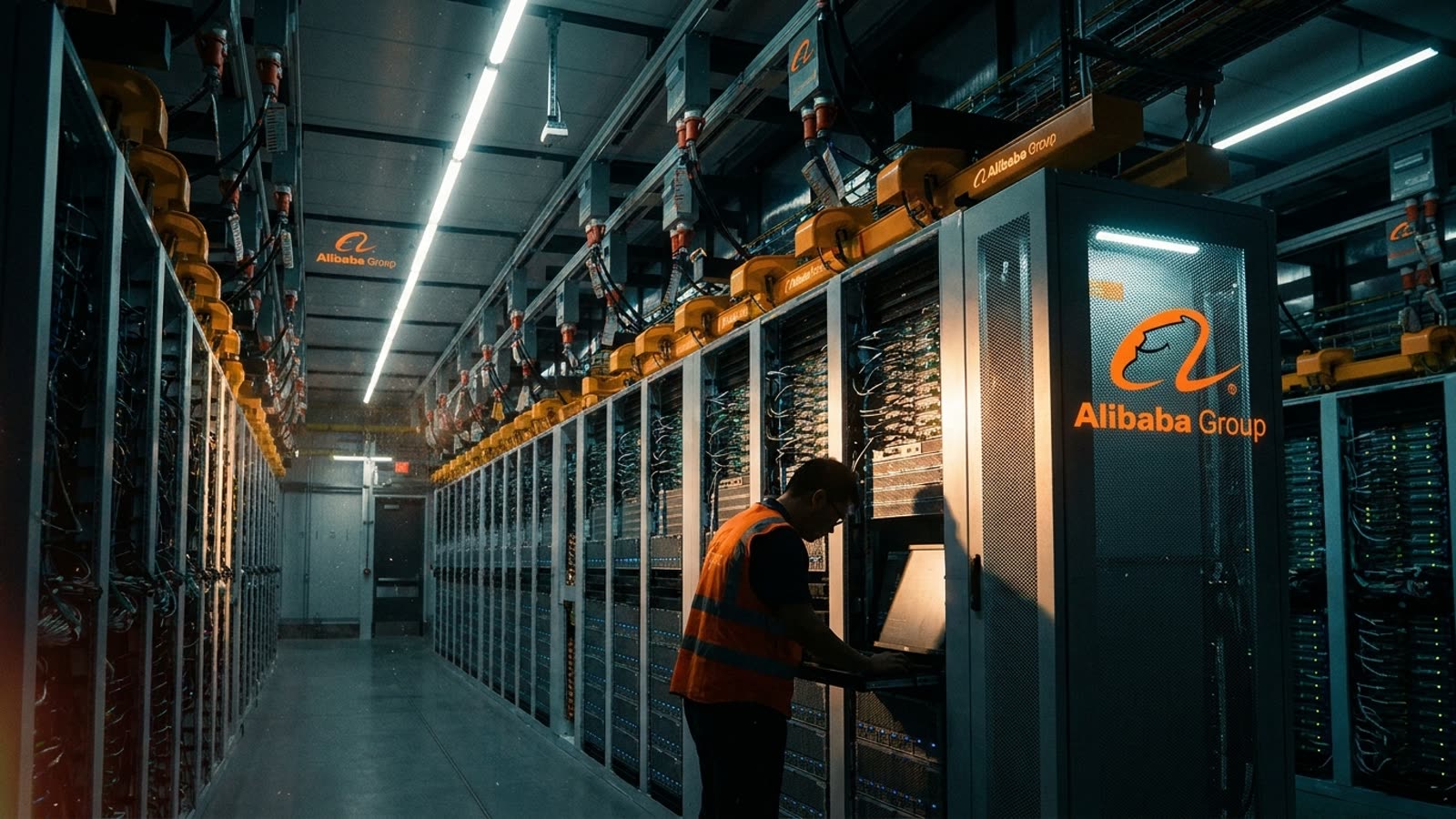
The most revealing technology conflicts often begin not with grand policy pronouncements but with quiet memos to employees. Alibaba's reported ban on Claude Code—Anthropic's AI-powered coding assistant—marks a new phase in the US-China technology rivalry: one where the battlefield has shifted from semiconductor fabs and export licenses to the mundane question of which autocomplete tool engineers may use.
The prohibition, first reported this week, prevents Alibaba employees from accessing Claude Code for work purposes. The move follows a pattern of Chinese technology companies distancing themselves from American AI tools, but it carries particular significance given Alibaba's own substantial investments in large language models and its position as China's cloud computing leader.
The logic of mutual exclusion
Alibaba's decision makes a certain strategic sense. The company has poured billions into its Qwen family of models, positioning itself as China's answer to OpenAI and Anthropic. Allowing employees to rely on a competitor's tools—particularly an American competitor operating under increasingly restrictive export regimes—creates both dependency risk and potential security concerns. Every prompt sent to Claude Code is, after all, data leaving the building.
But the ban also reflects a deeper anxiety. American AI companies have become entangled in export control debates, with the Trump administration reportedly directing restrictions on certain AI services to Chinese users. Anthropic itself has faced pressure over which customers may access its most capable models. For a Chinese company, relying on tools that could be switched off by regulatory fiat is not merely inconvenient—it is an operational vulnerability.
The productivity cost of decoupling
What makes this development worth watching is not its immediate impact but its implications for the thousands of engineers caught in the middle. Claude Code, like GitHub Copilot and similar tools, has become genuinely useful—not transformative, but useful in the way that a good IDE or a fast compiler is useful. It saves time. It reduces friction. Banning it imposes a real, if difficult to quantify, productivity tax.
Alibaba's engineers will use Qwen-based alternatives instead. These may be excellent; they may be adequate; they may be worse. The point is that the choice is no longer being made on technical merit. It is being made on the basis of geopolitical alignment, corporate strategy, and regulatory exposure. The same logic will increasingly apply in reverse: American defense contractors, government agencies, and eventually ordinary companies will face pressure to avoid Chinese AI tools, whether or not those tools are superior for a given task.
Our take
We are witnessing the balkanization of the software stack in real time. For three decades, the technology industry operated on the assumption that the best tools would win globally—that a developer in Shanghai and a developer in San Francisco would use the same compilers, the same frameworks, the same cloud services. That assumption is dying. Alibaba's Claude Code ban is a small symptom of a large disease: the slow, grinding separation of the world's two largest technology ecosystems. The costs will be measured not in dramatic confrontations but in millions of small inefficiencies, compounding quietly across every codebase that could have been better.