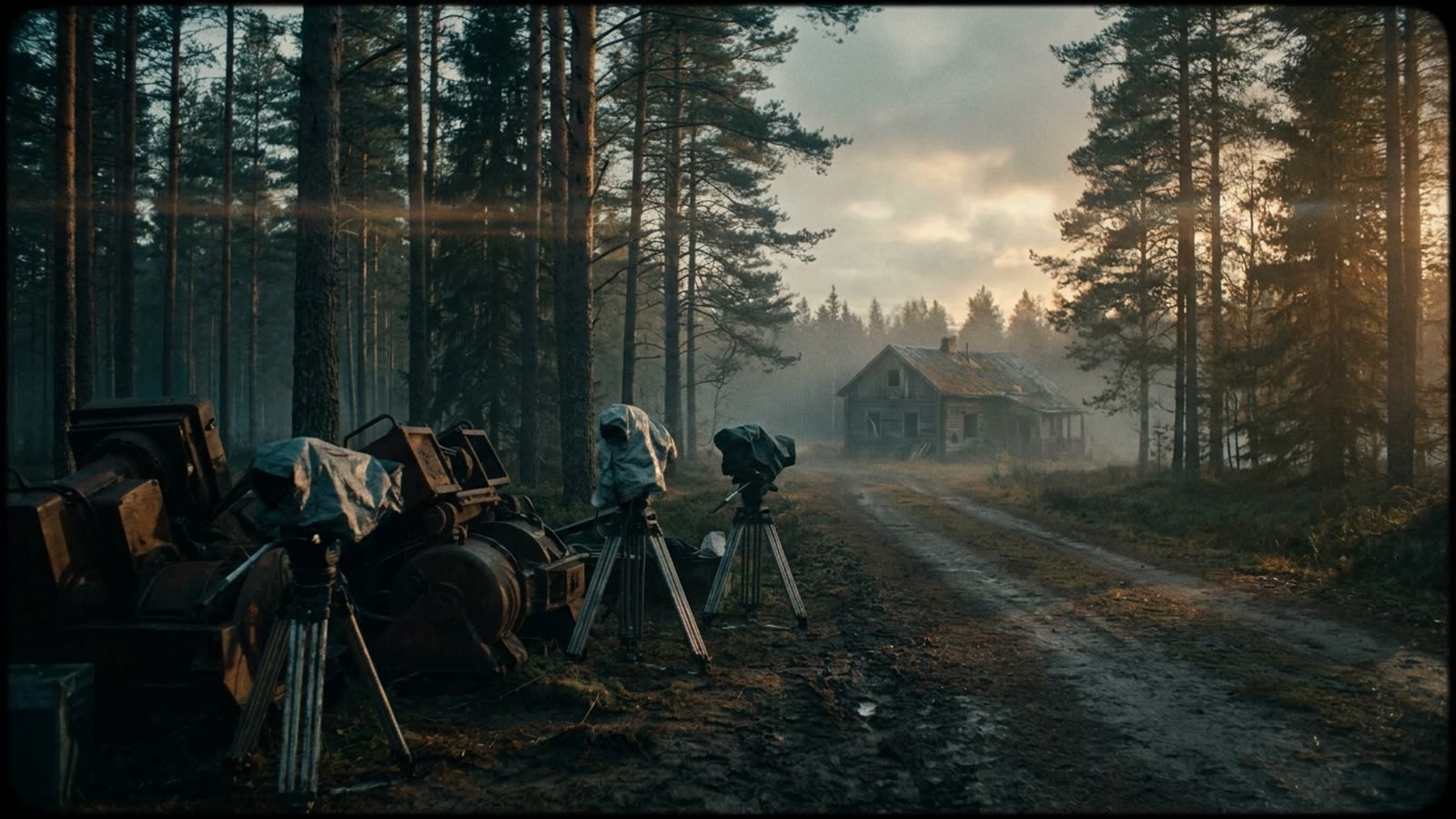
The premise was always a little absurd: a family of nine living off-grid in the Alaskan wilderness, hunting and gathering their way through life while camera crews documented their every move. Alaskan Bush People, which ran for fourteen seasons on Discovery Channel before its 2024 conclusion, asked viewers to believe in a version of frontier existence that required, among other things, professional lighting rigs and satellite uplinks.
The Brown family—patriarch Billy, matriarch Ami, and their seven children—became unlikely reality television royalty not despite the contradictions but because of them. American audiences have always harbored a complicated relationship with wilderness mythology, and the Browns offered something irresistible: the fantasy of escape packaged for consumption from the comfort of a suburban couch.
The authenticity industrial complex
The show's genius lay in its refusal to fully commit to either documentary realism or obvious fabrication. Critics spent years cataloging inconsistencies—the family's actual residences, their legal troubles in Alaska over false permanent fund dividend claims, the children's surprisingly robust social media presences. None of it mattered to the core audience, who understood implicitly that they were watching a negotiation between myth and reality rather than either thing in pure form.
This positioned Alaskan Bush People as a template for the streaming era's approach to reality programming, where the line between scripted and unscripted has become almost meaninglessly blurred. The Browns were doing in 2014 what most reality franchises now do as a matter of course: performing authenticity rather than documenting it.
Grief as programming
Billy Brown's death in February 2021 transformed the show into something more uncomfortable and arguably more honest. The final seasons became an extended meditation on loss, with the family's genuine mourning playing out alongside their continued performance of wilderness self-sufficiency. It was maudlin, occasionally exploitative, and also genuinely affecting—reality television doing what it does best, which is to find the real inside the artificial.
The children have scattered since the show's end. Some have pursued solo media ventures; others have retreated from public life. The Washington property that served as the family's later base remains, a monument to a particular moment in American entertainment when audiences still believed, or wanted to believe, that somewhere out there people were living differently.
Our take
Alaskan Bush People deserves more credit than it typically receives from cultural critics. Yes, it was manipulative. Yes, the premise required suspension of disbelief that bordered on the delusional. But it also captured something true about American longing—the persistent dream of opting out, of finding some territory beyond the reach of modernity's demands. That the dream was always a television production doesn't make it less revealing. The Browns understood their audience better than their audience understood itself, and that's a rare achievement in any medium.