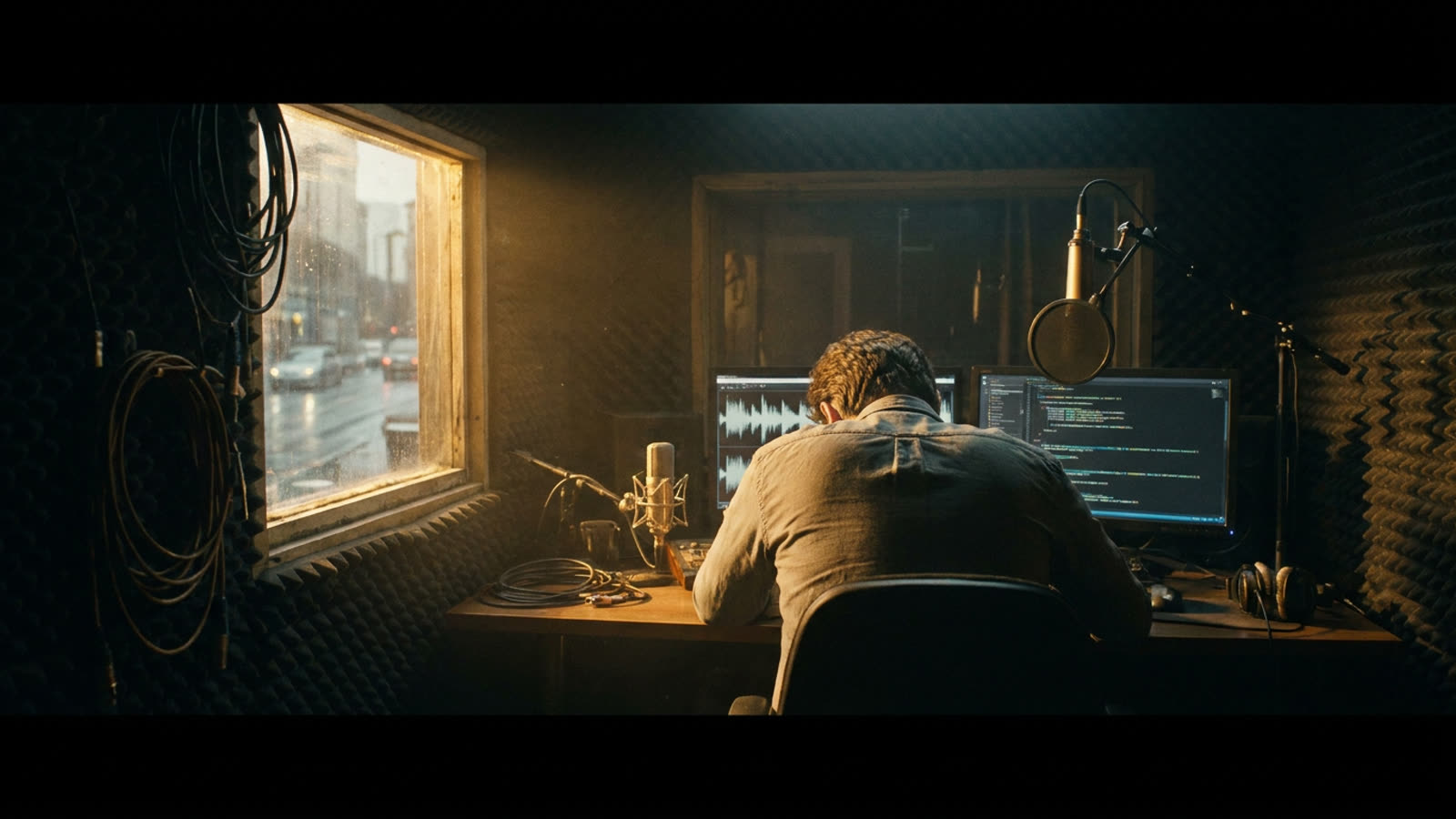
The recording booth, that padded sanctuary where performers have earned their living since the radio age, is becoming optional. Voice synthesis technology has advanced to the point where a few minutes of sample audio can generate unlimited new speech indistinguishable from the original performer — in any language, with any emotional inflection, saying words they never spoke. This is not a future scenario requiring speculation; it is the present condition of an industry in quiet upheaval.
Voice acting sits at the uncomfortable intersection of art and commerce where AI's disruption is most immediate. Unlike screenwriting or visual effects, where human judgment still guides the creative process, a synthetic voice requires no ongoing human participation once trained. The economics are stark: a single session fee versus perpetual licensing revenue, a day's work versus a dataset that works forever.
The uncanny valley has closed
Early text-to-speech systems were obviously mechanical, useful for GPS directions and accessibility tools but unsuitable for anything requiring emotional nuance. That technological barrier has collapsed. Modern neural voice synthesis captures breath patterns, micro-hesitations, the subtle variations in pitch that distinguish genuine speech from robotic recitation. Video game studios, audiobook publishers, and advertising agencies now face a genuine choice where none existed before.
The shift has been particularly acute in localization. A character voiced in English can now speak fluent Japanese, Spanish, or Hindi while retaining the original performer's distinctive vocal qualities. What once required hiring dozens of regional voice actors can theoretically be accomplished with software. The efficiency gains are real; so is the displacement.
Consent becomes the battleground
The legal framework governing voice rights was built for an analog world. Performers signed contracts specifying particular projects, particular uses, particular durations. The concept of licensing one's voice as a trainable dataset — a template for infinite future utterances — had no precedent. Early AI voice deals were often buried in dense contract language that performers signed without understanding the implications.
The backlash has been fierce. Union negotiations now center on AI provisions with an intensity that rivals traditional compensation disputes. The fundamental question is whether a voice constitutes personal identity, protectable like a face or fingerprint, or whether it is merely a skill, licensable like any other professional service. Courts in multiple jurisdictions are weighing in, and their rulings will establish precedent far beyond entertainment.
The human premium
Paradoxically, the rise of synthetic voices may be creating a market premium for certified human performance. Some audiobook platforms now offer "human-narrated" labels, betting that listeners will pay more for the assurance of genuine human craft. Advertising agencies report that certain clients specifically request proof of human voice talent, viewing it as a brand-values statement.
This bifurcation suggests a possible future: synthetic voices handling utilitarian applications where cost and speed matter most, human performers retained for prestige projects where authenticity carries commercial value. Whether that division sustains a viable profession for voice actors — rather than a boutique luxury for the elite few — remains uncertain.
Our take
Voice acting is the canary in the creative economy's coal mine. The technology that can clone a voice can eventually clone a writing style, a visual aesthetic, a musical sensibility. How this industry navigates consent, compensation, and creative control will establish templates that ripple outward. The performers fighting for their vocal identities are not merely protecting their own livelihoods; they are drafting the first chapter of labor law for the synthetic age. The rest of us would do well to pay attention.