For decades, the logistics dispatcher occupied a peculiar position in the supply chain: part air-traffic controller, part therapist, part chess grandmaster playing against entropy itself. They juggled driver schedules, weather patterns, customer demands, and the thousand small crises that emerge when physical goods must traverse physical space. Now, increasingly, they don't.
The transformation happened without fanfare. No press releases announced that route optimization had moved from whiteboards to neural networks. No industry conferences mourned the decline of the dispatcher's intuition. The packages simply kept arriving, and the humans who once orchestrated their journeys found their roles fundamentally altered—or eliminated entirely.
The cognitive load that machines inherited
Dispatching was always a problem of combinatorial explosion. A fleet of fifty trucks serving two hundred stops generates more possible route combinations than there are atoms in the observable universe. Human dispatchers never solved this problem optimally; they developed heuristics, mental shortcuts refined through years of experience. They knew which drivers worked well together, which customers would accept early deliveries, which roads flooded in spring.
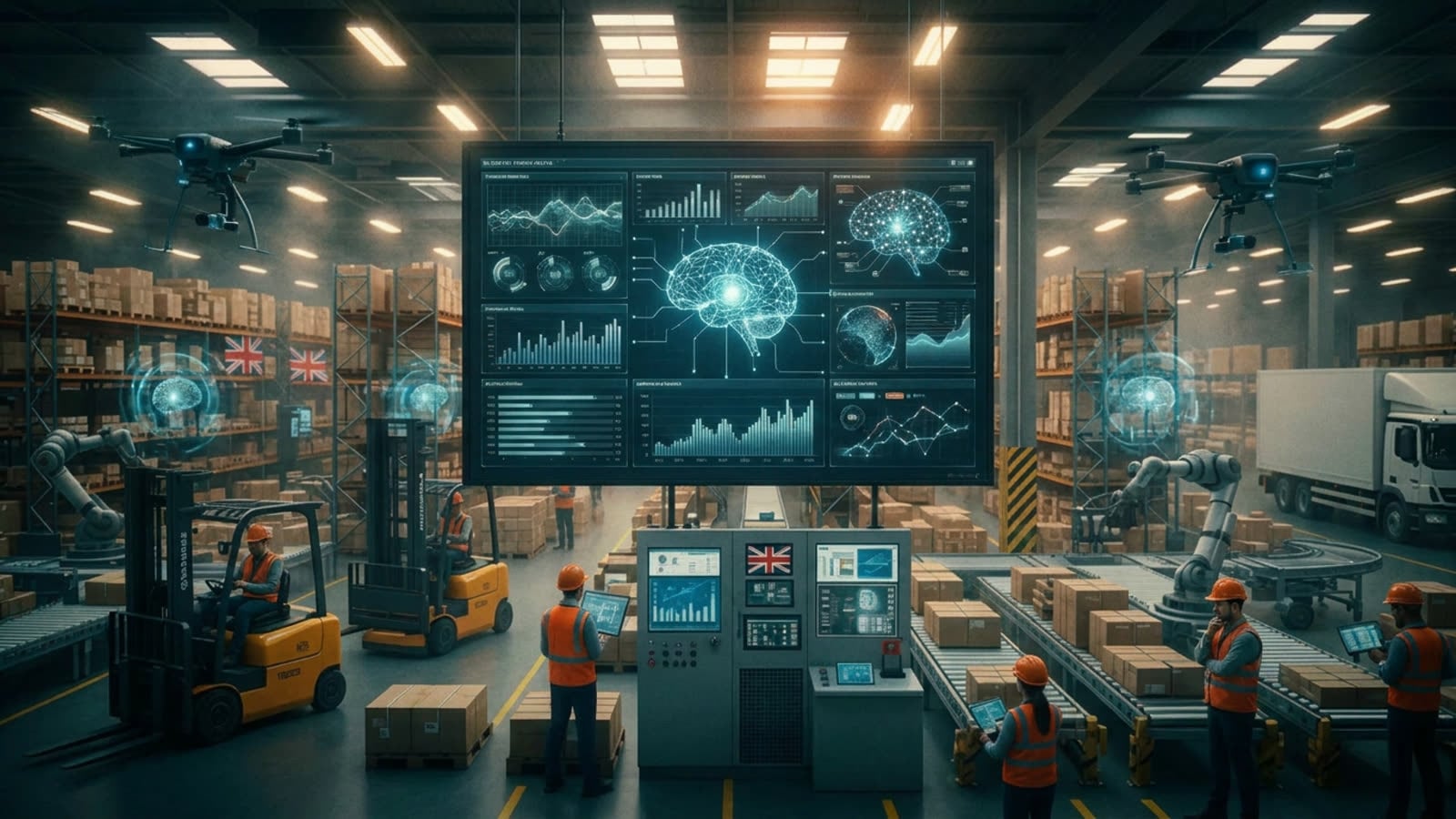
Modern AI systems approach the same problem differently. They ingest historical delivery data, real-time traffic feeds, weather forecasts, and driver performance metrics, then generate solutions that human dispatchers describe with a mixture of admiration and unease. The routes often look wrong to experienced eyes—counterintuitive sequences that nonetheless prove faster, cheaper, more fuel-efficient when executed.
The remaining human dispatchers have become, in effect, exception handlers. They intervene when a driver calls in sick, when a customer changes requirements mid-route, when the algorithm encounters a situation outside its training distribution. Their expertise has shifted from solving the core optimization problem to understanding when and how the machine's solutions will fail.
What the algorithm cannot see
The limits of AI dispatching reveal themselves in the margins. Algorithms struggle with what industry veterans call "soft constraints"—the driver who needs to be home by six on Thursdays for his daughter's soccer games, the customer who technically accepts deliveries until five but whose receiving clerk leaves at four-thirty, the warehouse manager who will expedite your shipment if you remember to ask about his boat.
These are not merely sentimental considerations. They represent accumulated relationship capital that lubricates the supply chain's mechanical operations. When companies eliminate dispatchers entirely, they often discover that on-time delivery metrics remain stable while something harder to measure deteriorates: driver retention, customer loyalty, the willingness of partners to accommodate unusual requests.
The most sophisticated logistics operations have recognized this. They deploy AI for the mathematical heavy lifting while preserving human dispatchers as relationship managers and system overseers. The ratio has shifted dramatically—one human might now supervise what previously required a team of ten—but the human element persists.
The new dispatcher skillset
Younger workers entering logistics dispatch face a different career than their predecessors. The job posting that once emphasized "ability to work under pressure" and "strong geographic knowledge" now requests "experience with optimization platforms" and "comfort with data-driven decision-making." The dispatcher's value lies not in outthinking the algorithm but in knowing when to trust it and when to override it.
This represents a broader pattern in AI-augmented work. The human role shifts from performing a task to supervising its automated performance, from generating solutions to evaluating them, from expertise in the domain to expertise in the domain's algorithmic representation. It is a subtle demotion dressed as an upgrade.
Our take
The dispatcher's quiet transformation offers a preview of how AI will reshape cognitive work more broadly: not through dramatic displacement but through gradual redefinition. The trucks still need humans, but they need different humans doing different things. Whether this represents progress depends entirely on whether you're the dispatcher who learned to manage algorithms or the one who discovered that thirty years of route intuition had become a depreciating asset overnight.