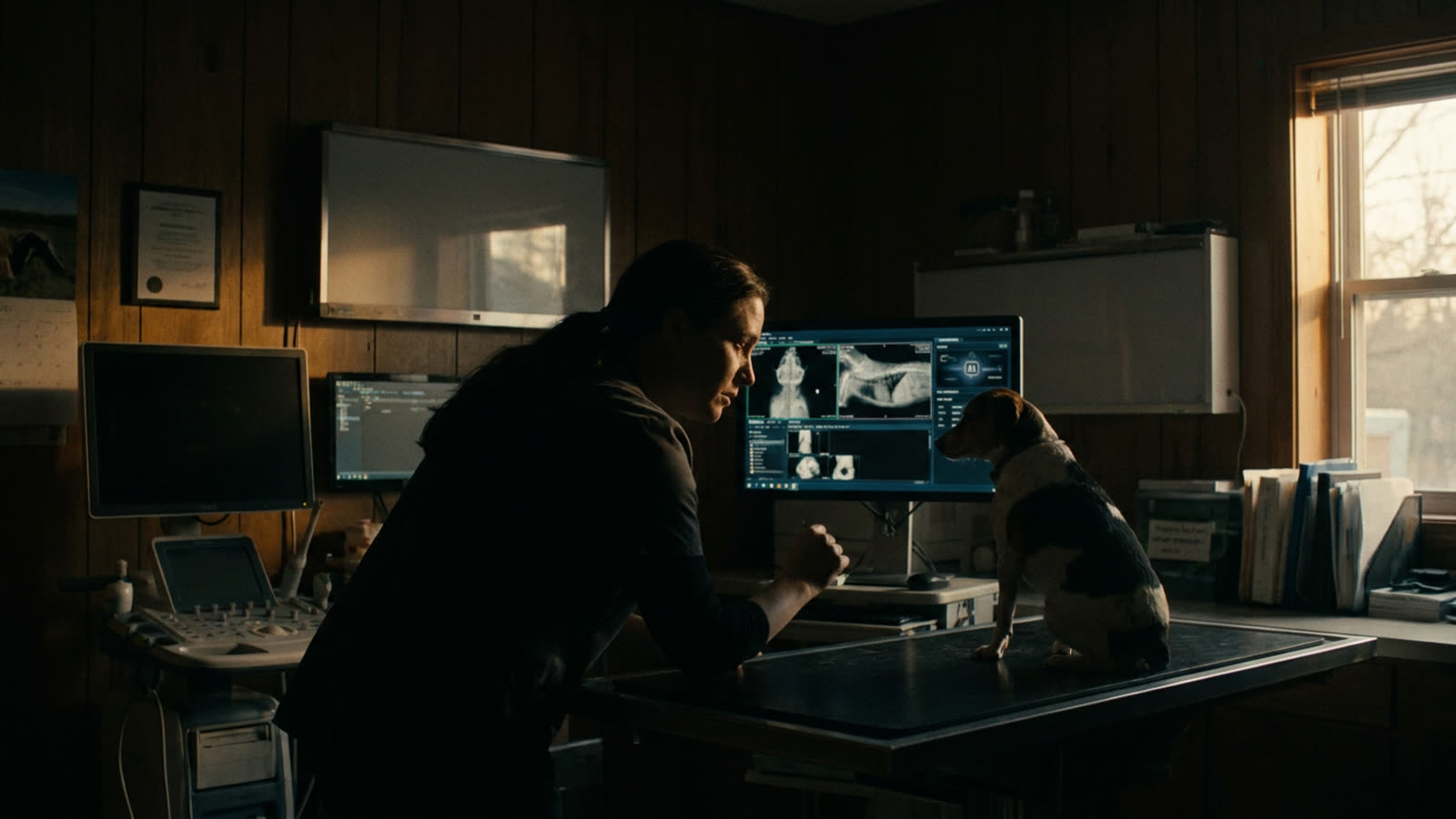
The most honest test of how artificial intelligence will reshape professional work is happening not in gleaming hospital systems or white-shoe law firms, but in suburban strip-mall veterinary clinics where a golden retriever named Max is getting his annual checkup.
Veterinary medicine has become an accidental laboratory for AI adoption because it shares the diagnostic complexity of human medicine without the regulatory thickets, liability paranoia, and institutional inertia that slow change in human healthcare. The results are instructive: AI is not replacing veterinarians. It is making them faster, more confident, and slightly more dependent on algorithmic second opinions in ways they do not always articulate clearly.
The X-ray in the back room
The most visible AI penetration in veterinary practice is in diagnostic imaging. When a limping Labrador gets radiographs, the images increasingly pass through machine learning systems trained on millions of animal X-rays before the veterinarian reviews them. These systems flag potential fractures, highlight suspicious masses, and measure joint angles with a consistency that human eyes cannot match at 4 p.m. on a Friday after twelve appointments.
The technology does not make the diagnosis. It directs attention, reduces the cognitive load of pattern recognition, and catches the things tired professionals miss. Veterinarians who use these systems report something interesting: they trust their own readings more when the algorithm agrees with them, and they look harder when it disagrees. The AI has become a silent partner in clinical reasoning, not a replacement for it.
The economics of algorithmic assistance
Veterinary clinics operate on thin margins with high throughput. A general practitioner might see thirty patients in a day, making decisions about creatures who cannot describe their symptoms and whose owners often cannot afford extensive testing. AI tools that reduce diagnostic uncertainty or speed up workflows have immediate economic value that clinic owners can calculate in dollars per appointment.
This economic clarity has driven adoption in ways that more prestigious professions have resisted. When a dermatology AI can distinguish between allergic dermatitis and a fungal infection from a smartphone photo with reasonable accuracy, the veterinarian saves twenty minutes and the client saves a referral fee. Nobody writes anxious op-eds about whether this diminishes the art of veterinary dermatology.
What the profession reveals about the future
The veterinary experience suggests that AI absorption into professional work follows a pattern that neither utopians nor catastrophists predict accurately. The technology does not eliminate jobs or even dramatically reduce the number of practitioners needed. Instead, it subtly restructures what expertise means and where human judgment adds value.
Veterinarians increasingly describe their role as interpreting algorithmic outputs in the context of a specific animal's history, an owner's financial constraints, and the ineffable clinical intuition that comes from touching a patient's abdomen. The AI handles pattern recognition at scale; the human handles everything that requires understanding that this particular anxious rescue dog has an owner who works two jobs and cannot afford a $3,000 workup.
Our take
The veterinary profession's quiet AI integration offers the most realistic preview of how artificial intelligence will actually change white-collar work. Not through dramatic displacement, but through gradual cognitive partnership that makes professionals simultaneously more capable and more dependent on tools they do not fully understand. The veterinarians are not worried about being replaced. They are worried about what happens when the system goes down and they realize how much they have come to rely on that algorithmic whisper in their ear. That dependency, not unemployment, is the real transformation underway.