The transformation happened without a memo. One morning, the junior associates at a midsize litigation firm in Chicago noticed their paralegals had stopped printing discovery documents. Instead, they were typing queries into a system that could search, summarize, and cross-reference thousands of pages in minutes. The paralegals themselves noticed something different: their jobs had changed, and nobody had asked permission.
This quiet revolution in legal support work offers a window into how artificial intelligence actually enters a profession—not through dramatic displacement announcements, but through the gradual redefinition of what competence means. The paralegal, once valued primarily for meticulous document organization and procedural knowledge, now finds that the most prized skill is knowing how to ask a machine the right question.
The new literacy
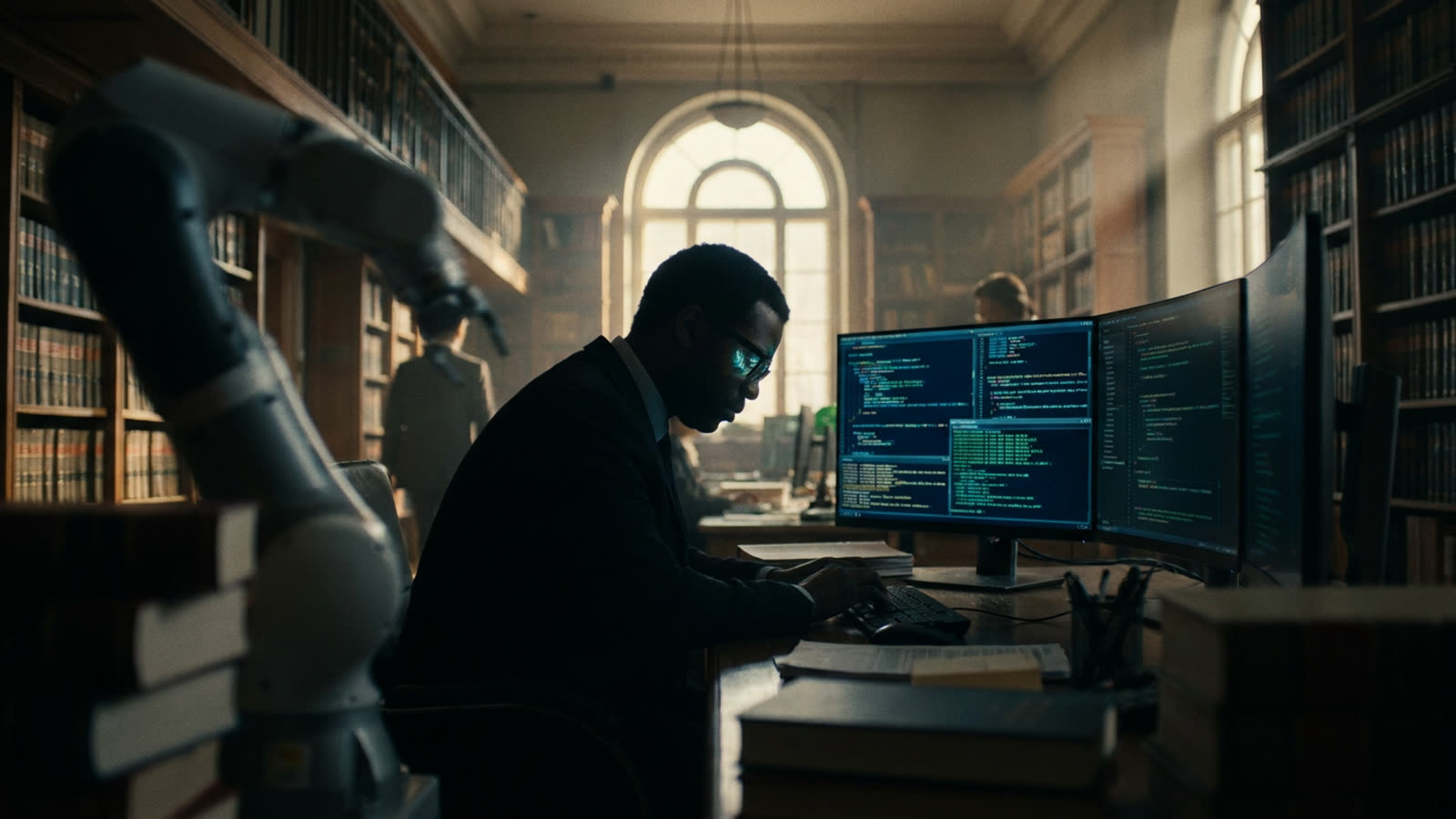
Legal work has always been text-heavy, which made it an obvious early target for language models. Contract review, case law research, deposition summarization—these tasks that once consumed hundreds of billable hours now compress into fractions of the time. But the compression did not eliminate human involvement; it relocated it. Someone still needs to frame the query, evaluate the output, and catch the hallucinations.
That someone, increasingly, is the paralegal. Partners and associates remain focused on strategy and client relationships. The paralegal has become the interface between the firm's legal reasoning and the machine's pattern recognition. This is skilled work, but it is a different skill than the one most paralegals were trained for. The best performers are those who developed an intuition for prompt construction—understanding that asking for "relevant precedents" yields different results than asking for "cases where the defendant successfully argued jurisdictional immunity in maritime disputes."
The training gap
Law schools have begun incorporating AI literacy into their curricula, but paralegal certification programs have been slower to adapt. The American Bar Association's guidelines for paralegal education still emphasize traditional research methods, document management, and procedural compliance. These remain necessary, but they are no longer sufficient.
The result is a workforce caught between two eras. Veteran paralegals with decades of experience find their institutional knowledge devalued relative to younger colleagues who grew up iterating with chatbots. Meanwhile, formal credentials have become unreliable signals of actual capability. Firms report hiring based on demonstrated AI fluency rather than certificate prestige—an inversion that has left professional associations scrambling to define new standards.
The billable hour problem
There is also the uncomfortable question of economics. Paralegals have traditionally been profit centers for law firms, their hours billed to clients at rates that exceed their salaries by comfortable margins. When a task that once took forty hours now takes four, someone absorbs the difference. Some firms have responded by expanding the scope of paralegal work, using the time savings to handle more matters. Others have simply reduced headcount.
The profession's trade publications are filled with reassurances that AI will augment rather than replace human workers. This is probably true in aggregate, but aggregates offer cold comfort to the individual whose specific tasks have been automated. The paralegal who spent a career mastering Westlaw's Boolean search syntax now competes with entry-level hires who treat the same database as a conversational partner.
Our take
The paralegal profession is experiencing what will eventually happen to most knowledge work: not elimination, but redefinition under pressure. The optimistic reading is that freed from drudgery, legal support staff can focus on higher-value judgment calls. The realistic reading is that this transition will be chaotic, unevenly distributed, and largely unmanaged by the institutions that should be preparing workers for it. The paralegals figuring this out are doing so on their own time, with their own ingenuity. Their profession's formal gatekeepers remain several steps behind.