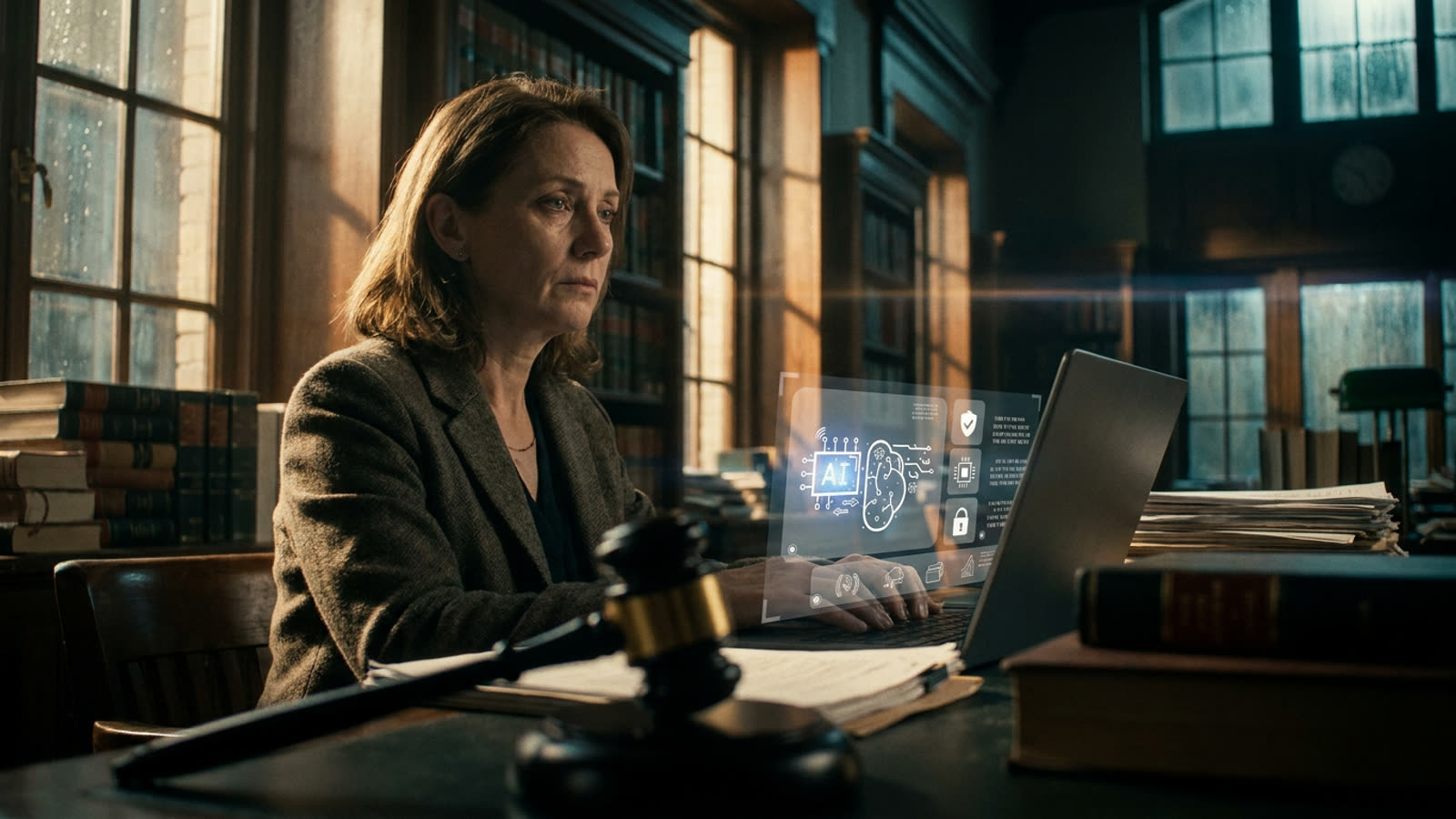
The paralegal profession has always been defined by volume. Thousands of pages of contracts, millions of documents in discovery, endless hours of due diligence—work that demanded intelligence but not necessarily a law degree. Now that same work can be completed in minutes by systems that never tire, never miss a clause, and never bill by the hour. The question facing paralegals is not whether AI will change their jobs, but whether they will be the ones directing the machines or competing against them.
From document review to quality control
The transformation is already well underway. Contract analysis that once required days of careful reading can now be processed by AI systems trained on millions of legal documents. Discovery, the notoriously expensive process of sifting through evidence, has been partially automated for years, but recent advances have pushed machine capabilities far beyond keyword searching. Modern systems can identify privilege issues, flag relevant communications, and even predict which documents opposing counsel is likely to request.
For paralegals, this has created a peculiar inversion. The junior work—the grinding, repetitive tasks that built foundational knowledge—is precisely what machines do best. What remains is the oversight: checking the AI's work, catching its errors, explaining its limitations to attorneys who may not understand the technology. The paralegal who once spent weeks in a document review room now spends hours reviewing what the machine flagged, asking whether the algorithm understood the nuance of a particular relationship or missed the significance of a seemingly routine email.
The knowledge paradox
Here lies the profession's central tension. To supervise AI effectively, paralegals need deep expertise in the very tasks the AI is performing. They must understand contract structures well enough to recognize when the machine has misclassified an indemnification clause. They must know discovery rules thoroughly enough to catch when the system has incorrectly marked a document as privileged. Yet the traditional path to that expertise—years of hands-on document work—is being compressed or eliminated.
Law firms are grappling with how to train the next generation. Some have created hybrid roles, pairing new paralegals with experienced colleagues specifically to build judgment that cannot be learned from supervising algorithms alone. Others are recruiting from different backgrounds entirely, seeking candidates with technical fluency who can be taught legal fundamentals. The paralegal of the near future may look less like a legal specialist and more like a quality assurance engineer who happens to work in law.
The economics of efficiency
Clients, naturally, are delighted. Corporate legal departments that once faced seven-figure discovery bills now expect the same work for a fraction of the cost. This pressure flows downward. Law firms that once employed armies of contract attorneys and paralegals for large matters are finding that smaller teams with AI tools can produce equivalent results. The billable hour, already under siege, becomes harder to justify when the hour has become a minute.
Yet efficiency gains have not translated into mass unemployment—at least not yet. Demand for legal services has expanded to absorb much of the productivity increase. Matters that were once too expensive to pursue become economically viable. Compliance reviews that happened annually now happen quarterly. The work has changed more than it has disappeared, though the distribution of who performs it continues to shift.
Our take
The paralegal profession is not dying; it is bifurcating. Those who master the art of AI supervision—understanding both the technology's capabilities and its blind spots—will find themselves more valuable than ever, serving as the essential bridge between algorithmic output and legal judgment. Those who cannot adapt will find their traditional tasks automated away, their expertise rendered redundant by systems that learn faster than any human can read. The tragedy is that the transition rewards precisely the wrong people: those already comfortable with technology, rather than those who spent careers developing the substantive knowledge that makes AI oversight meaningful. The profession's survival depends on finding ways to transfer that hard-won wisdom before the machines make it obsolete.