For most of the twentieth century, underwriting was a job that rewarded a particular kind of intelligence: the ability to read a balance sheet, size up a factory floor, and make a judgment call about whether a business would burn down, go bankrupt, or simply plod along. The best underwriters combined quantitative rigour with something harder to define — a nose for risk, honed over decades of getting it wrong and learning from the wreckage.
That job still exists. But it is changing faster than almost any other white-collar profession, and the people who do it know it.
The machine in the middle office
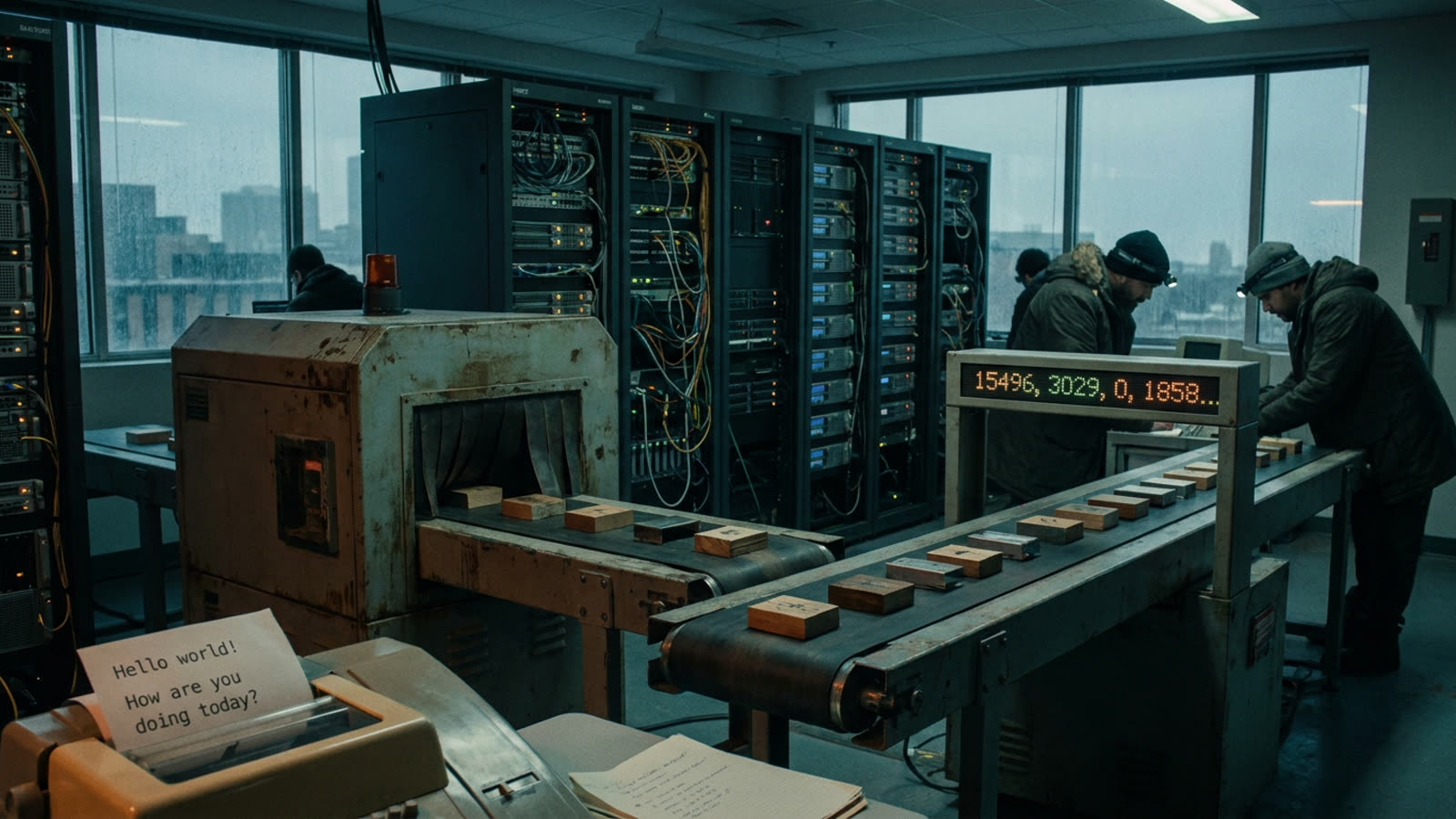
The transformation began not with large language models but with simpler machine-learning systems in the early 2010s. Insurers discovered that algorithms trained on claims data could predict loss ratios with uncomfortable accuracy — often outperforming their most experienced underwriters on straightforward commercial lines. The first wave of automation targeted the obvious: small-business policies, personal auto, homeowners. These were commoditised risks where human judgment added little value beyond what a well-tuned model could deliver in milliseconds.
What changed more recently is the scope of algorithmic ambition. Modern AI systems can now parse unstructured data — satellite imagery of rooftops, social-media sentiment about a company's management, the linguistic patterns in financial filings that correlate with fraud. They can synthesise information from dozens of sources and produce a risk score before a human underwriter has finished reading the submission email. The middle office, once staffed by junior analysts preparing dossiers for senior decision-makers, is increasingly automated.
What remains for the humans
The underwriters who thrive in this environment have become something different from their predecessors. They are less craftsmen than curators — reviewing algorithmic outputs, handling exceptions, negotiating with brokers on deals too complex or novel for the models to price confidently. The work is more supervisory, more relational, and in some ways more interesting. But there is less of it, and it requires different skills.
Senior underwriters describe a peculiar cognitive shift. Where they once built mental models of risk from first principles, they now spend much of their time interrogating the machine's reasoning — asking why a model flagged a particular account, whether the training data included comparable exposures, whether the algorithm is picking up signal or noise. The expertise required is no longer primarily actuarial; it is epistemological. Understanding what the model knows, and what it cannot know, has become the core competency.
The broker's lament
Insurance brokers, who serve as intermediaries between clients and underwriters, have noticed the change acutely. The old model of underwriting involved relationships — lunches, phone calls, the slow accumulation of trust that allowed a broker to get a difficult risk placed with an underwriter who understood the nuances. That world has not vanished, but it has shrunk. Algorithmic underwriting is faster and less negotiable. A risk either fits the model's parameters or it does not, and no amount of relationship capital can override a hard decline.
This efficiency comes at a cost. Brokers report that unusual risks — the ones that require genuine underwriting judgment — are harder to place than ever. The humans who remain in underwriting roles are stretched thin, handling the exceptions that the machines cannot process. The median risk gets priced faster and more accurately; the tail risks get orphaned.
Our take
The underwriter's evolution is a useful case study in how AI actually transforms professional work — not through sudden displacement but through gradual redefinition. The job title persists; the job itself becomes unrecognisable. What is being lost is not easily quantified: a form of institutional knowledge, a way of thinking about uncertainty that was developed over generations. What is being gained is efficiency, consistency, and the capacity to price risks at a scale that would have been unimaginable a decade ago. Whether that trade-off is worth it depends on which risks you care about — and who bears the cost when the models get it wrong.