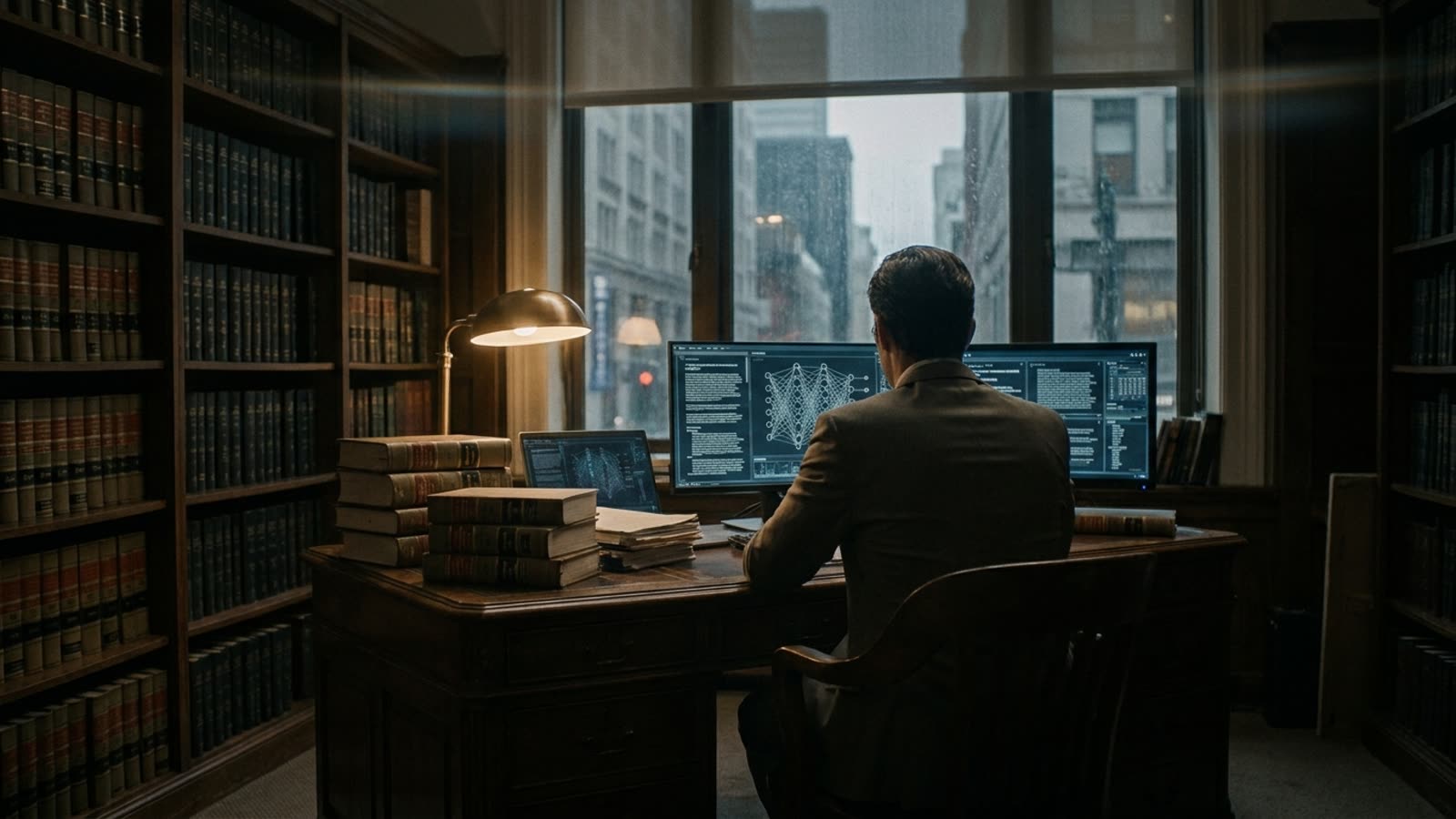
The annual audit used to be an exercise in statistical sampling. A team of accountants would descend on a company, select a representative fraction of transactions, and extrapolate their findings to the whole. The method was born of necessity — no human workforce could examine every invoice, every journal entry, every intercompany transfer. The sample had to suffice.
That constraint is dissolving. Machine learning systems can now ingest a company's entire general ledger, flag anomalies across millions of transactions, and surface patterns that sampling would almost certainly miss. The profession built on educated guesswork is becoming one of comprehensive verification.
From sampling to census
The shift is more profound than it appears. Traditional auditing accepted a fundamental limitation: materiality thresholds existed partly because exhaustive review was impossible. When software can examine every transaction, the philosophical basis for those thresholds changes. Auditors are grappling with a question their training never anticipated — if you can check everything, must you?
The major accounting firms have invested heavily in proprietary platforms that apply natural language processing to contracts, use anomaly detection on financial data, and employ pattern recognition to identify related-party transactions that might otherwise escape notice. The technology excels at the tedious, repetitive work that once consumed junior auditors' first years.
The junior auditor problem
This creates an uncomfortable workforce question. The profession has always functioned as an apprenticeship — new graduates learned by doing the grunt work, absorbing judgment through osmosis. If algorithms handle the grunt work, how do future partners develop judgment? The firms insist that humans are being elevated to higher-value analysis, but the pipeline that produced seasoned auditors depended on years of mundane exposure to how businesses actually operate.
Some firms are experimenting with simulation-based training, attempting to compress experiential learning into structured programs. Whether this produces auditors with equivalent intuition remains genuinely unknown. The profession is conducting an experiment on itself.
Liability and the black box
There is also the matter of professional responsibility. When an algorithm flags — or fails to flag — a transaction, who bears accountability? Auditing standards were written for human judgment. The regulatory frameworks have not caught up with systems that can explain what they found but not always why they found it. Partners signing audit opinions must attest to work they may not fully understand.
This is not hypothetical anxiety. Audit failures carry legal consequences, and the defense that the algorithm missed it is unlikely to satisfy regulators or courts. The profession is adopting technology faster than it is developing governance for that technology.
Our take
Financial auditing may be the clearest case study in how AI transforms knowledge work — not by replacing professionals outright, but by fundamentally altering what the job means. The auditor of the near future will be less an examiner of transactions than an overseer of systems that examine transactions. Whether that produces better audits or merely different ones is the trillion-dollar question that the profession, and the capital markets that depend on it, will answer together.