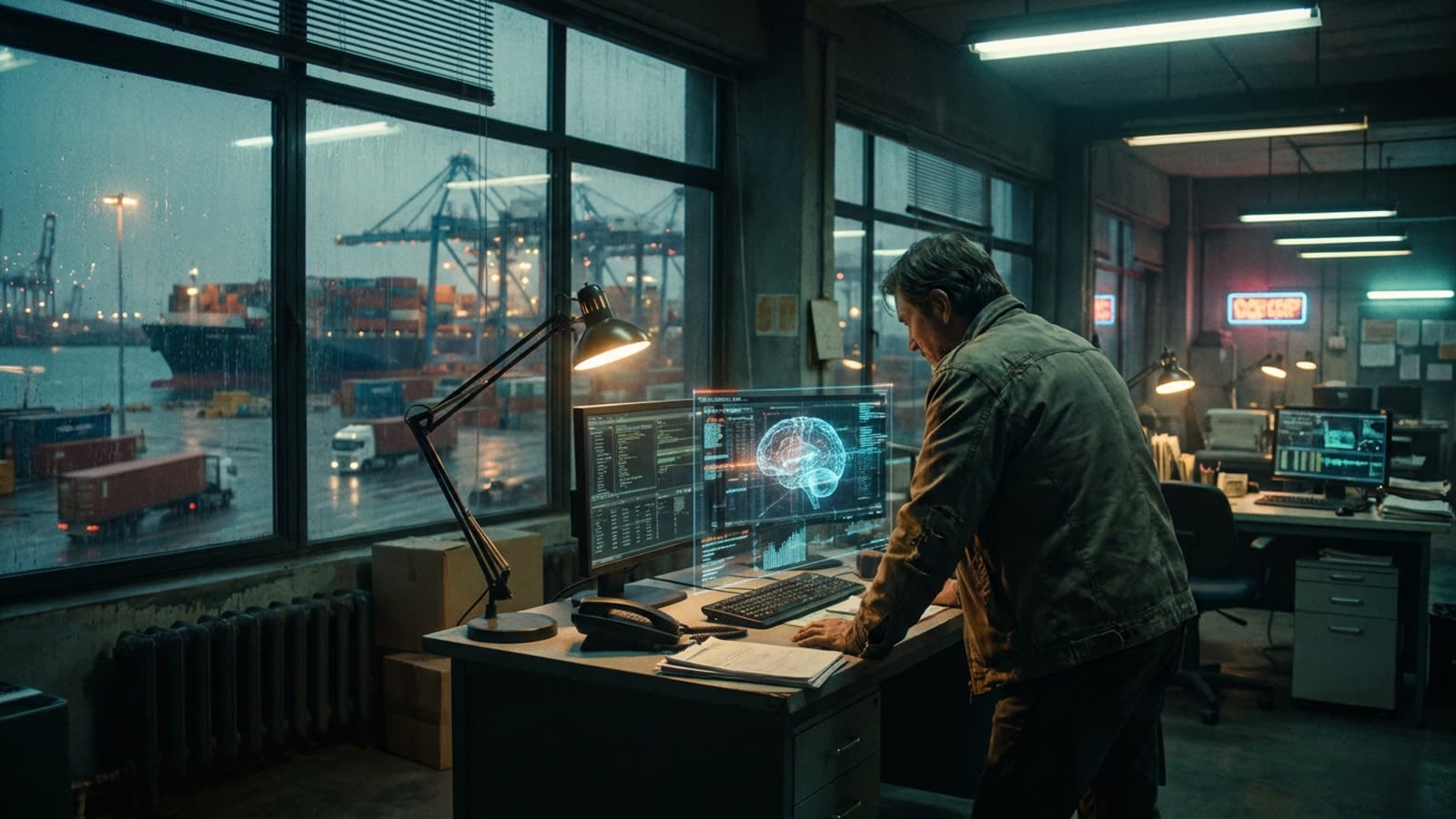
Every container that crosses a border carries paperwork, and for more than a century that paperwork has required a particular kind of human intelligence: the customs broker, master of tariff codes, trade agreements, and the bureaucratic maze that separates a shipment in transit from a shipment delivered.
That intelligence is being automated faster than almost anyone outside the logistics industry has noticed. The transformation is not dramatic—no robots unloading ships, no drones delivering packages. It is happening in spreadsheets and classification databases, in the quiet work of matching products to the correct six-digit Harmonized System codes that determine how much duty a government collects.
The classification problem
Customs brokerage has always been an information arbitrage business. A broker's value lay in knowing that a "plastic storage container with integrated cooling element" might be classified as kitchenware, refrigeration equipment, or general plastics depending on its primary function, country of origin, and the specific wording of applicable trade agreements. Get it wrong and your client pays excess duties or faces penalties. Get it right and you have earned your fee.
This is precisely the kind of pattern-matching task at which large language models excel. The major logistics software providers now offer AI-powered classification tools that can process thousands of product descriptions against tariff schedules in minutes. What once required a broker to spend an afternoon researching precedents and rulings can now be accomplished before the coffee gets cold.
The accuracy rates are not perfect—edge cases still require human judgment—but they are good enough that the economics of the profession have fundamentally shifted. A mid-sized brokerage that once employed a dozen classification specialists might now need three, with the rest of the work handled by software.
What remains for humans
The brokers who are thriving in this environment have stopped competing with algorithms on classification speed. Instead, they have repositioned themselves as strategic advisors on supply chain design, trade agreement optimization, and regulatory risk management.
This is higher-value work, but it requires a different skill set. The successful modern broker needs to understand not just what the tariff code is, but why a client's supply chain is structured to use that code, and whether restructuring might produce better outcomes. They need to anticipate regulatory changes, advise on free trade zone strategies, and help clients navigate the increasingly politicized landscape of international commerce.
In other words, the job has shifted from knowing the rules to understanding the game. The AI handles the lookup; the human handles the judgment.
The apprenticeship problem
There is a troubling undercurrent to this transformation. Customs brokerage, like many specialized professions, traditionally relied on apprenticeship. Junior brokers learned by doing thousands of routine classifications, gradually developing the intuition that allowed them to handle complex cases.
If AI handles the routine work, how does the next generation develop that intuition? The profession has not yet answered this question convincingly. Some firms are experimenting with AI-assisted training programs where junior staff review and validate machine classifications rather than generating them from scratch. Whether this produces the same depth of expertise remains to be seen.
Our take
Customs brokerage offers a preview of what AI transformation actually looks like in knowledge work: not mass unemployment, but a quiet reshaping of what the job means and who can do it well. The brokers who understood their value as classification speed are struggling. Those who understood it as judgment and relationships are finding that AI has made them more valuable, not less. The profession is smaller but more strategic, less clerical but more consequential. It is a pattern that will repeat across dozens of industries in the coming years, and the winners will be those who recognize early which parts of their expertise are truly human.