For more than two centuries, actuaries have occupied a peculiar position in the professional hierarchy: essential yet invisible, wielding enormous influence over how societies manage risk while remaining almost entirely unknown to the public they protect. The profession that invented life expectancy tables, priced the first insurance policies, and quantified mortality during industrial revolutions is now confronting its most significant transformation since the adoption of electronic calculators.
The change is not dramatic. There are no headlines about actuarial layoffs or AI replacing the green-eyeshade set. But inside the world's largest insurers, pension funds, and reinsurance giants, something fundamental is shifting.
The old craft and its limits
Traditional actuarial work rests on a foundation of generalised linear models, mortality tables, and carefully constructed assumptions about how populations behave in aggregate. An actuary pricing a life insurance product might spend weeks building a model that segments customers by age, health status, and smoking history, then applies decades of mortality data to estimate when, statistically speaking, each cohort will die.
This approach works remarkably well for large, homogeneous populations. It breaks down when the data becomes granular, when individual behaviour matters more than demographic category, and when the variables multiply beyond human capacity to weight them intuitively.
Machine learning does not replace the underlying mathematics of risk. It extends the actuary's reach into territory that was previously computationally inaccessible.
What the machines actually do
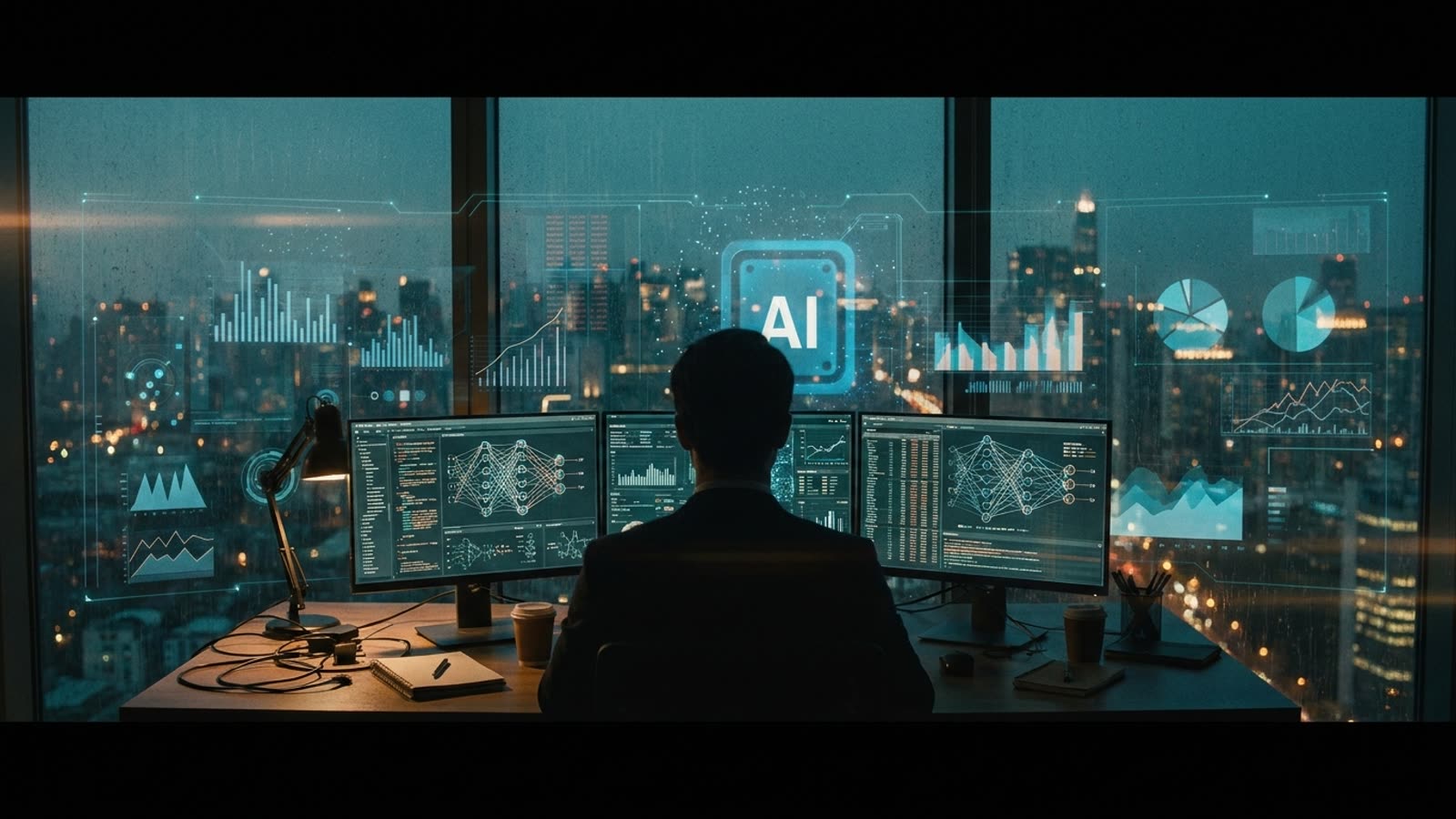
At major reinsurers, gradient-boosted decision trees now process thousands of variables simultaneously to price catastrophe risk—incorporating satellite imagery, soil composition data, building materials, and historical weather patterns in ways no human model could integrate. The actuary's role shifts from building the model to interrogating it: understanding why the algorithm priced a particular coastal property at a particular premium, and whether that reasoning would survive regulatory scrutiny.
In health insurance, neural networks trained on claims data can identify patterns that predict high-cost members years before traditional risk scores would flag them. The ethical implications are obvious and unresolved. The actuarial implications are equally profound: the profession must now grapple with models it cannot fully explain.
Pension funds deploy reinforcement learning to optimise asset-liability matching across scenarios that would take human analysts months to simulate. The actuary becomes less a calculator and more a translator—converting algorithmic outputs into language that trustees, regulators, and beneficiaries can understand and trust.
The new competencies
Professional actuarial bodies have responded with predictable institutional caution. Examinations now include modules on data science and predictive analytics, though the core curriculum remains anchored in classical probability theory. The real education happens on the job, where junior actuaries increasingly arrive with Python fluency their seniors lack, while seniors possess regulatory knowledge and business judgment that no amount of coding can substitute.
The profession's future likely belongs to those who can operate in both registers: technically sophisticated enough to audit an algorithm's decisions, commercially experienced enough to know when the algorithm is missing something that only human judgment can supply. The pure number-cruncher is becoming obsolete. The pure data scientist lacks the domain expertise to deploy models responsibly.
Our take
Actuarial science has always been about quantifying what cannot be known with certainty. The tools for that quantification are changing faster than at any point in the profession's history, but the underlying question remains constant: how do we price the future? The actuaries who thrive will be those who recognise that machine learning is neither their replacement nor their salvation, but simply the most powerful instrument yet invented for answering a question humans have asked since the first merchant ship set sail without knowing whether it would return.