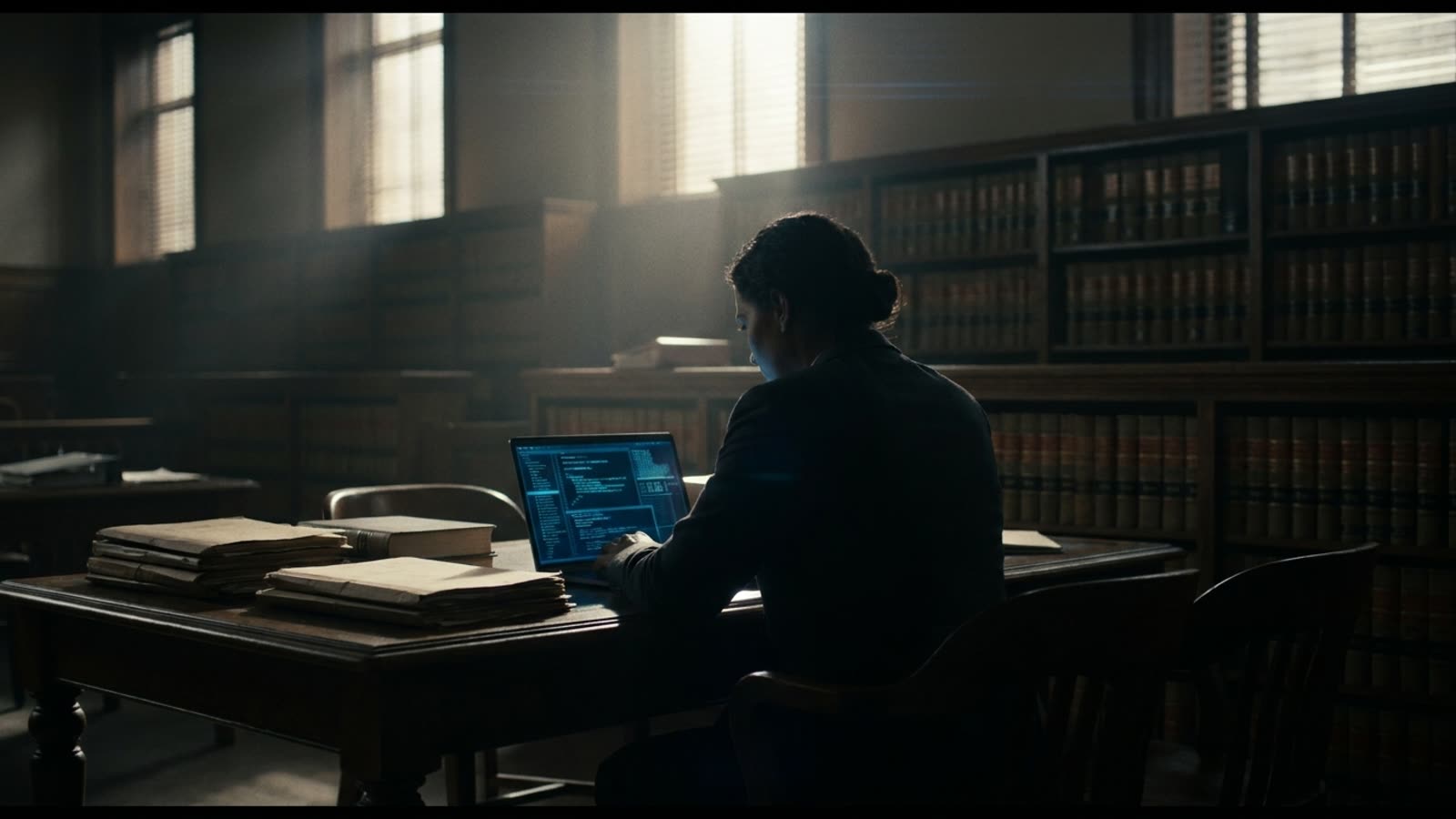
For a century, young lawyers earned their stripes the same way: locked in windowless rooms, surrounded by bankers' boxes, reading documents until their eyes bled. Discovery—the legal process of combing through evidence before trial—was grunt work, billed by the hour, performed by associates who understood that suffering was the price of partnership.
That world is functionally extinct. Not because litigation has become simpler, but because the machines read faster now.
The scale problem that broke the old model
Modern litigation generates documents at a pace that would have seemed hallucinatory to lawyers practicing even two decades ago. A single corporate lawsuit can involve tens of millions of emails, Slack messages, text threads, and shared files. The 2001 Enron collapse produced roughly 1.5 million documents for review. Today, a mid-sized employment dispute might generate more.
The mathematics became impossible. At a careful pace of fifty documents per hour—considered efficient—a team of twenty associates working full-time would need years to review a major case's discovery. Clients, understandably, stopped agreeing to pay for this. Insurance companies began refusing coverage for litigation costs that spiraled into eight figures before anyone entered a courtroom.
Something had to give, and what gave was the assumption that human eyes needed to see every page.
What the machines actually do
AI-assisted document review—often called technology-assisted review or TAR—works through a deceptively simple process. Senior lawyers review a small sample of documents, coding each as relevant or irrelevant, privileged or producible. The system learns from these decisions, then applies that learning to the remaining millions of documents, ranking them by likely relevance.
The results have been striking. Studies comparing AI-assisted review to traditional human review have consistently found that the machines perform at least as accurately, often more so. Human reviewers, it turns out, are inconsistent—their attention flags, their judgments drift, they miss things at two in the morning that they would catch at ten. The algorithms don't get tired.
But the transformation runs deeper than efficiency. The junior lawyers who once spent their first years developing an intuitive feel for documents—learning to spot the email that doesn't quite fit, the memo whose careful phrasing suggests someone knew trouble was coming—now spend those years doing something else entirely. What that something else should be remains an open question the profession hasn't fully answered.
The human residue
Law firms haven't eliminated their discovery teams. They've restructured them. A process that once required dozens of associates now requires a handful of specialists who understand how to train the systems, validate their outputs, and explain their methodology to skeptical judges. These lawyers need different skills: statistical literacy, comfort with technology, the ability to articulate why a machine's judgment should be trusted.
The partners who built careers on discovery still exist, but their expertise has shifted from reading documents to managing the systems that read them. They've become, in essence, quality control supervisors for artificial intelligence—a role that would have been incomprehensible to their predecessors.
Meanwhile, the document review centers that once employed thousands of contract attorneys have consolidated or closed. The work that remains has become more specialized and, paradoxically, both better compensated and less available. The pyramid that once supported Big Law—vast numbers of junior lawyers doing routine work, supervised by smaller numbers of senior lawyers doing complex work—has developed a missing middle.
Our take
The legal profession's AI transformation offers a preview of what's coming for knowledge work more broadly. The pattern isn't mass unemployment but structural reorganization: fewer people doing more work, different skills becoming valuable, the middle rungs of career ladders quietly removed. Law firms adapted because they had to—their economics demanded it. Other professions will face the same pressure, and they'd do well to study how lawyers navigated the transition. Not because it went smoothly, but because it happened whether anyone was ready or not.