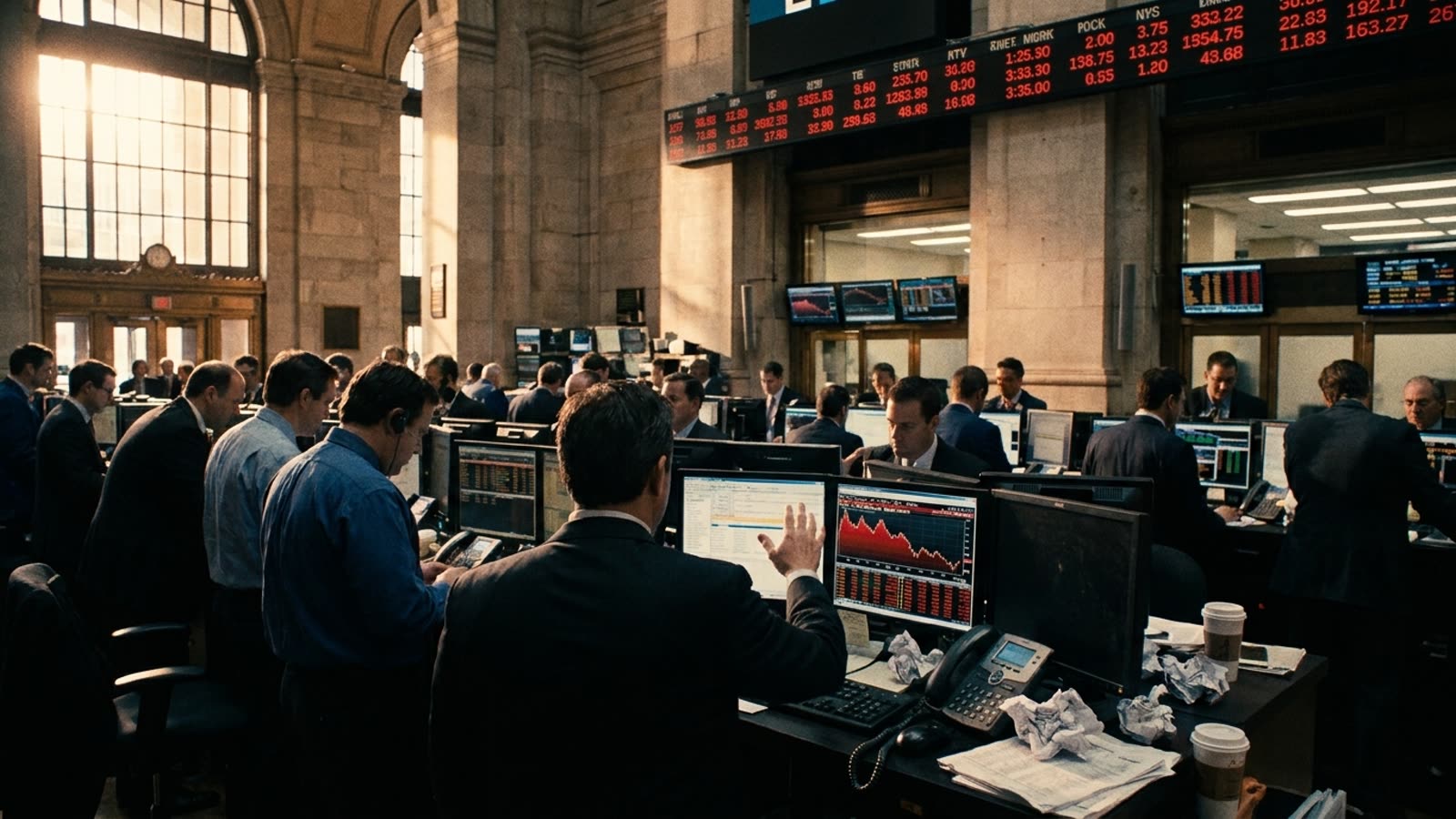
The most interesting trades are often the ones nobody talks about at dinner parties. While retail investors debate whether Nvidia will hit $200 or $250, a different conversation is happening in the credit markets: volumes of credit default swaps linked to major AI-exposed technology companies have surged to their highest levels since the 2022 rate-shock selloff.
CDS contracts are, in essence, insurance policies against corporate default. When trading volumes spike, it means sophisticated investors—hedge funds, pension managers, sovereign wealth funds—are either seeking protection or speculating that credit spreads will widen. Neither interpretation is bullish.
The capital trap
The AI buildout is phenomenally expensive. Data centers, GPU clusters, power infrastructure, and the talent to run it all require billions in upfront capital with uncertain payback timelines. Microsoft, Google, Amazon, and Meta have collectively committed more than $200 billion to AI-related capital expenditure over the next three years. OpenAI, despite its $150 billion valuation, burns cash at a rate that would alarm any traditional credit analyst.
For now, these companies can service their debt comfortably. But the CDS market is forward-looking. It prices in scenarios where AI monetization disappoints, where regulatory costs mount, where competition erodes pricing power, or where a recession forces painful retrenchment. The surge in CDS activity suggests at least some large players are assigning non-trivial probabilities to these outcomes.
A familiar pattern
Credit markets have a history of sniffing out trouble before equity markets. CDS spreads on Lehman Brothers widened months before the bank collapsed. Energy-sector CDS volumes spiked in late 2014, well ahead of the shale bust. The signal is not always right—sometimes hedges expire worthless—but it is rarely random noise.
What makes the current moment distinctive is the disconnect between equity exuberance and credit caution. AI-adjacent stocks remain near all-time highs, buoyed by earnings beats and breathless analyst notes. Yet the same institutional investors buying those stocks are also, apparently, paying up for downside protection in the credit market. This is not contradiction; it is portfolio construction. But it reveals a level of uncertainty that the headline indices do not.
Our take
The CDS surge is not a prediction of imminent doom. It is a reminder that the AI boom, like every capital cycle before it, carries real risk. The investors placing these trades are not permabears or Luddites; they are the same people funding the buildout. They simply want insurance in case the future arrives more slowly—or more painfully—than the pitch decks promise. That is not panic. It is prudence. And prudence, in markets, is often the first sign that the easy money has already been made.