The backlash against AI's environmental footprint has found a compelling villain: water. Headlines warn of data centers draining aquifers to cool the servers that power ChatGPT and its competitors. Environmental groups have seized on the issue. Politicians in water-stressed states have called for moratoriums on new facilities. The narrative is tidy, alarming, and—according to new analysis—substantially misleading at the national level while masking a more serious problem at the local one.
A comprehensive study released this week examining water consumption across the technology sector found that AI-focused data centers account for roughly 0.02% of total U.S. water withdrawals. For context, agricultural irrigation claims approximately 42%, thermoelectric power generation takes another 41%, and municipal systems consume around 12%. Even within the data center industry itself, AI workloads represent a minority of total consumption, with traditional cloud computing, enterprise storage, and streaming services collectively drawing far more.
The geography problem
But national statistics obscure what matters most: location. Water is not a fungible commodity that flows freely across state lines. A data center in Oregon drawing from the Columbia River watershed operates in a fundamentally different hydrological reality than one in Arizona tapping the stressed Colorado River system.
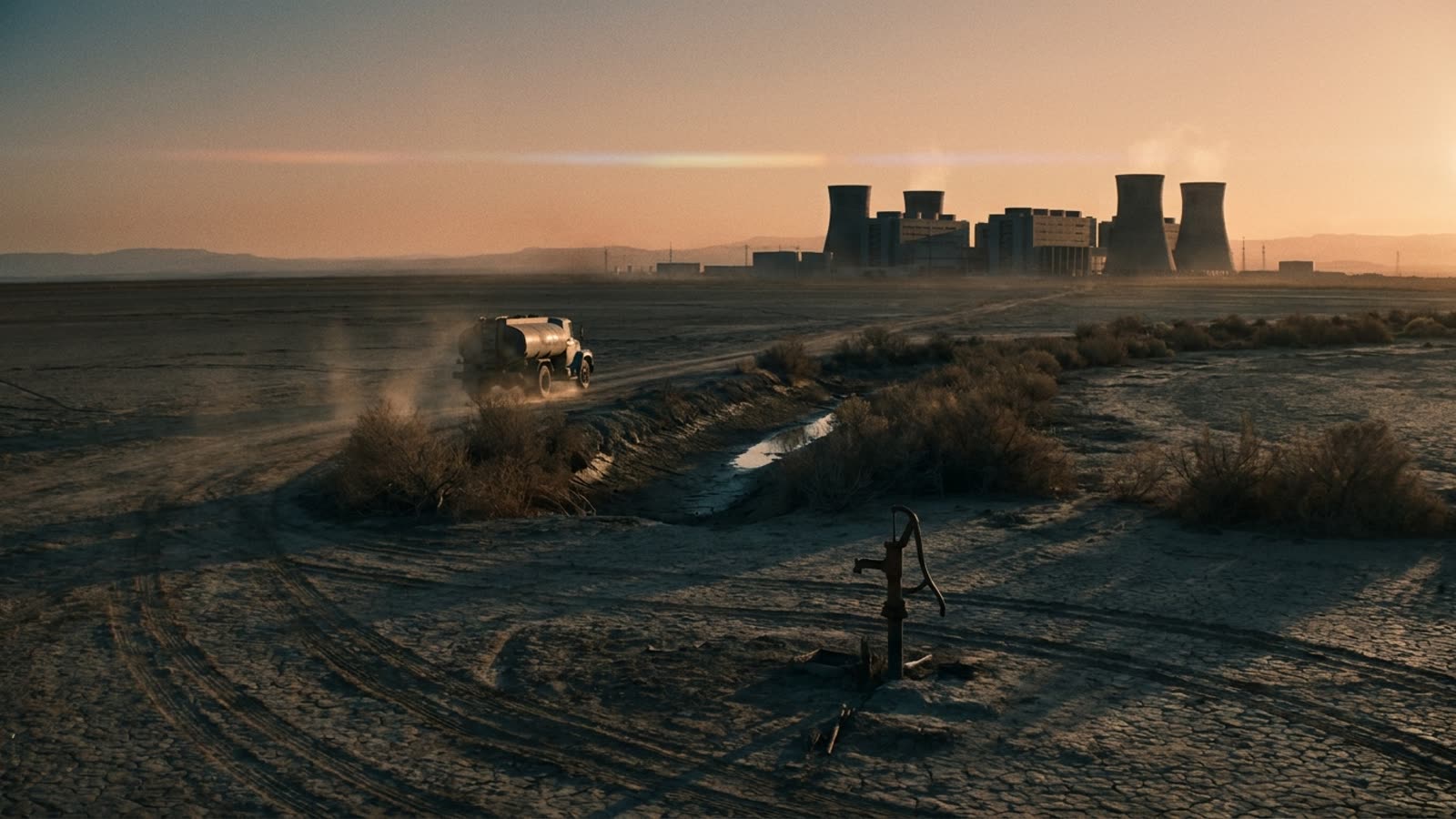
The difficulty is that the American Southwest—with its cheap land, abundant solar potential, and business-friendly regulatory environments—has become a magnet for data center development. Nevada, Arizona, and parts of Texas have actively courted these facilities with tax incentives and expedited permitting. The result is a clustering of water-intensive infrastructure in precisely the regions where every gallon carries outsize ecological and political weight.
In Maricopa County, Arizona, a single large data center campus can consume as much water annually as several thousand households. When that consumption occurs during a megadrought that has already forced mandatory cutbacks for farmers and municipalities, the aggregate national percentage becomes irrelevant to the residents watching their groundwater tables decline.
The cooling arms race
The industry is not oblivious to the optics. Major operators have invested heavily in alternative cooling technologies—air cooling, liquid immersion systems, and heat exchangers that reduce or eliminate water consumption. Google, Microsoft, and Meta have all announced water-positive commitments, pledging to replenish more water than their facilities consume through watershed restoration and efficiency projects.
Skeptics note that these pledges often involve replenishment in different watersheds than where the consumption occurs, and that the accounting methodologies remain opaque. A data center in Phoenix cannot meaningfully offset its local aquifer drawdown by funding wetland restoration in the Pacific Northwest.
The more honest operators acknowledge that the real solution is geographic diversification—building new capacity in water-rich regions even when the economics are less favorable. Some are exploring Nordic locations where cold ambient air provides natural cooling. Others are retrofitting existing facilities with closed-loop systems that recirculate water rather than evaporating it.
Our take
The water panic around AI data centers has the structure of many environmental controversies: a real problem inflated into a civilizational threat by advocates who understand that nuance does not generate headlines. AI's water footprint is not going to drain the nation's reservoirs. But it is going to intensify conflicts in regions already fighting over every acre-foot. The industry would do well to get ahead of this by voluntarily avoiding the most stressed watersheds—not because the aggregate numbers demand it, but because the politics of local water are brutal, and a single high-profile conflict could trigger regulatory responses that affect the entire sector. Sometimes the smart move is restraint before it becomes mandatory.