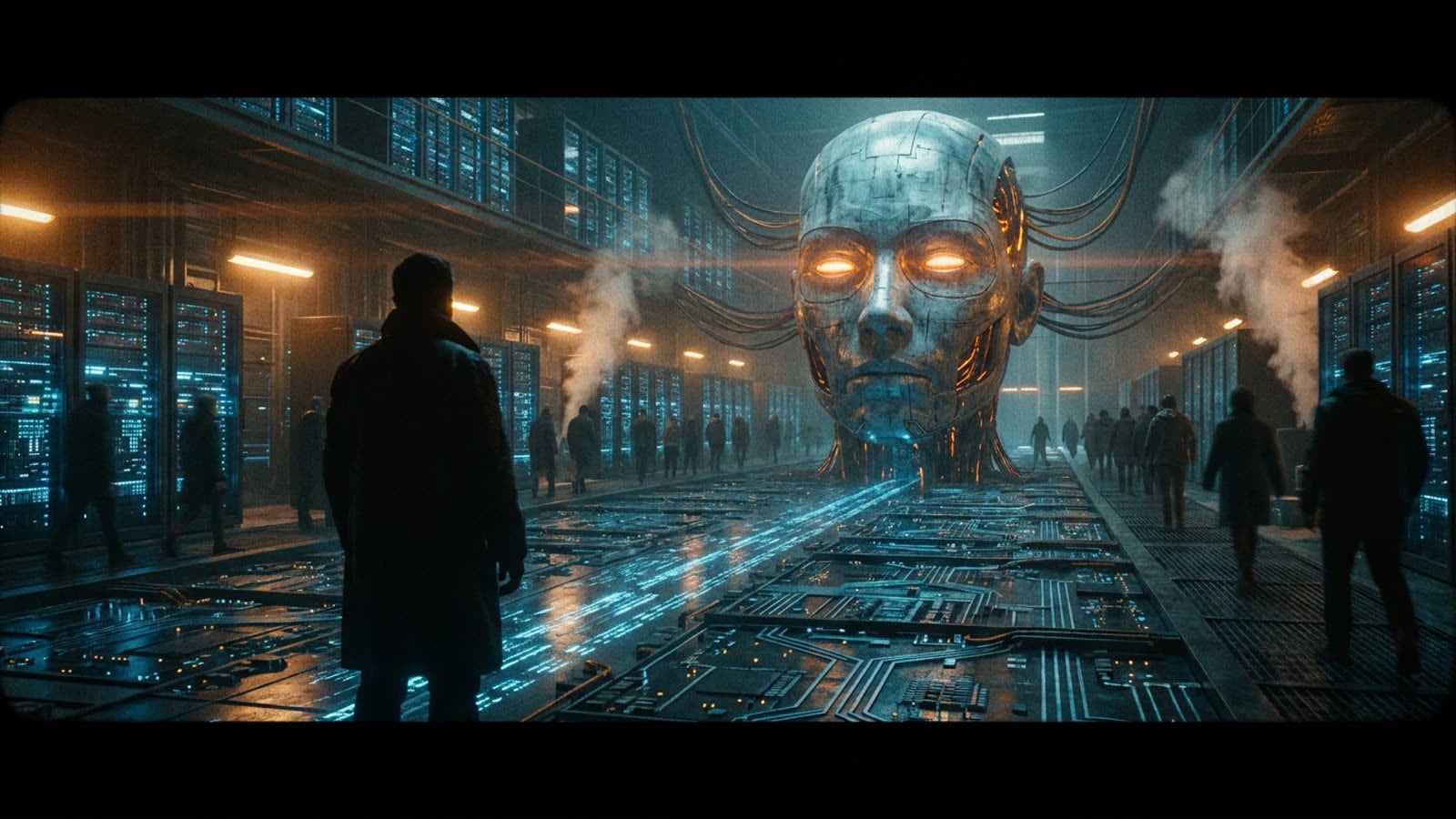
The most sophisticated language model on Earth cannot tell you whether milk has gone sour. It can discuss the biochemistry of lactobacillus fermentation, quote poetry about spoiled dairy, and generate a thousand-word essay on food safety protocols. But hand it a carton and ask for a verdict, and it has nothing — no nose, no tongue, no way to bridge the gap between symbol and sensation.
This is not a trivial observation dressed up as profundity. It is the central fact about contemporary artificial intelligence that the hype cycle consistently obscures. We have built systems of extraordinary linguistic sophistication that remain, in the most fundamental sense, unmoored from the physical world they describe.
The disembodiment problem
Large language models learn by predicting the next token in vast oceans of text. They become eerily fluent because human language is patterned, and patterns can be learned. But language is not the world — it is a compression of the world, a map rather than the territory. When a model writes about the weight of grief or the brightness of morning light, it is manipulating symbols that correlate with human experience without possessing any experience of its own.
This creates curious blind spots. Ask a model to describe how to ride a bicycle and you will receive confident, accurate instructions. Ask it to actually balance, and you confront the void. The procedural knowledge that humans acquire through bodies — the intuitions of carpenters, surgeons, sommeliers — exists in a register these systems cannot access. They can describe the taste of a Burgundy; they cannot taste it.
Why this matters beyond philosophy
The practical consequences are significant. In domains where language adequately captures the relevant knowledge — legal research, code generation, summarization — AI performs remarkably well. In domains where embodied judgment matters — diagnosing a patient by observing their gait, assessing structural damage by running a hand along a beam — the technology remains auxiliary at best.
This explains why autonomous vehicles, despite billions in investment, still struggle with edge cases that any sixteen-year-old driver handles intuitively. Driving is not primarily a language problem. It is a problem of bodies moving through space, of split-second physical intuitions that resist reduction to text.
Robotics researchers understand this acutely. The field has long grappled with Moravec's paradox: tasks that seem hard to humans, like chess, proved computationally tractable, while tasks that seem easy, like folding laundry, remain fiendishly difficult. Language models have extended this paradox into new territory. Writing a sonnet is now trivial; tying a shoelace remains beyond reach.
The sensor question
Some argue this is merely an engineering lag — that once we give AI systems better sensors and actuators, embodiment will follow. Perhaps. But there is reason for skepticism. Human cognition is not a disembodied mind that happens to receive sensory input; it is constitutively shaped by having a body. Our concepts of up and down, heavy and light, warm and cold are not abstract categories but felt realities that structure thought itself.
Whether machines can develop genuine understanding without genuine embodiment is not a question engineering alone can answer. It touches on philosophy of mind, on what we mean by understanding in the first place. The honest answer is that nobody knows.
Our take
The AI industry has a marketing incentive to emphasize capabilities and minimize limitations. But the disembodiment gap is not a bug to be patched in the next release; it is a structural feature of how these systems were built. Recognizing this does not diminish what language models have achieved — their fluency is genuinely remarkable. It simply places that achievement in proper context. We have created brilliant correspondents who have never left their rooms, eloquent describers of a world they have never touched. That is impressive. It is also, in ways that matter, incomplete.