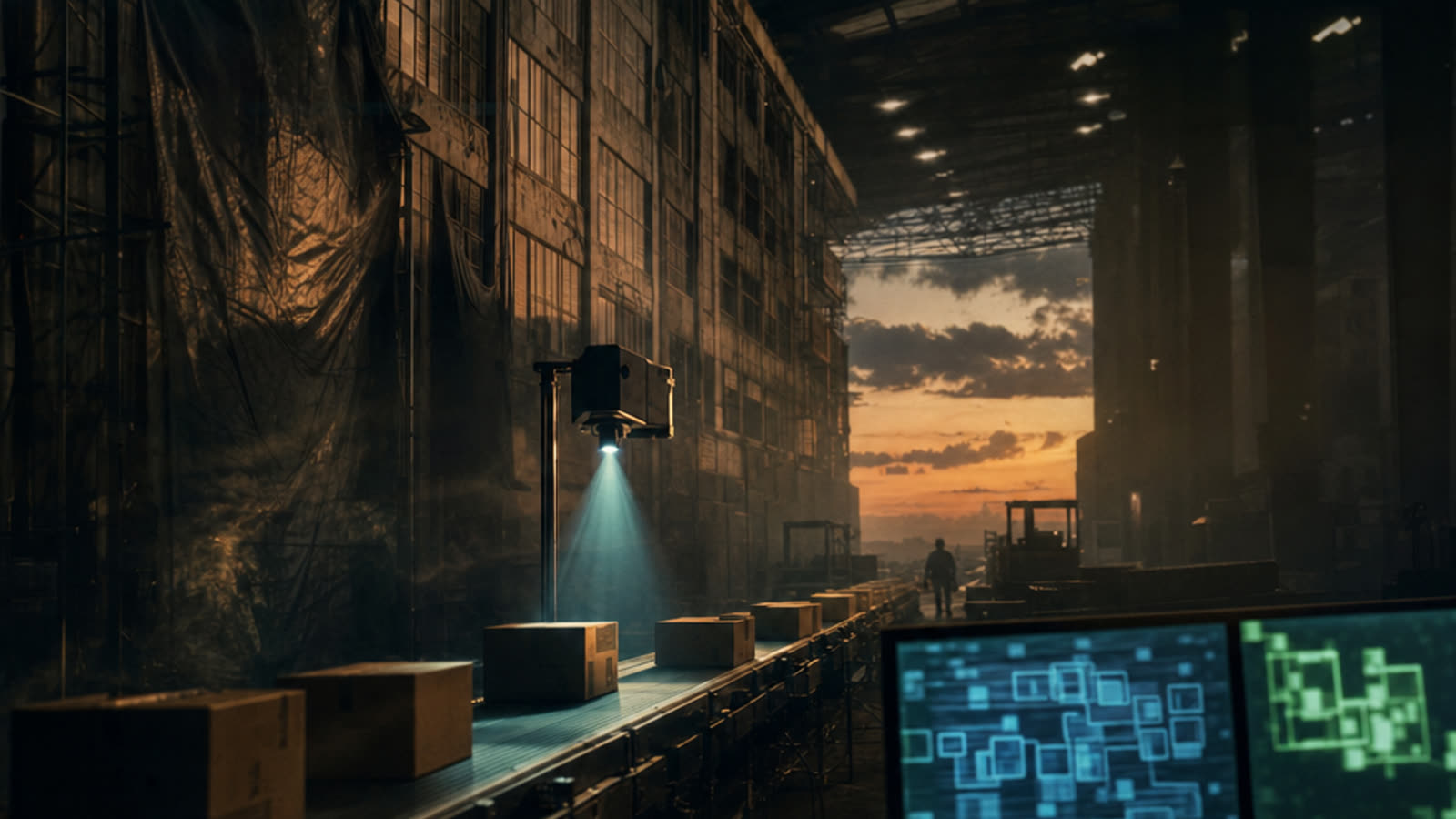
Ask a frontier AI model to describe a photograph and it will wax eloquent about mood, composition, and cultural context. Ask it to count the people in the frame and there is a reasonable chance it will be wrong. This is not a bug awaiting a patch. It is a window into the architecture of machine cognition itself.
The phenomenon is well-documented among researchers but poorly understood by the public, which has been led to believe that if AI can diagnose diseases and draft legal briefs, surely it can perform the kindergarten task of counting objects. The truth is more interesting: these systems do not perceive images the way humans do. They translate pixels into tokens, then predict relationships between those tokens based on statistical patterns learned from billions of examples. Nowhere in that pipeline is there a discrete counting mechanism.
The tokenization trap
When a vision-language model processes an image, it converts visual information into a sequence of abstract representations—tokens—that can be fed into the same transformer architecture that handles text. This is elegant engineering, but it means the model never builds a mental inventory of discrete objects. It learns associations: images with many similar shapes tend to co-occur with words like "crowd" or "flock." But association is not enumeration.
Humans count by individuating—mentally separating each object, assigning it a temporary identity, then iterating. This requires what cognitive scientists call object permanence and working memory. Current AI architectures lack both. They process everything in a single forward pass, with no mechanism to pause, point, and tally.
Why this matters beyond party tricks
The counting problem is a proxy for a deeper limitation: these models struggle with any task requiring precise, compositional reasoning over discrete entities. Spatial relationships, temporal sequences, logical chains with many steps—all become unreliable when the answer depends on getting every element exactly right rather than approximately right.
This has real consequences. An AI assistant asked to verify that a warehouse shelf holds the correct number of units may hallucinate confidence. A medical imaging system might miss a small lesion not because it lacks pattern-recognition power but because it cannot reliably segment and enumerate anomalies. The failure mode is subtle: the model sounds certain, because certainty is what it learned to produce.
The path forward is not obvious
Researchers are exploring hybrid approaches—pairing neural networks with symbolic systems that can count, track, and reason discretely. Others are developing architectures with explicit memory and attention mechanisms designed for enumeration. Progress is real but incremental. The fundamental tension remains: the statistical fluency that makes these models so impressive is precisely what makes them unreliable at tasks requiring exactness.
Our take
The counting problem is a gift to anyone trying to understand AI honestly. It demonstrates that intelligence is not a single axis but a landscape of capabilities, and that machines can be superhuman in one valley while stumbling in another. The next time someone tells you AI will replace all human judgment, ask them how many fingers are in the photograph. The answer may be illuminating.